
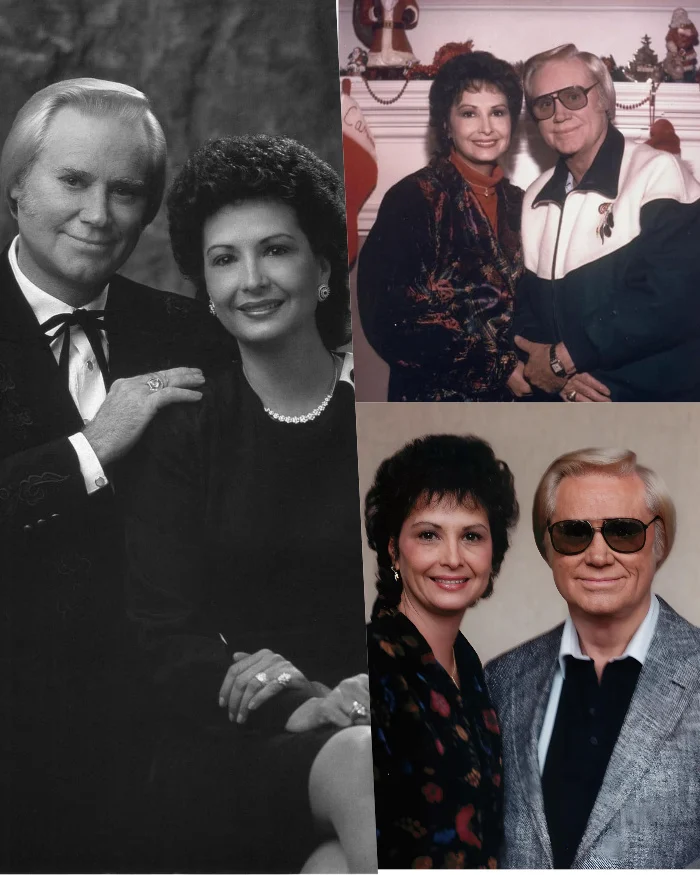

March 1999 near Nashville A severe single car crash left George Jones critically injured. As he looked up from a hospital bed, Nancy Sepulvado was still there, keeping vigil through the wreckage. That moment helped wake him from a lifetime of self destruction, and after his release he chose complete sobriety for his remaining fourteen years.
That bedside scene was the emotional peak of a rescue mission that began in November 1981. Nancy had gone to an upstate New York concert with a coworker and ended up backstage, where a brief introduction to George Jones changed the direction of her life.
At the time Jones was fifty years old and sliding toward total ruin. Promoters called him No Show Jones because he skipped dozens of paid dates. Radio stations mocked his public arrests. Unpaid taxes and legal judgments pushed his personal debts past one million dollars. Heavy drinking, poor nutrition, and isolation had dropped his weight below one hundred pounds.
Friends and family begged Nancy to stay away. Industry veterans warned that many people had tried and failed to pull Jones back from self destruction. They said closeness to him would bring heartbreak and instability.
Nancy saw the danger. She also saw an exhausted and deeply vulnerable man who had been left to a predatory entourage.
She looked past the reputation and saw a quiet person buried beneath the reckless behavior.
Instead of walking away, she packed her bags and moved into his chaotic world. She understood that the bottle was only one obstacle. The other was a ring of enablers, dealers, and opportunists who filled his tour bus and living room, fed his worst impulses, and drained his remaining earnings.
Her first campaign was quiet and uncompromising. She cleared out the entourage. She took possession of his car keys to stop late night tavern runs. She intercepted calls from unvetted associates. She barred hangers on from the property. By taking complete authority over daily household routines and strictly managing the cash in his pockets, she cut the access lines that had fueled his benders for decades.
Order followed her. Nancy sorted piles of unopened mail, faced angry booking agents, and personally made sure Jones walked on stage sober and on time. On March 4, 1983, the couple married in a quiet ceremony at his sister’s residence in Woodville, Texas. The marriage formalized a fierce and lifelong rescue effort.
During the mid 1980s and 1990s, Nancy traveled on every tour bus. Each evening she stood near the wings with warm coffee, stage wardrobe, and performance schedules. Her steady oversight helped Jones rebuild his reputation among venue promoters, systematically repay his debts, and return to recording studios with renewed focus and vocal stamina.
The road was never smooth. Old demons occasionally resurfaced. Then came the March 1999 crash near Nashville, and the hospital vigil that tested everything. Seeing Nancy’s devotion through the wreckage forced a profound personal awakening. After his release, Jones chose complete sobriety for the rest of his life.
When George Jones closed out his legendary career performing to packed arenas, he stood before audiences not as an industry cautionary tale but as an elder statesman restored to dignity. Until his passing in April 2013, he reminded the public that his voice belonged to the songs.
His life belonged to the woman who refused to leave him behind.