
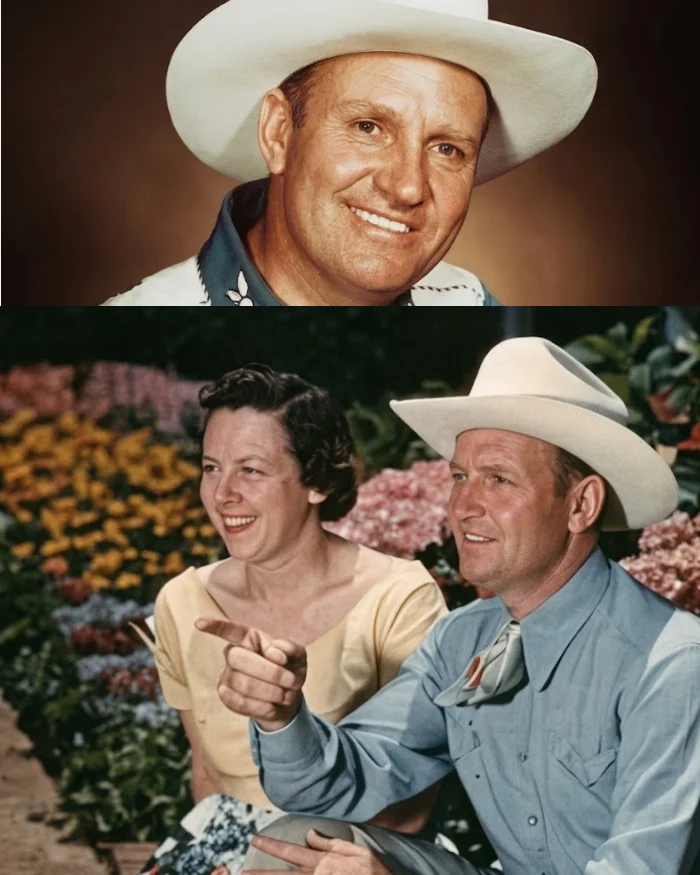
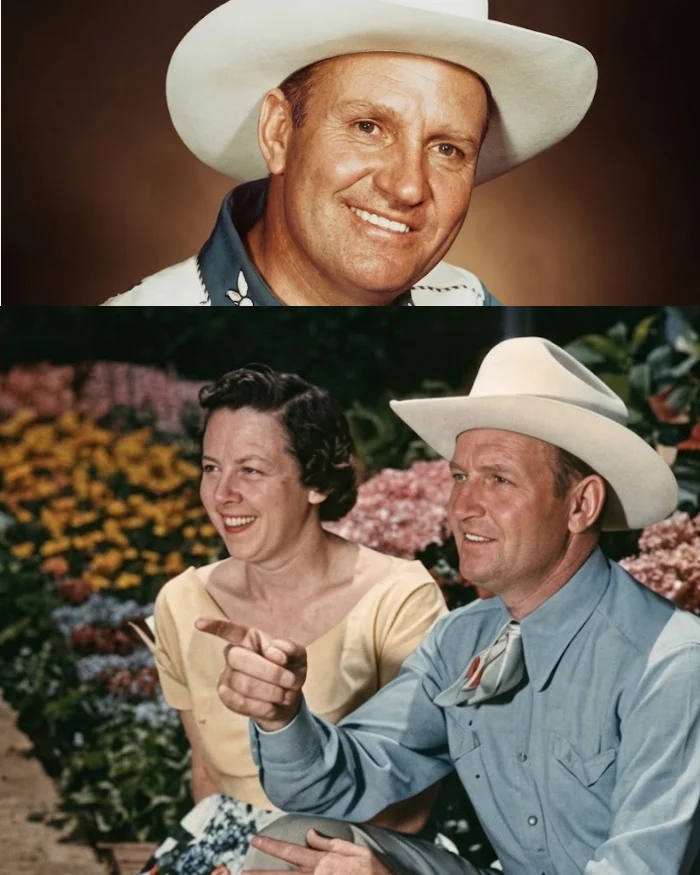
For forty eight years the loudest applause in America faded at the front door of Gene Autry’s California home. Behind the gates, the singing cowboy and his wife Ina Mae Spivey returned to a quiet nursery and a private ache that the public rarely saw.
Their marriage began on April 1, 1932, while Autry was still building a music career from Chicago radio studios. In the decades that followed he became an Oklahoma railroad telegrapher turned national cowboy icon, a recording star, a television station owner, a sports team owner, and the only entertainer with five stars on the Hollywood Walk of Fame. Ina Mae stood beside him through all of it. They shared forty eight years together until her death in 1980. They never had biological children.
Rather than let the empty nursery close them off, Gene and Ina Mae turned their Studio City home into a refuge for the family already around them. In the mid 1930s, as his earnings from Mascot Pictures and Republic Westerns grew steadier, Autry took full financial responsibility for his younger siblings Dudley, Vanda, and Wilma. Their father Delbert Autry was an itinerant horse trader and livestock handler whose restless work left the family in tight financial straits across northern Texas and Oklahoma. Autry moved his mother Elnora and the children west, bought property for them, and covered every expense.
Ina Mae handled the daily reality of that promise. She managed school enrollments, tracked doctor appointments, and folded the younger children into the household as if they were her own sons and daughters. When Dudley later showed interest in the aviation and ranching operations tied to Autry’s enterprises, Gene supplied the training and resources to help him stand on steady ground. The couple made sure the next generation had the foundation their own childhood had lacked.
As Autry’s fortune widened beyond music publishing into Golden West Broadcasters, the California Angels baseball franchise, and vast cattle holdings such as Melody Ranch in Newhall, the scale of their private support grew with it. Nieces, nephews, and distant cousins from Oklahoma found college tuition quietly covered by checks sent from Autry’s business office. Relatives starting small farms or buying first homes received low interest financing or outright grants, arranged through private family meetings and kept far from public disclosure.
That same instinct reached thousands of children with no family tie to the singing cowboy. Beginning in the late 1930s, Gene and Ina Mae aligned themselves with pediatric health organizations, especially Shriners Hospitals for Children. Autry’s commitment went far beyond an honorary endorsement. He used touring schedules to visit hospital units across North America. When rodeo appearances or live stage dates brought him into a major city, his morning calendar was cleared for unannounced hospital rounds.
In orthopedic wards and recovery rooms, Autry left the press corps behind. He walked between beds in full western attire, pulled up metal folding chairs, and talked directly with children recovering from polio, spinal surgeries, and severe burns. He often lifted his white Stetson and placed it onto small heads, signed plaster casts, and let young patients hold his silver mounted guitar.
Behind the scenes, Ina Mae ran an extensive correspondence desk from their home. She tracked individual patient cases, arranged private shipments of specialized orthopedic equipment, and wrote handwritten letters to parents facing long hospital stays. Hospital administrators remembered that large gifts for pediatric surgical wings and rehabilitation physical therapy units arrived with clear instructions that the Autry name stay off building plaques.
When Ina Mae died in 1980 after forty eight years of marriage, she left no direct descendants to inherit the sprawling estate. The couple’s domestic life had already been settled across family dinner tables and pediatric hospital floors. Gene and Ina Mae met their quietest private absence by opening a door for anyone who needed a steady hand.
They built a family out of anyone who needed a steady hand.