
The metal strings bit into her small fingers, leaving cracked skin and stinging pain. But eight-year-old Dolly Parton refused to stop playing.
Long before the Grand Ole Opry ever knew her name, Dolly was making music from discarded items in a cramped one-room cabin in the Great Smoky Mountains of Sevier County. She grew up with eleven brothers and sisters. A store-bought guitar was out of reach. In the early 1950s, she found an old mandolin body tucked away in the house. Lacking proper strings, she stretched two heavy bass guitar strings across the narrow neck. The thick metal bit into her fingers as she taught herself to coax chords from the awkward tension.
Her first audience gathered near the chicken coop and along the wooden fences out back.
Clutching her makeshift instrument, she sang to the farm animals. She held a dried corn cob on a stick of straw up to her mouth as a microphone. Inside the cabin, her mother took time between preparing thin meals to listen to those raw clanging notes. She encouraged the girl to keep playing.
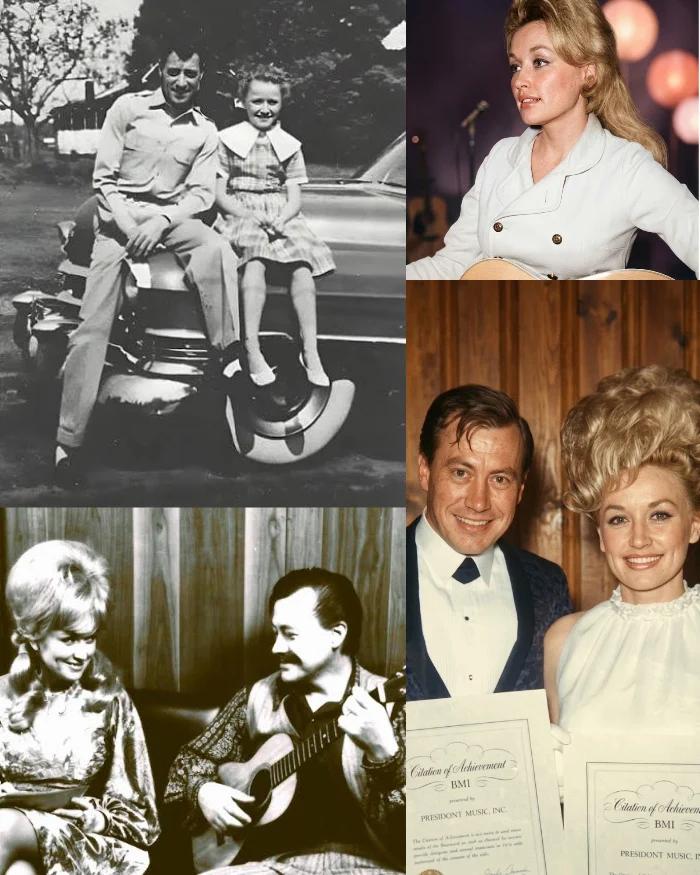
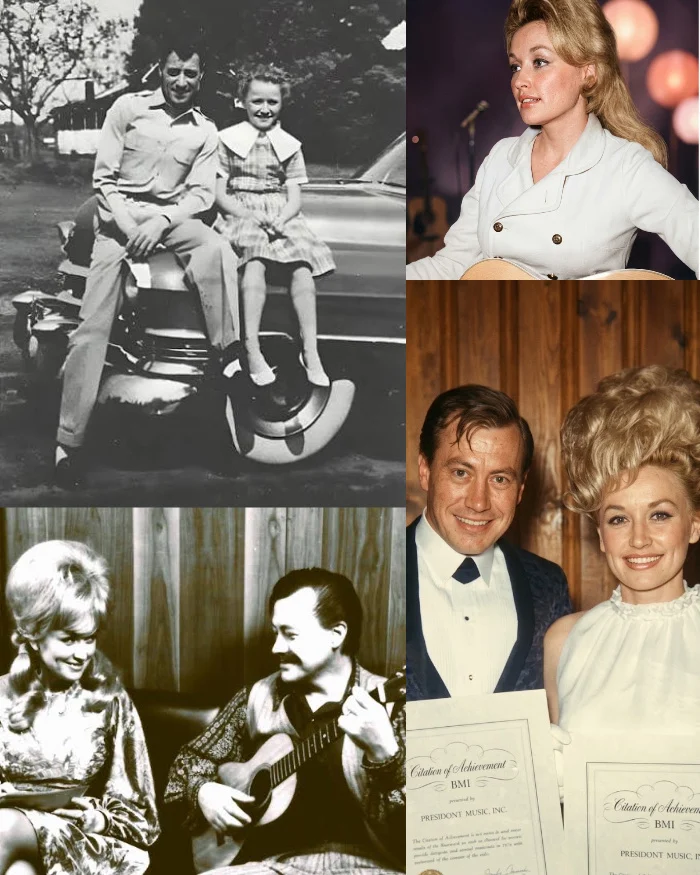
Seeing the dedication in those bleeding fingers, her maternal uncle Bill Owens realized the child possessed something rare. He stepped in when Dolly was eight. Owens, a musician and songwriter with ambitions of his own, bought her a real guitar and began teaching her how to form clean chord changes. He began driving her down the mountain to local radio stations. That modest wooden guitar quickly shifted their lives from the quiet hollow of Locust Ridge into the winding dirt roads heading toward regional radio. Bill Owens did not just act as an uncle. He became her earliest manager, booking agent, and co-writer, turning a battered beat-up car into a rolling office. Those trips opened doors that led to Knoxville’s Cas Walker Show at ten and the Grand Ole Opry stage at thirteen.
By the mid-1950s, Owens was driving his niece across county lines to audition wherever someone had a working transmitter. Their first regular break came in Knoxville, Tennessee, through the colorful grocery chain owner Cas Walker. Walker ran a live variety radio and television broadcast called the Farm and Home Hour, designed to sell groceries by entertaining working-class mountain families. Auditioning for Walker at just ten years old, Dolly won a standing spot on his radio broadcasts. She took the bus or rode with Owens into Knoxville multiple mornings a week, singing early commercial jingles and mountain ballads before rushing back to attend school.
Owens knew local grocery broadcasts were only a stepping stone. Working late into the evenings around kitchen tables, the pair began writing original songs together, pooling Dolly’s natural sense of mountain storytelling with Bill’s commercial instincts. Owens carried their homemade demo tapes across the state, relentlessly knocking on station doors while his young niece waited patiently in the car passenger seat.
Their persistence culminated in 1959, when Owens managed to secure thirteen-year-old Dolly a guest invitation at WSM’s Grand Ole Opry at the Ryman Auditorium in Nashville. Johnny Cash introduced her onto the historic wooden circle that night, where she sang George Jones’s “White Lightning” to three standing ovations.
That Opry appearance opened doors for her first commercial recording session.
Later that same year, Owens drove her south to Lake Charles, Louisiana, where producer Eddie Shuler recorded her on the small Goldband label. Together, they cut a teenage track Dolly and Bill had written titled “Puppy Love.” The small regional single failed to chart nationally, yet it proved to the pair that a mountain girl’s songs could be stamped onto vinyl. Throughout her remaining school years at Sevier County High School, Owens kept the focus steady, booking weekend dates across East Tennessee while writing dozens of songs that would eventually follow them across state lines.
The day after her high school graduation in 1964, Dolly packed dirty laundry into cardboard luggage and headed permanently down the mountain to Nashville. Bill Owens arrived alongside her, continuing to knock on publisher doors until they landed writing contracts with Tree Publishing and later Combine Music.
Within a few short years, those Nashville publishers realized what mountain audiences had seen a decade earlier on local airwaves. Songs the pair wrote together, including “Put It Off Until Tomorrow,” began landing on national country charts and earned them Songwriter of the Year honors from BMI.
Decades later, after selling more than one hundred million records worldwide, Dolly never forgot the miles logged in the front seat of that old family automobile. The grand stages were hers, but the road leading down the mountain had been paved by an uncle who saw a girl singing to farm fences and decided she was worth the drive.