
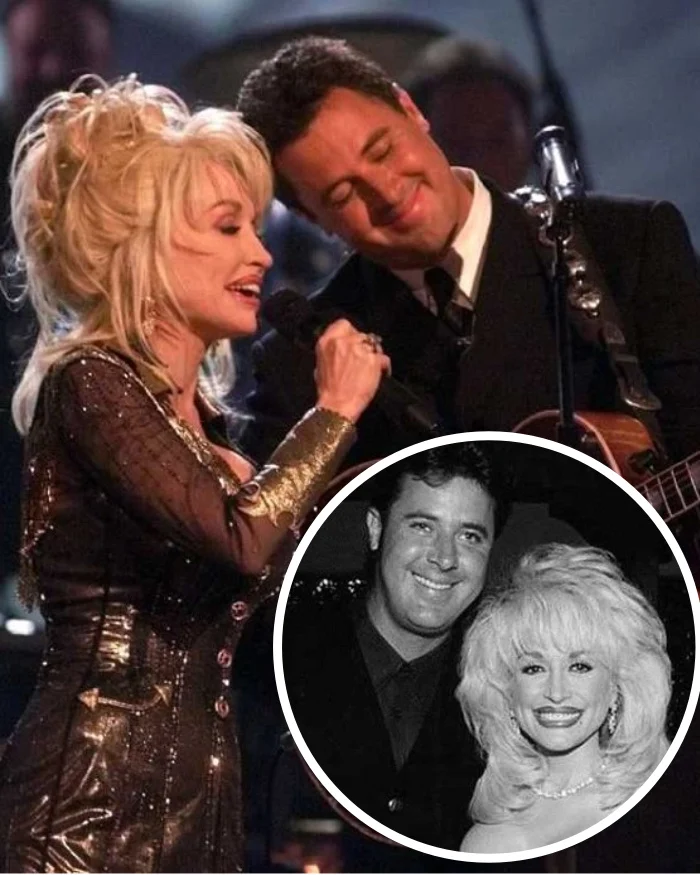
The hall fell silent when Vince Gill closed his eyes and could not finish the line. Under a single white spotlight in Kansas City, the country singer had stripped a beloved 1995 duet down to an acoustic guitar and his own voice, and the missing harmony beside him suddenly felt larger than the stage.
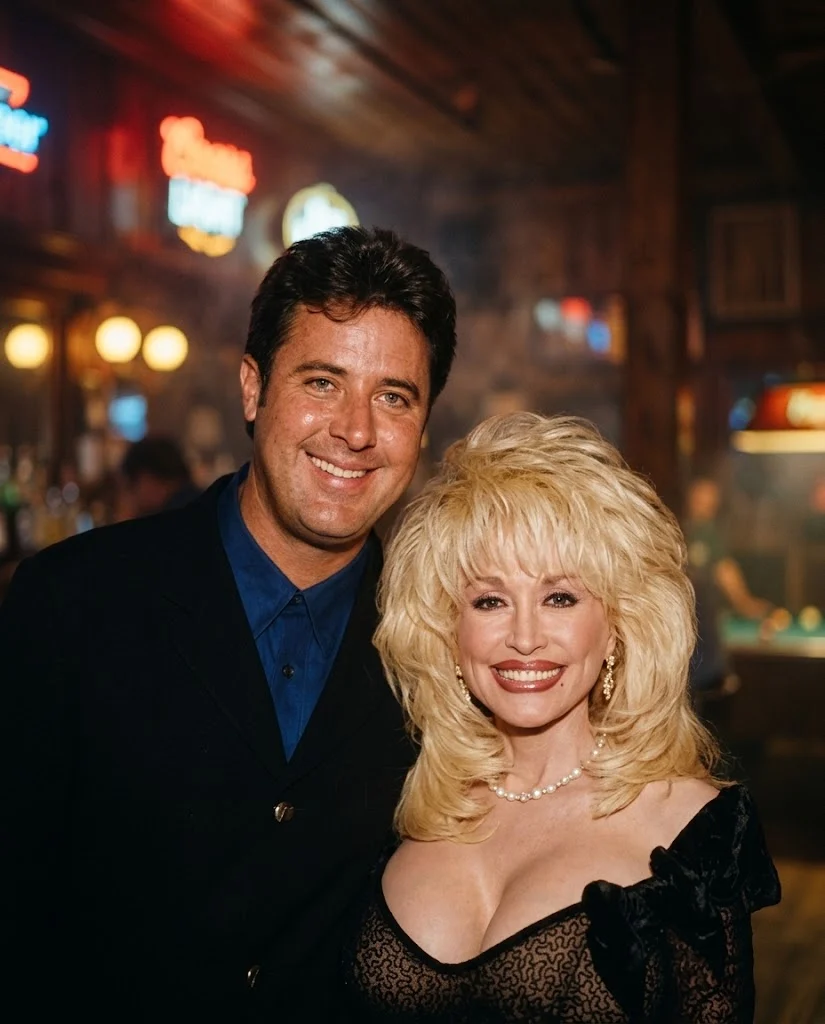
Gill was revisiting the celebrated duet he shared with Dolly Parton, a recording that won them the Country Music Association Award for Vocal Event of the Year in 1995. For more than 30 years, the two have remained close friends, often praising each other’s songwriting and vocal gifts. But on this night, the setting was far removed from the brightly lit awards show where they once stood shoulder to shoulder and smiled through a shared victory.
His tenor voice, long admired for its clarity and breath control, began to waver. Halfway through the performance, he paused. With his eyes closed, he tried to reach the higher notes without Parton’s soprano harmony, and the physical absence of his longtime partner seemed to overwhelm the moment.
The Kansas City crowd stayed quiet. When his voice broke, listeners answered with steady and encouraging applause, giving him room to gather himself. The exchange dissolved the usual boundary between artist and audience. A song written about a peaceful parting and enduring love took on an immediate and heavy reality when sung alone on stage.
His tears on stage confirmed what that collaboration still means to him personally and how deeply the shared history remains woven into his artistry.
That quiet scene stood in stark contrast to the 1995 CMA Awards, where Gill and Parton celebrated a vocal event that had grown from a Nashville recording booth. The groundwork was laid during the making of Parton’s 1995 album Something Special. Parton had envisioned revisiting her classic composition about gracious parting and mutual respect, and she reached out to Gill because she believed his gentle tenor could complement the delicate emotional weight of the piece.
Inside the studio, the two artists built the arrangement from the ground up. They traded musical cues rather than relying on rigid guide tracks. Gill shaped his vocal phrasing to match Parton’s natural cadence and blended his harmonies beneath her lead lines so that neither performer overshadowed the other. That session established a mutual respect that continued across three decades of awards shows, joint tributes, and private encouragement.
Back in Kansas City, every measure without his longtime partner carried the weight of that history. Gill was not merely executing a catalog favorite. He was acknowledging the passage of time and the rare creative partnerships that define an entire career. As the final acoustic notes faded into the hall, he stood quietly under the amber light and offered a simple and grateful nod to the standing crowd.
The stage was quieter than it had been three decades earlier, but the music did not feel diminished. It simply carried the enduring weight of a lifelong friendship.