
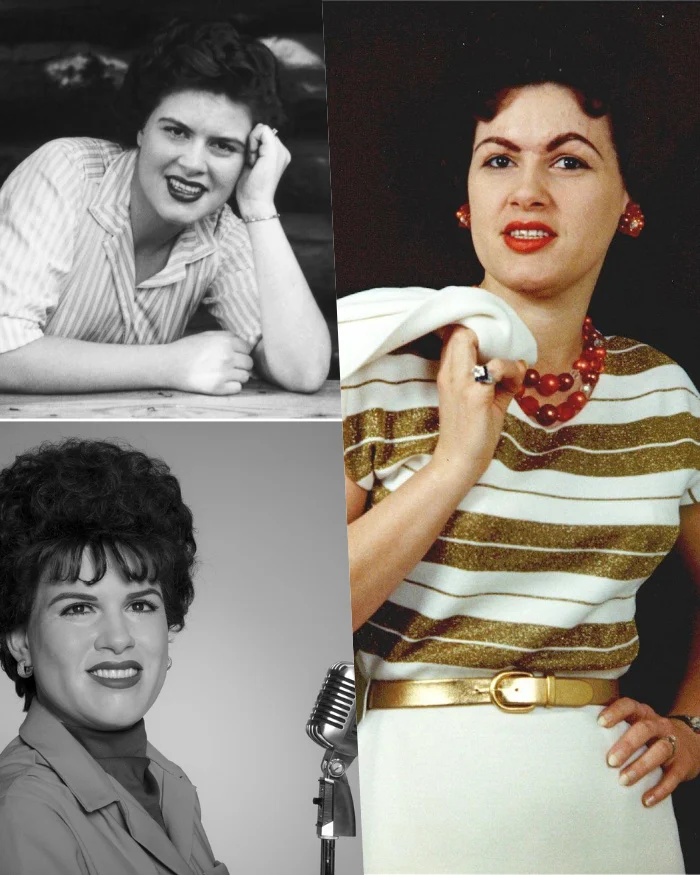
The hospital room door opened and a terrified Kentucky girl stepped inside, hands clenched, unsure how to speak to the bandaged star she idolized. That girl was Loretta Lynn. The bandaged star was Patsy Cline.
Only weeks earlier, in June 1961, a brutal head-on collision had thrown Patsy through a car windshield. Her hip was violently dislocated. Her wrist was shattered. The cuts on her face were so deep that doctors whispered she might never look the same.
Patsy was already Nashville’s untouchable queen of country music. Her timeless hits “Walkin’ After Midnight” and “Crazy” had made her a global voice. But in that sterile hospital room, surrounded by medicine and fear, she was not thinking about her own legacy. She was trying to survive the night.
Then the radio crackled. Through the late-night static of the Midnight Jamboree, a rough, plain-spoken voice filled the silence. It was Loretta Lynn, still a nervous Kentucky girl trying to find her footing in a Nashville machine that loved to chew naive women up and spit them out.
Timidly, with a voice shaking with nerves, Loretta dedicated “I Fall to Pieces” to the ailing star.
In an industry that constantly pitted women against each other, a lesser singer might have heard the footsteps of competition.
Patsy heard a frightened sister who needed a shield.
Still wrapped in bandages and enduring excruciating pain, Patsy turned to her husband, Charlie Dick. She told him to go find that girl.
Not someday. Now.
When Loretta walked into the room, she was terrified. She clenched her hands and did not know how to speak to the woman she worshipped. It could have been a polite, fleeting exchange between a massive star and an unknown fan. Instead, Patsy did not treat her like an intruder. She treated her like blood.
That is where the true legacy of Patsy Cline lives. Patsy already knew the quiet humiliations of Music Row. She knew how a woman could be praised onstage and still pushed around behind the curtain. She did not wait until she was back on her feet in the spotlight to mentor the young singer. She did it from a place of utter vulnerability.
Patsy gave Loretta clothes to wear onstage. She gave her hard, honest advice. She gave her fierce, absolute protection in a town run by men who dictated what women could sing. She took the girl who would one day shake the world under her wing long before the industry knew her worth.
Their friendship did not start in a glamorous dressing room with applause and champagne. It started after blood, glass, and a desperate fight for survival. That is the detail that breaks your heart when you look back.
They only had two years together. In March 1963, a plane crash took Patsy from the world forever. Loretta did not just lose a famous friend that dark day. She lost the woman who had reached out for her when the rest of the world was still looking away.
Patsy never saw the full blazing fire of the legend Loretta became. She never heard the fierce anthems like “Fist City” or “Coal Miner’s Daughter.” She never watched that terrified Kentucky girl become a fearless force of nature.
But Loretta carried Patsy with her onto every stage she walked on for the rest of her life. Before Loretta Lynn ever fought Nashville with her own fearless voice, she had to survive the doorway. She survived because a broken, bleeding woman stood there first and refused to let anyone blow out her match.