
She was only 13 when she held the proof in her hands. A small piece of black vinyl with a yellow label and her own name in the center told Dolly Parton that the dream she had carried on a family porch could become something real, and that tiny record became the psychological foundation for everything that followed.
The journey behind it was exhausting. In 1959, Dolly and her uncle Bill Owens left the familiar mist of Sevier County for the humid and unfamiliar streets of Lake Charles, Louisiana, riding a Greyhound bus for 30 hours out of the Tennessee mountains. Owens had recognized early that his niece had a voice meant for far more than local radio programs and small town stages in East Tennessee, and with whatever limited resources he could gather he secured her a session hundreds of miles from home.
Their destination was Goldband Records, an unlikely starting point for a future country icon. Founded by Eddie Shuler, the label was known mainly for documenting the regional sounds of Cajun music, rhythm and blues, and Louisiana swamp pop. Shuler worked outside the polished and strict gatekeeping of the Nashville establishment and had built a reputation for giving unknown artists a chance when they had the drive to show up at his door.
Showing up carried a real physical toll. Parton and Owens rode through the night surrounded by the smell of diesel and the constant hum of the highway. They had left a rural cabin that did not yet have electricity and traveled toward a busy professional recording facility in the deep South, a massive environmental shift for a young girl from deep rural poverty.
The idea of a music career was no longer just a daydream. It was something she could actually carry in her hands.
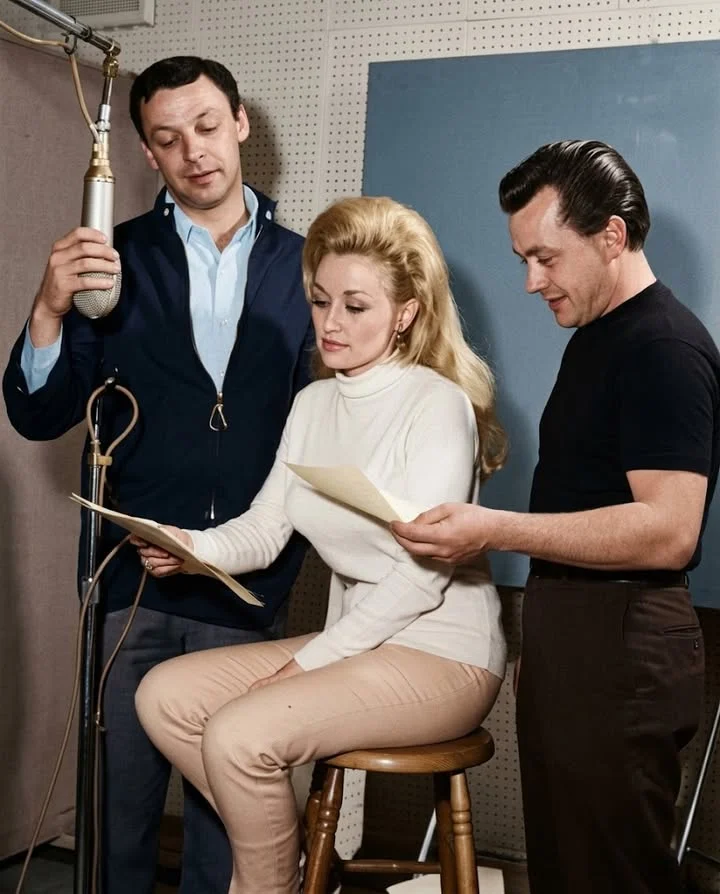
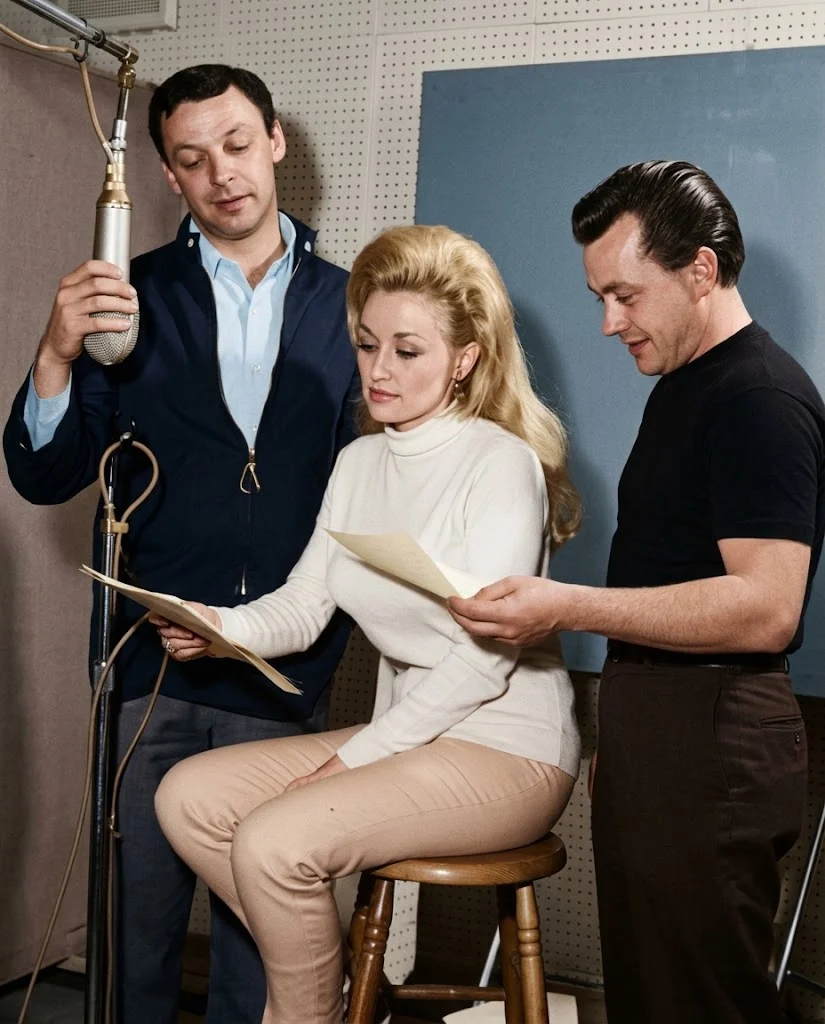
Inside the Louisiana studio, exhaustion gave way to complete focus. Owens watched quietly from behind the glass while the young teenager stepped up to a cold professional microphone. She recorded Puppy Love, an upbeat track she and her uncle had written together for this opportunity. Her voice was still unmistakably young with the high and piercing pitch of childhood, yet her vocal control and phrasing were already entirely serious. She then recorded the B side, the slightly more somber Girl Left Alone.
For Eddie Shuler, it was another standard day running an independent label and pressing regional records for hopeful musicians passing through town. For Parton, it was the exact moment her abstract ambitions took physical shape. When the session ended and the mastering was complete, the label pressed a small batch of 45 RPM records. Her fingers, already calloused from practicing a battered acoustic guitar, traced the fine grooves of the newly pressed vinyl complete with that yellow Goldband label.
Puppy Love did not instantly make her a national star. The single received limited regional airplay, driven largely by Bill Owens taking the record directly to local radio station programmers, and it did not trouble the mainstream Billboard charts. The commercial outcome mattered far less than the psychological shift it created.
The long bus ride back to the Smoky Mountains felt entirely different from the journey down. The scenery outside the Greyhound windows was exactly the same, but the passengers had changed. Parton returned to the family cabin not just as a child who liked to sing, but as a documented and published recording artist with proof that a studio could turn her voice into a tangible product and that songs written in her head could be made into something the public could take home.
That single piece of vinyl proved to Bill Owens that his relentless faith in his niece was justified, and it proved to Parton that her talent could reach far beyond the county line. A Louisiana studio built on swamp pop and accordion music ultimately pressed the first notes of a country music empire. The 13 year old girl took her record, boarded a bus heading north, and set her sights firmly on Nashville.