
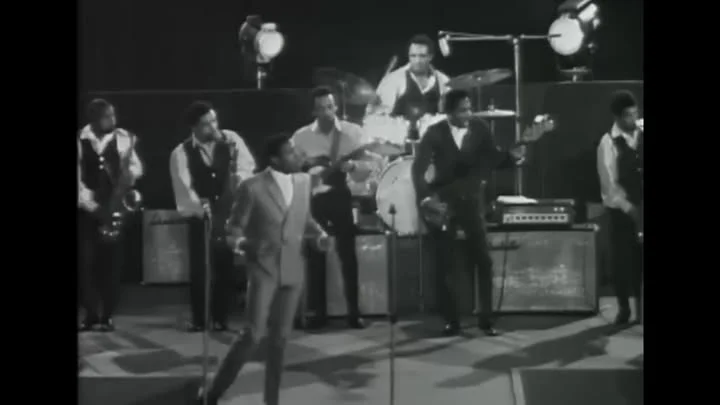
There is a moment, just seconds into the song, when the world shifts. That jagged, staccato guitar riff cuts through the air like a lightning bolt, and suddenly you are no longer just listening—you are standing taller, breathing deeper, ready to declare something powerful about yourself. Sam & Dave captured that feeling perfectly in 1967 with Soul Man, a track that is far more than a classic hit. It is a declaration of identity, a battle cry for resilience, and a timeless anthem that continues to pulse with the raw energy of an era defined by struggle and triumph.
The story behind Soul Man begins not in a recording studio but in the smoke and fire of the 1967 Detroit riots. Isaac Hayes, who co-wrote the song with David Porter, saw footage of the destruction and noticed something extraordinary: the word “soul” spray-painted on buildings. Residents had marked their own businesses with that word, hoping the fires would spare them. To Hayes, that single word became a symbol of defiance, community, and unbreakable pride. He wanted to capture that spirit in music, to create a character who embodies strength earned through hardship, a person who rises above and declares to the world: I am here, I am worthy, I am a soul man.
“Got what I got the hard way,” the lyrics proclaim, “and I’ll make it better each and every day.”
These lines are not just words—they are the heartbeat of a generation. In the mid‑1960s, the Civil Rights Movement was reshaping America, and African Americans demanded respect and recognition. Music became both refuge and megaphone. Soul Man arrived at precisely the right moment, its upbeat tempo and assertive lyrics offering a soundtrack of empowerment. It was a song that said: you do not need permission to be proud of who you are.
Musically, the track is a masterclass in soul. Steve Cropper’s guitar riff is instantly iconic, a sharp, punchy hook that grabs you and never lets go. Beneath it, the Stax Records house band lays down a groove of horns, bass, and drums that feels both urgent and effortless. But the true engine of Soul Man is the vocal chemistry between Sam Moore and Dave Prater. Prater’s deep, commanding voice leads with bold confidence; Moore’s lighter tenor weaves around it with soulful precision. Together, they create a call‑and‑response that feels like a conversation between equals, each note charged with conviction. When they belt out “I’m a soul man!” it is not a suggestion—it is an undeniable truth.
This sound—raw, gospel‑infused, unapologetically gritty—was the signature of Stax Records in Memphis. While Motown polished its soul for a broad audience, Stax kept its feet in the blues and the church pews. Soul Man is the epitome of that aesthetic. It does not ask for your approval; it demands your attention. There is a visceral authenticity here that transcends mere entertainment. It is music that knows what it means to struggle and still finds the strength to celebrate.
The song became an immediate success, climbing to No. 2 on the Billboard Hot 100 and earning a Grammy for Best Rhythm & Blues Group Performance. But its influence did not stop there. In 1978, The Blues Brothers released a cover that introduced Soul Man to a new generation. Their version added a playful, comedic energy, but it also proved the song’s remarkable versatility. Soul Man was not just a relic of the 1960s; it was a living, breathing anthem that could adapt and still deliver its core message of self‑worth.
More than half a century later, that message has not faded. The song continues to resonate in a world where many still fight for validation, equality, and respect. It is a reminder that confidence and integrity are not passive qualities—they are acts of resistance. Every time that opening riff plays, we are invited to stand a little taller, to remember our own strength, and to declare with Sam & Dave: we are soul men and soul women, and we will persevere.
Soul Man endures not simply because it is a great song, but because it is a mirror. When we hear it, we see ourselves: our struggles, our pride, our unyielding hope. And in that reflection, we find the courage to keep going.