
Before arenas shook with his name, a shy Memphis teenager walked Beale Street at dusk, listening outside venues to learn the rhythms that reshaped American music. The sound did not begin under blinding studio lights, but in the quiet attention of a young truck driver who simply stopped to listen.
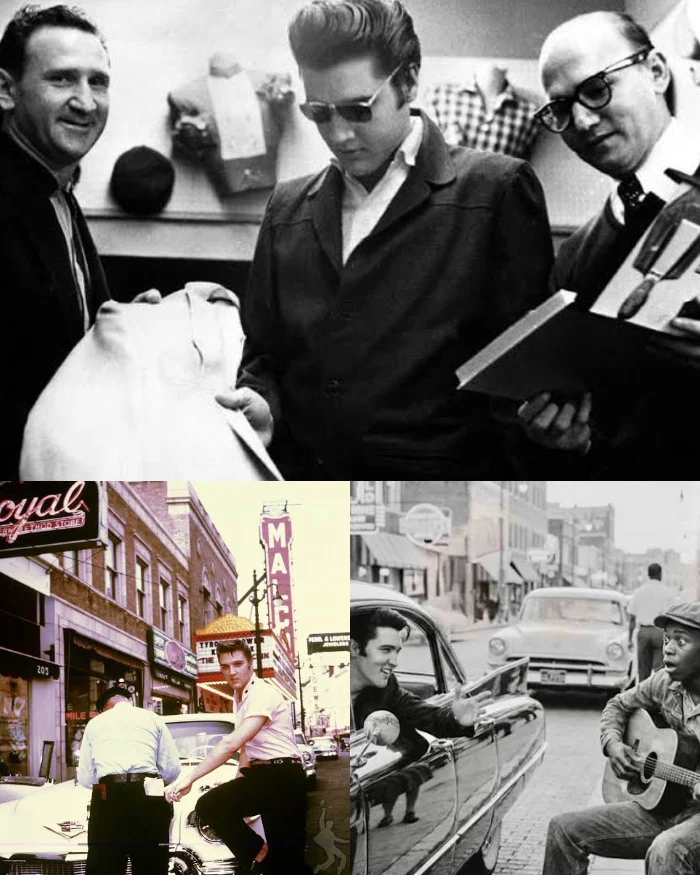
Long before global fame transformed his life, Elvis Presley lived in Apartment 328 at Lauderdale Courts, a modest public housing complex in north Memphis. The Presley family had moved there in 1949, paying $12.80 a month for the apartment. He worked as an usher at Loew’s State Theater and later drove a delivery truck for the Crown Electric Company, earning modest weekly wages. Most evenings, rather than staying in the neighborhood, the nineteen year old headed south toward Beale Street, the vibrant epicenter of Black musical life in the segregated city.
Standing outside open doorways and screened windows at venues like Club Handy, he listened intently to the steady shuffle beats and stinging electric guitar phrases of local blues legends, including B.B. King and Rufus Thomas. Rather than chasing nightlife, he watched from the edges of the room with quiet concentration, observing how performers worked the microphone and how guitarists formed chords up and down the neck. Local musicians noticed the shy teenager standing at the back of the room. Rather than turning him away, several recognized his genuine reverence and let him watch their hands move across the frets.
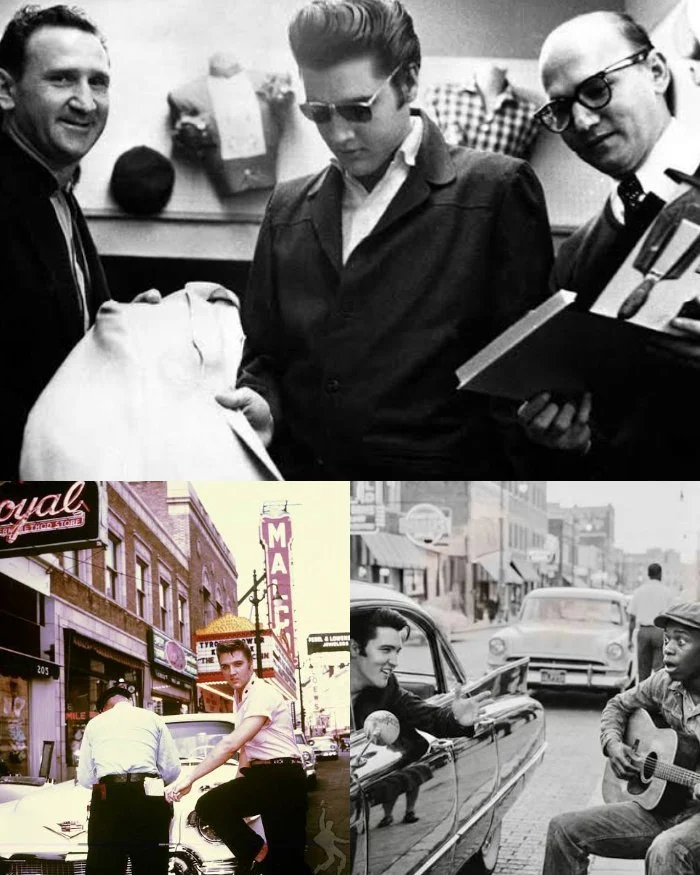
Just a short walk down Beale, he regularly stopped outside Lansky Brothers, a haberdashery owned by Bernard and Guy Lansky that catered to rhythm and blues bandleaders. Bernard Lansky later recalled watching the slender truck driver study the window displays for weeks before finally walking inside to put layaway payments toward wide collared shirts, black jackets with pink piping, and pegged trousers. That distinct sartorial choice became the visual trademark he brought to regional roadhouse stages within two years.
On Sunday mornings, his musical education extended across town to East Trigg Baptist Church in south Memphis. Reverend W. Herbert Brewster, a celebrated gospel composer whose services aired on WDIA radio, led an energized congregation whose dynamic call and response singing left an indelible impression on the young singer. Presley sat respectfully near the back, soaking in the physical momentum, vocal phrasing, and syncopated handclaps of Black gospel traditions.
When producer Sam Phillips invited Presley into Sun Studio at 706 Union Avenue in July 1954 alongside guitarist Scotty Moore and bassist Bill Black, those disparate Memphis influences surfaced during a spontaneous breakthrough. After hours of struggling through formal ballads, Presley picked up his acoustic guitar during a break and began improvising an upbeat and syncopated variation of the blues track of Arthur Crudup, That’s All Right. Moore and Black joined in instantly, blending the acoustic drive of country music with the phrasing and forward momentum Presley had absorbed outside Beale Street clubs.
The resulting session produced a raw and unvarnished synthesis of Southern gospel, urban blues, and honky tonk hillbilly music that launched his recording career. When the record debuted on the Red, Hot, and Blue program of Dewey Phillips over WHBQ radio days later, the station was flooded with phone calls asking where the singer went to high school, confirming how effortlessly he bridged musical worlds.
Throughout the meteoric national rise that followed, Presley remained explicit about where his signature vocal delivery and physical style originated. In interviews during the mid 1950s, he consistently dismissed assertions that he created a new genre out of thin air, giving credit to the church singers, blues pioneers, and street musicians who had mastered those idioms long before commercial radio embraced them.
The early stage presence that startled television audiences was built step by step along those evening sidewalks, in gospel pews, and across the counter at Lansky Brothers.