
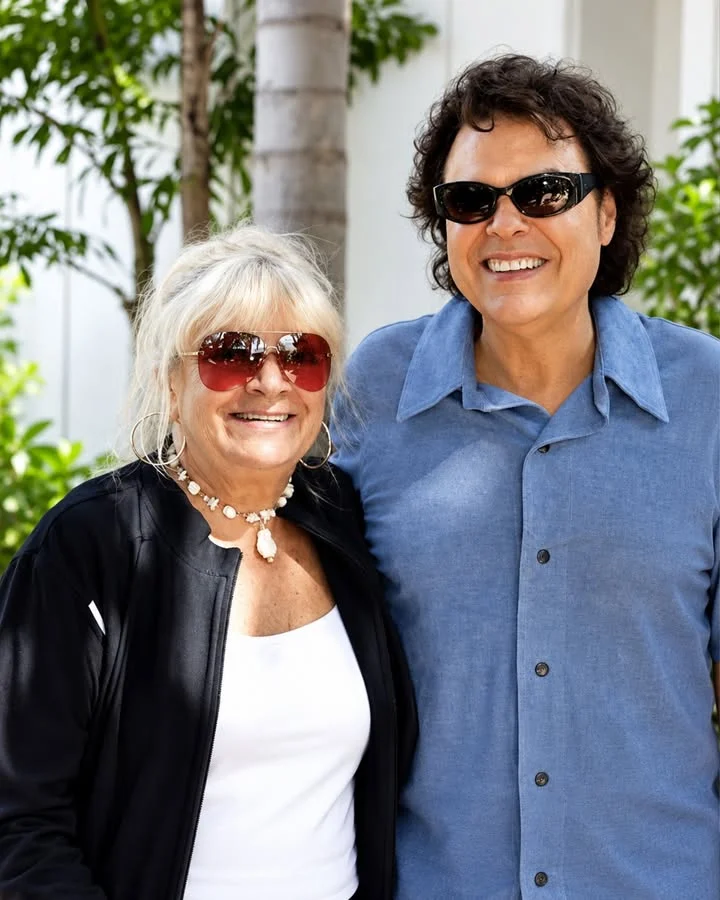
Joyce Milsap Heard Nashville Before It Heard Ronnie
The trailer behind the Volkswagen of Joyce carried no trophies and no certainty. It carried clothes, household things, and the unfinished life of a working musician. That was enough to start.
That was enough to start.
Joyce Milsap packed the move into a small trailer hitched behind her Volkswagen. Christmas had just passed. Nashville was waiting several hours up the road, though nothing in the city suggested it was waiting for them.
Ronnie had no record contract there. No manager had promised to meet him. The only certainty was a piano job that might become something steadier if the right person happened to enter the room.
Behind the Volkswagen were the ordinary possessions of a married couple changing cities. Inside it was a decision Joyce had reached before the music business had given her much evidence that she was right.
The Broadcast In Memphis
On October 16, 1972, Ronnie and Joyce watched the Country Music Association Awards from their home in Memphis. Charley Pride was named Male Vocalist of the Year.
The moment reached beyond the award itself. Pride had built a major country career while working inside an industry whose ideas about race, audience, and tradition were often narrower than the music people actually listened to. Ronnie had spent years moving among those musical borders. His voice carried country phrasing, gospel warmth, and the grain of Southern rhythm and blues. He could play standards, soul numbers, and hard country songs without treating any of them as foreign territory.
Yet Memphis had not given that range a stable direction. Ronnie had made rhythm and blues records, performed in clubs, and entered one of the most important studio circles in American music. He had played piano on Kentucky Rain by Elvis Presley. He had been close enough to hear how great records were assembled.
Closeness was not the same as a career. Joyce told him they should move to Nashville. The answer of Ronnie was practical. Nobody there had hired him. They went anyway.
The Room Upstairs
A weeklong engagement at The Villa, a small room near the Anchor Motel of Nashville, brought Don Davis through the door. Davis offered Ronnie a steadier job in the ninth floor showroom of the King of the Road Motor Inn of Roger Miller. Five nights a week, Milsap played country, soul, pop, and whatever else the room could hold. Music executives and performers began coming upstairs after their own work was done.
Among them was Jack Johnson, who managed Charley Pride. Within days, Johnson offered to manage Milsap and financed the demos that led toward RCA. The singer who had arrived with no job would eventually place more than forty singles in the country Top Ten.
The elements that later defined the music of Ronnie were not new additions. They were the parts that had traveled with him, the radio of his North Carolina childhood, classical training, the Black clubs of Atlanta, Memphis studios, and country songs learned long before Nashville provided a category.
Joyce had heard those elements before the industry found a way to sell them together.
The Songs Kept Inside The House
A successful artist accumulates songs that do not fit the next album. Some arrive at the wrong moment. Others remain private because a producer cannot find space for them, a label cannot hear the single, or the artist simply wants to keep listening.
Ronnie kept such material. Ronnie continued bringing songs home, trying them at the piano and listening for what changed in the room. Joyce became the private audience behind the public career, the person close enough to recognize both his strengths and his evasions.
When he prepared A Better Word for Love decades later, he returned to songs that had stayed with him through changing labels and seasons. He said that some had been preserved so long they had become treasures only he and Joyce could hear. The phrase reveals the domestic scale behind a large catalog. Before musicians gathered and tape began rolling, the songs had lived in a room shared by two people.
By then, the role of Joyce in the life of Ronnie had stretched across nearly the whole career, the early rhythm and blues record, the move to Memphis, the decision to try Nashville, the hotel years, the number one singles, the touring, and the quieter work of deciding what still deserved another hearing.
She died in 2021. The public statement of Ronnie described her as his love, the mother of their son, and the strength behind more than five decades of life together. The word strength covered more ground than career history usually allows. It included packing, moving, waiting, listening, and knowing when the sensible objection that there was no job there should not have the final word.
What Joyce And Ronnie Milsap Really Leave Behind
The Nashville story of Ronnie Milsap can be measured in unusually large numbers, more than forty Top Ten country singles, dozens of number ones, multiple Grammy and CMA awards, and a body of work that widened the sound country radio could accept.
The part of Joyce is measured differently.
It appears in the distance between a television set in Memphis and a ninth floor showroom in Nashville. It sits inside the practical risk of moving a household for a job that had barely begun. Later, it can be heard in the quieter distance between a song entering their home and the same song finally reaching a studio.
The visible career needed RCA, skilled producers, gifted musicians, and radio. Its earliest Nashville movement required something smaller, one person hearing where the music of another person might belong, then being willing to load the car before the city had agreed.