

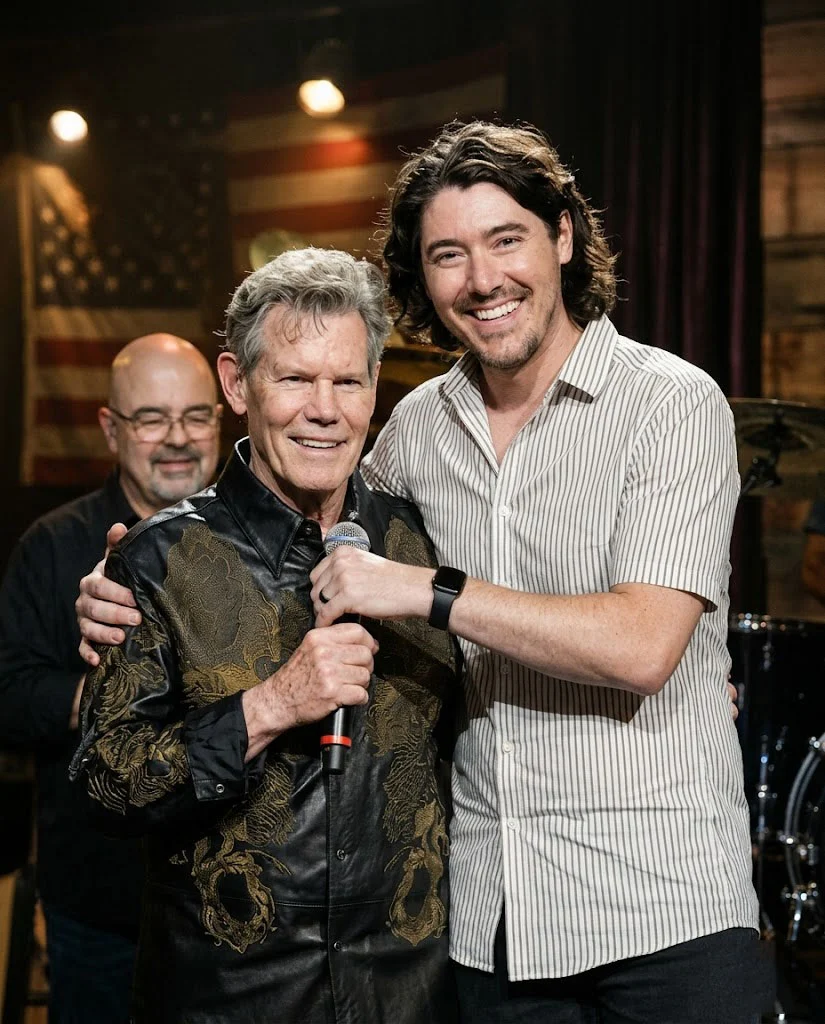
Thirteen years after a stroke changed his life, Randy Travis walked back into the music during the More Life Tour, and the room realized some voices never truly disappear.
When Randy Travis returned to the stage for the More Life Tour, nobody in the audience expected things to feel the way they once had. That was never the point.
Most artists would have disappeared quietly after what happened to Randy Travis in 2013. The stroke changed everything. His speech became limited and difficult. His body weakened. For years fans quietly wondered whether the man behind “Forever and Ever, Amen” had already sung his final words into a microphone.
But Randy Travis never treated silence as surrender. He never treated silence as the end of his story.
That quiet determination hangs over every moment of the More Life Tour. It is not built around pretending the past still exists. Instead of trying to recreate the past, the performances honor something far more difficult, what remains after life changes permanently and what survived.
A Presence At The Center Of Every Song
Night after night James Dupré stands center stage at the microphone, singing the songs that made Randy Travis one of the defining voices in country music. Beside him plays the Original Randy Travis Band, carrying melodies audiences have lived with for decades.
And seated nearby is Randy himself. Still present. Still watching. Still part of the music.
There are no dramatic speeches asking for sympathy. No attempt to recreate who he once was. No attempt to pretend tragedy never happened. Travis does not appear before the crowd as a symbol of miraculous recovery or comeback mythology.
Instead he sits there with a quiet smile and steady faith and quiet dignity, allowing people to witness survival exactly as it is. And somehow that honesty makes the room emotional long before the first chorus arrives.
The Audience Sings Before They Even Realize They Are Doing It
On paper it sounds like a tribute concert. Inside the room it feels far more personal than that.
When songs like “On The Other Hand” and “Three Wooden Crosses” and “Forever and Ever, Amen” begin, the audience no longer experiences them as nostalgic recordings or memories from another era. They experience them as living things. The lyrics become communal memory. Thousands of voices rise carefully together, carrying words Randy Travis once delivered alone.
And despite not singing every line himself, he remains at the center of every moment. That may be the most moving part of all.
He is not standing before fans trying to prove nothing was lost. He is showing them what life can still look like after loss. There is humility inside that choice. A different kind of courage country music rarely speaks about directly.
Many performers spend their careers protecting the illusion that time cannot touch them. Randy Travis allows people to see exactly what time did, sitting before the crowd as proof that survival can carry its own kind of grace. And in doing so he somehow becomes even more powerful.
More Life Becomes A Statement
More life after fear. More life after silence. More life after the moment everyone assumed the music was over.
The phrase “More Life” slowly takes on a different meaning as the night unfolds. It stops sounding like the title of a tour and begins sounding like a declaration whispered quietly back at fear itself.
More life after illness. More life after silence. More life after everyone assumed the story had already ended.
The crowd understands that instinctively. By the final songs applause no longer feels directed only at the music. It becomes something deeper than appreciation for old hits. The audience is responding to endurance itself, the stubborn refusal to disappear quietly after devastation.
There are moments when Randy Travis smiles at the crowd while they sing his lyrics back to him, and the room seems to hold its breath all at once. Not out of pity. Out of recognition.
Because the voice country music loved never truly vanished. It moved into the records. Into the crowd singing every lyric back to him. Into the fans carrying every lyric by memory. Into the tears behind his smile when the room remembers the words he once carried alone.
He is not trying to prove nothing was lost. He is showing people what remains after loss.
And maybe that is Randy Travis’s real legacy now. Not perfection. Not comeback mythology. Just the quiet and stubborn refusal to let silence have the final word, and proof that he did not return unchanged but showed an entire audience how grace can still survive long after the life people once knew has already been taken away.