
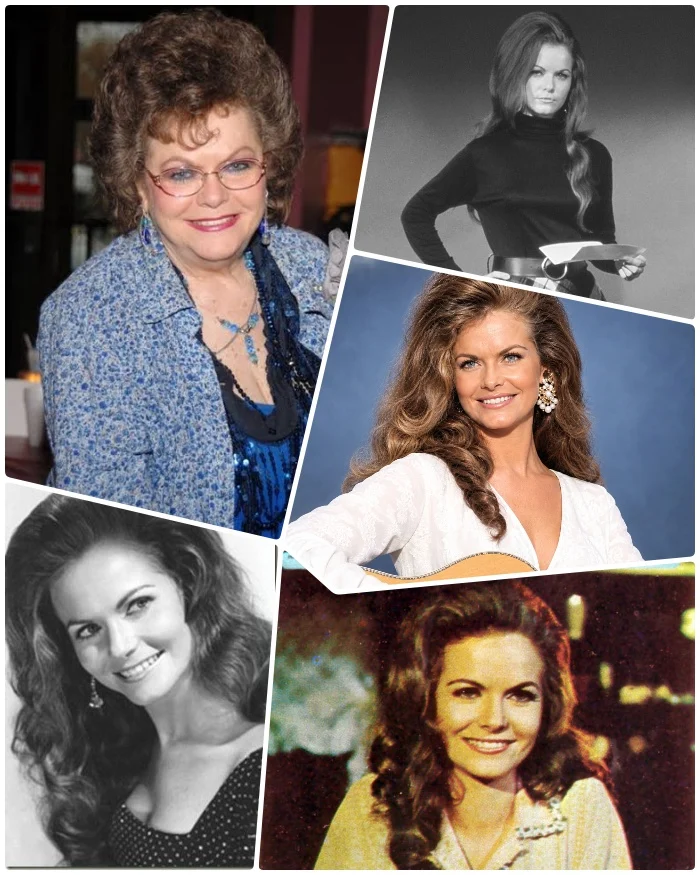
She had delivered a six million selling debut for Plantation Records, yet by 1971 Jeannie C. Riley was buying her way out of her contract and signing with MGM Records in a determined effort to leave the miniskirt wearing stage persona behind for good.
That brave decision closed a whirlwind chapter that began at 5 p.m. on July 26, 1968, when twenty two year old Jeanne Carolyn Riley finished her secretarial shift on Music Row in Nashville, walked into the Columbia studio next door, and cut Harper Valley P.T.A. in just fifteen minutes.
She traded packaged stardom for church stages and found her family again.
Long before executives argued over her wardrobe, her dreams had taken root in West Texas. Born October 19, 1945, in Anson, Texas, Jeanne Carolyn Stephenson first stepped up to a microphone on a local country jamboree run by her uncle Johnny Moore. She married her high school sweetheart Mickey Riley straight out of school and welcomed their daughter Kim in January 1966. When Nashville session steel guitarist Weldon Myrick heard a demo tape she had recorded in Texas, he sent a letter encouraging the young couple to move to Tennessee.
Arriving in Nashville with few connections, Mickey took a job pumping gas at a local service station to cover the rent while Jeannie typed correspondence at Passkey Music. Between office shifts, she sang on songwriter demo sessions for a few dozen dollars a track. Former Mercury Records producer Shelby Singleton heard one of her tapes just as songwriter Tom T. Hall brought in a narrative song about a small town widow confronting a hypocritical school board.
During that Friday evening session at Columbia Studios, session leader Jerry Kennedy played a round neck Dobro resonator guitar behind Riley’s crisp Texas phrasing. After the first take, Kennedy paused in concern that his loud and aggressive Dobro fills were overpowering her vocal. Singleton sent word from the control room for Kennedy to play even harder on the second take, which became the released master.
Issued in August 1968, Harper Valley P.T.A. made Riley the first woman in recording history to hold the number one position on both the Billboard Hot 100 and the Hot Country Singles charts with the same song. It won her the Grammy Award for Best Female Country Vocal Performance, the CMA Single of the Year, and a 1969 network television variety special titled Harper Valley U.S.A.
For a woman raised in a conservative Texas household, the commercial image built around that single record quickly grew suffocating. Plantation Records required her to appear on television and concert stages in miniskirts and go go boots to mirror the fictional widow in Hall’s song. Singleton kept feeding her satirical story songs about small town hypocrisy, including The Girl Most Likely and There Never Was a Time, while she asked to record traditional country ballads.
The sudden transition from typing pool to relentless national touring fractured her life at home. In 1970, two years after they had relied on a gas station paycheck to stay afloat in Nashville, Jeannie and Mickey divorced.
Still under contract to Plantation into early 1971, she scored major country hits with Country Girl and Oh, Singer, along with the top ten single Good Enough to Be Your Wife. Seeking control over her material and public image, she parted ways with Singleton’s label later in 1971 and moved to MGM Records.
At MGM between 1971 and 1973, Riley worked to establish herself as a straight country vocalist, placing songs like Houston Blues, Give Myself a Party, and Good Morning Country Rain on the charts. She signed with Mercury Records in 1974, releasing singles such as Missouri and Plain Vanilla, before recording briefly for Warner Bros. and Vanguard Records by mid decade. Even without the mandatory miniskirts of her Plantation years, the grind of secular touring and promotion left her isolated.
A spiritual turning point in the mid 1970s reshaped both her music and her private life. After becoming a born again Christian, Riley stepped away from the commercial country market altogether to focus on gospel music and ministry, later chronicling that journey in her autobiography titled From Harper Valley to the Mountain Top.
Trading secular nightclubs and network soundstages for church sanctuaries removed the pressures that had divided her family six years earlier. In 1976, Jeannie and Mickey Riley remarried, beginning a second chapter that lasted thirty eight years until Mickey’s passing in 2014, before she eventually moved back home to Anson, Texas, where she had first sung on her uncle’s stage.