
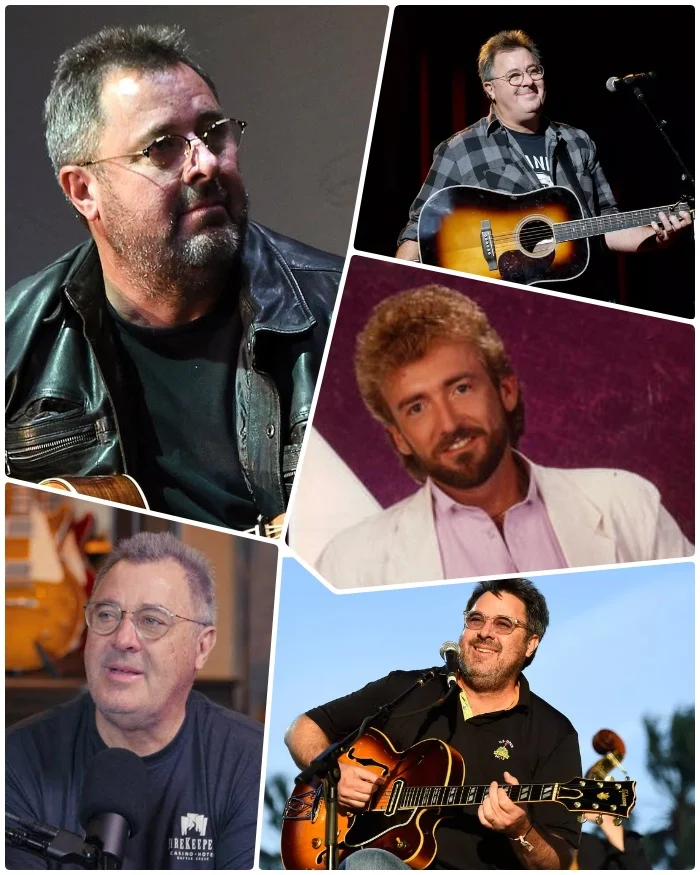
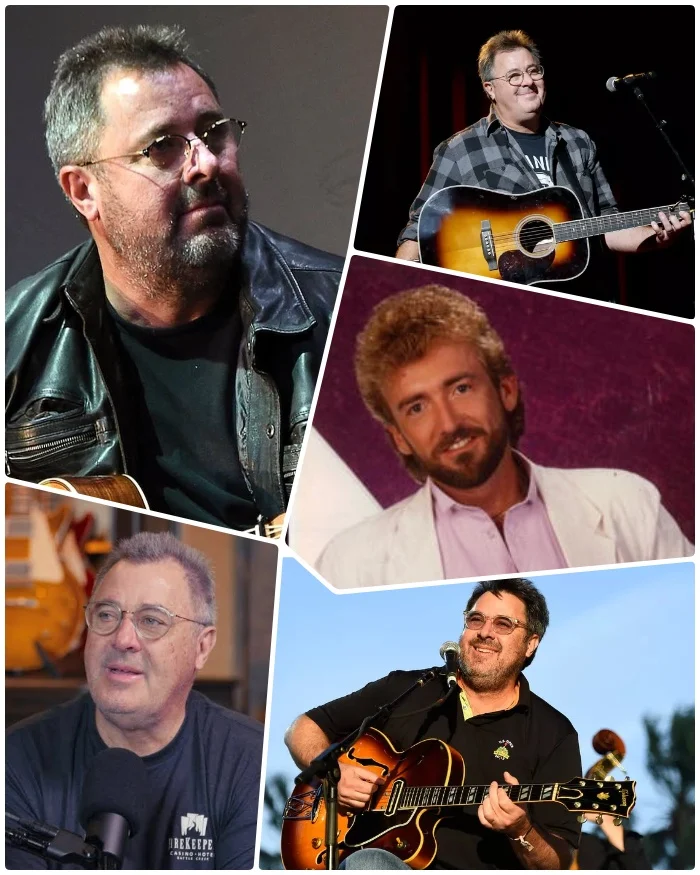
He closed the dressing room door at the Grand Ole Opry, fell to his knees, and wept until there were no tears left, knowing it was the only way he could stand on that stage and sing the finished song without his voice giving out.
That private prayer sat at the heart of Go Rest High on That Mountain, the ballad Vince Gill carried for years before he walked into a Nashville studio with producer Tony Brown in 1994 and gathered Ricky Skaggs and Patty Loveless around one microphone to sing harmony for two men who were no longer alive.
The story had begun five years earlier on May 9, 1989, when thirty four year old country singer Keith Whitley died of acute alcohol poisoning at his home near Nashville. Shaken by the loss of his friend and fellow bluegrass veteran, Gill wrote a few opening lines and then put the unfinished draft away in a drawer, unable to take it any further.
For Skaggs and Loveless, Whitley’s death carried deep roots in eastern Kentucky. As teenagers in the late 1960s, Skaggs and Whitley had formed a tribute duo modeled after the Stanley Brothers before Ralph Stanley heard them in a club and recruited both boys into his Clinch Mountain Boys band. Loveless, raised in that same eastern Kentucky coal country, had toured alongside Whitley early in her career and regarded him as an older brother.
The lines written for Whitley stayed unfinished for four years until tragedy reached Gill’s own family in Oklahoma. In the autumn of 1993, his fifty seven year old half brother Bob Gill died of a heart attack at home, a quiet ending to a life forever changed in 1971.
A severe automobile accident that year had left Bob in a coma for three months. He woke to permanent brain damage and severe memory loss, and in the years after the crash his wife and children left. For the next two decades he lived alone and could not keep steady work, and because he was by himself, two days passed after his heart attack before his regular golfing partners realized he had missed his tee time and went to his house to check on him.
He wept until he had no tears left so he could make it through the performance without breaking down.
After returning from Oklahoma and his brother’s funeral, Gill pulled out the 1989 manuscript he had started for Whitley and wrote the second verse for Bob. Only after that dressing room moment at the Opry could he sing the completed ballad in public for the first time.
During the 1994 sessions for his MCA album When Love Finds You, Gill and Brown kept the arrangement spare and tender, building the track around acoustic guitar, steel guitar, and strings. Skaggs offered the high tenor line he had honed singing mountain gospel with Whitley in their youth, while Loveless anchored the lower harmony, giving the chorus the feeling of old friends carrying one another through loss.
MCA Records first released five other singles from When Love Finds You over the course of a year and held this ballad back until country radio programmers began playing the album cut on their own. Officially issued as the album’s sixth single in August 1995, it climbed into the Billboard country top fifteen and became one of the most requested funeral songs in America.
In 1996 the Country Music Association named it Song of the Year, and at the 1997 Grammy Awards it won Best Country Song and Best Male Country Vocal Performance. Over the next two decades Gill was called again and again to sing it at memorial services across Nashville, including the May 2013 funeral of George Jones at the Grand Ole Opry House, where he stood beside Loveless near Jones’s casket and broke down in tears mid verse while she carried the vocal alone for several measures until he could return to the microphone.
For twenty five years after that 1994 studio session, Gill never changed the two verse structure he had written for Whitley and Bob. That changed in 2019 during a residency at Nashville’s historic Ryman Auditorium, when he stepped forward with an acoustic guitar and introduced a newly written third verse. Framed as a final answer at the end of a believer’s earthly life, that short closing verse completed an arc begun thirty years earlier and brought the song back to the wooden Ryman stage, where his dressing room prayer for his brother had first met an audience.