
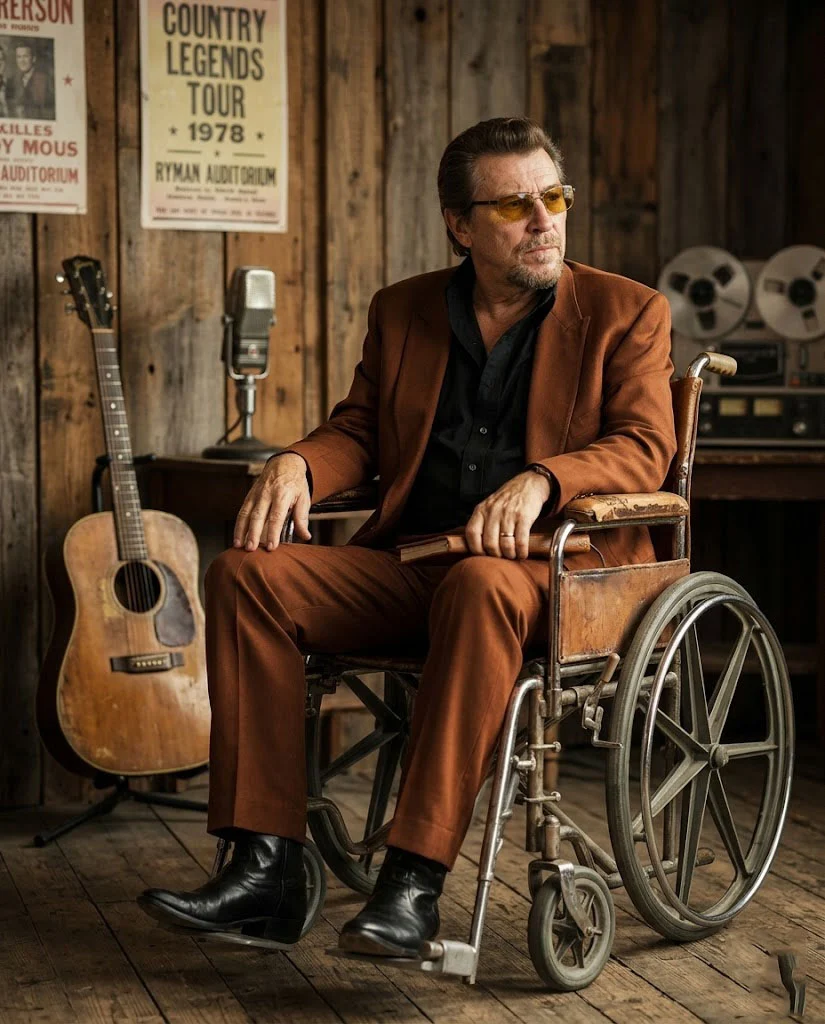
Some pain is simply too deep for applause to fix. When the Country Music Hall of Fame finally called in 2001, Waylon Jennings did not show up. He sent his son Shooter Jennings instead. A year later, in February 2002 and exactly forty three years after the winter night that changed everything, he died quietly in his sleep at home in Arizona at age 64.
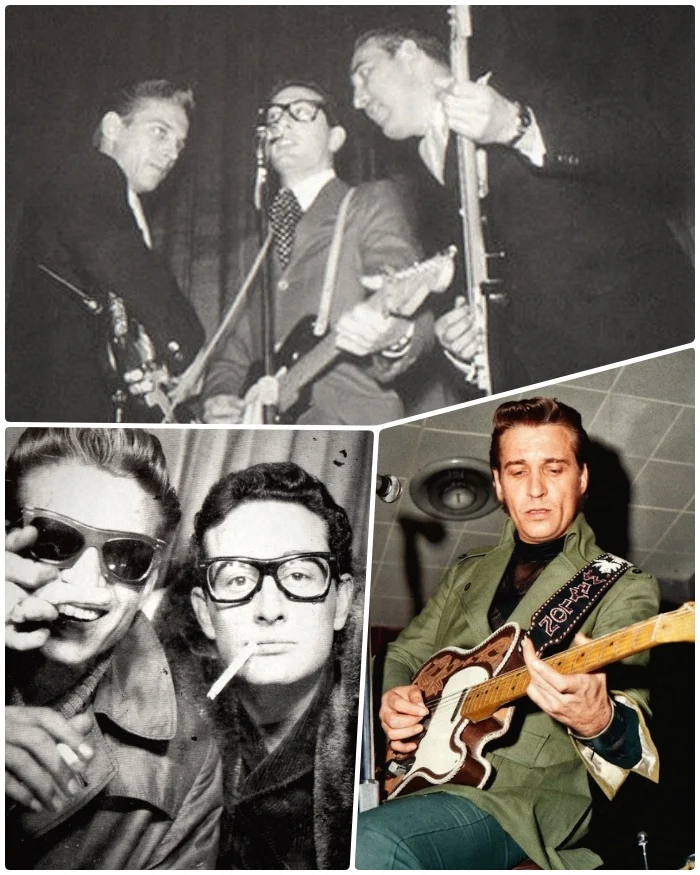
To understand that absence, you have to return to a freezing night in Iowa and a tired joke between friends that was never meant to carry any weight at all. Buddy Holly laughed about his young bass player freezing on the old tour bus. Jennings grinned and fired back without thinking.
I hope your ol’ plane crashes
Hours later the plane went down. Buddy Holly was dead and Ritchie Valens was dead and the Big Bopper was dead. Twenty one year old Waylon Jennings was left standing in the cold with words he could never take back, and that single moment followed him quietly for the rest of his life like a shadow learning his name.
On February 3, 1959, the Winter Dance Party tour had already turned miserable. The buses barely worked in the Iowa winter and the musicians were exhausted and freezing and sick. A small charter plane was arranged after the show in Clear Lake, and Jennings originally held a seat on it.
When the Big Bopper came down with the flu, Jennings gave that seat away without hesitation. It felt like a simple kindness at the time and something entirely ordinary. Then came the joke and then came the crash, and suddenly survival itself became complicated.
The Guilt That Never Left The Room
People now tell the story as country music folklore and as a tragic twist before the rise of an outlaw legend. For Jennings it was never mythology. It was memory. For decades afterward he admitted the guilt stayed with him, not only because he survived, but because the last words he ever spoke to Buddy Holly became impossible to separate from what happened next.
That kind of pain does not usually explode outward. It settles inward. He carried it onto stages across America and into hotel rooms after shows and into years blurred by pills and cocaine and exhaustion and restless nights when sleep came harder than applause ever did. Perhaps that was part of why his voice eventually sounded so weathered and defiant, like someone who trusted truth more than comfort.
The Outlaw Who Never Stopped Running
By the 1970s, Jennings had become one of the defining rebels in country music. Alongside Willie Nelson and Johnny Cash and Kris Kristofferson, he helped reshape Nashville through the outlaw movement with rougher songs and harder honesty and far less polish. The black hat became iconic and so did the stare and so did the voice that sounded scraped directly from experience itself.
He recorded sixteen No. 1 hits and lived enough chaos for several lifetimes with addiction and arrests and health battles and industry fights and endless miles on the road. Yet underneath the outlaw image remained a man still carrying a winter night in Iowa that never fully loosened its grip on him. Success did not erase the guilt and time did not organize it neatly. Sometimes a person simply learns how to carry it better in public.
That tension followed him even into moments that should have felt triumphant. Some people saw stubbornness in his decision to skip his Hall of Fame ceremony and others saw exhaustion, and perhaps both were true, because there are wounds applause cannot touch once they settle deeply enough inside someone.
The Final February
On February 13, 2002, forty three years after the plane crash that changed his life, Jennings died quietly in his sleep. There was no spotlight and no final outlaw speech, just silence finally arriving after decades of noise. The timing felt impossible for many fans to ignore, because February had marked him once and then claimed him too.
Perhaps that is why he still feels larger than ordinary music history. Listeners could hear the cost beneath the rebellion, because his songs never sounded like defiance performed safely from a distance. They sounded lived and painfully lived.
The world remembered the black hat and the outlaw swagger, but somewhere underneath it all was still a twenty one year old boy replaying one careless joke on an Iowa night and wishing he could take back a sentence the road would never let him forget.