
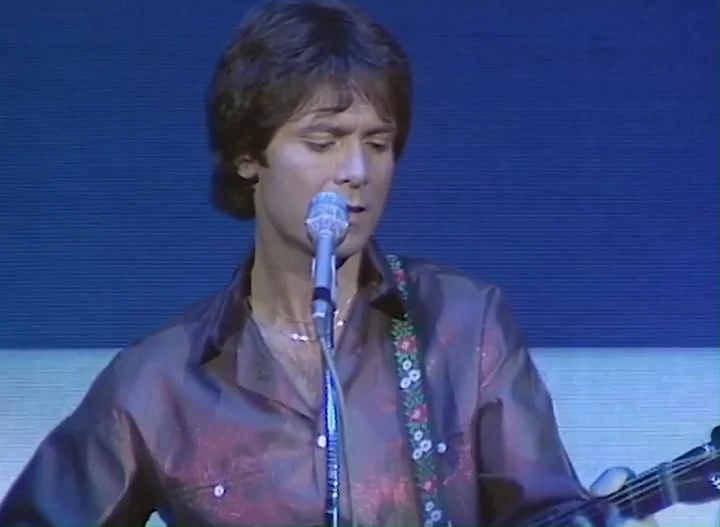
The song begins with a soft swell of strings that feels like a quiet sigh of resignation. Before a single word is sung, the melody already knows the ache of farewell. Then Cliff Richard steps in with his honeyed voice and delivers a line that has haunted listeners for generations The minute you’re gone, I cry. It is a moment of pure musical vulnerability, and more than half a century later, it still stops you cold.
That emotional immediacy is why Cliff Richard remains such a towering figure in pop music. His 1965 recording of “The Minute You’re Gone” is not merely a nostalgic relic. It is a living piece of art that continues to speak to anyone who has ever felt the sting of losing someone they love. The song stands as a powerful reminder that while trends fade and musical styles shift, the raw heartbreak of a solitary human voice can cut through the noise of any era.
“The minute you’re gone, I see / How lonely a man I’ll be.”
Those words, deceptively simple, carry the weight of universal sorrow. They describe a moment we all recognize, that instant when the door closes and the silence becomes unbearable. The lyrics were originally penned by Jimmy Gateley, an American country songwriter, and first recorded by Sonny James in 1963. But it was Richard who transformed the tune into an international anthem of longing. When he cut his version in Nashville, Tennessee, in 1965, he was stepping into unfamiliar territory. It was the first time he had ever recorded in the heart of country music, and the decision changed everything.
At that point, Richard was already a household name in Britain, often dubbed “The British Elvis” for his magnetic stage presence and chart dominance. Yet this particular track did something remarkable. It nudged him outside his comfort zone and broadened his artistic horizons. The Nashville session introduced a subtle country tinge to his pop sound, including the gentle cry of a pedal steel guitar woven beneath the orchestral arrangement. That blend of genres gave the record a distinctive flavor that set it apart from his earlier rock and roll hits.
What makes the song so enduring is not just its history but its craftsmanship. The orchestration is spacious and melancholic, giving Richard all the room he needs to pour his soul into the performance. The soft drumbeats and delicate guitar work never overshadow the voice. Instead, they cradle it, building an atmosphere of tender sorrow that feels both intimate and cinematic. Richard’s vocal delivery is a masterclass in restraint. He does not oversing or reach for dramatic effect. He simply lets the vulnerability of the melody and the honesty of the lyrics do the heavy lifting.
The themes of love and loss are timeless. Every generation experiences the pang of separation, and the song captures that ache with clarity and grace. It does not rely on clever metaphors or elaborate storytelling. It speaks plainly, like a friend confessing a private grief over a quiet drink. That simplicity is its greatest strength. There is no pretense here. Just pure emotion, beautifully expressed.
The commercial success of the track was swift and decisive. In April 1965, it climbed to the top of the UK Singles Chart, securing Richard’s eighth number one single and cementing his legacy as a dominant force in pop. The achievement was especially meaningful because it proved he could evolve without losing the audience that had grown up with him. His willingness to embrace a new sound opened doors not only for himself but also for the wider popularity of country-inflected pop music in Britain.
The song’s appeal did not stop at the borders of the UK. It found eager ears in several international markets, extending Richard’s reach across the globe. Over the years, “The Minute You’re Gone” has remained a constant presence in his discography, appearing in countless compilations and greatest hits collections. For fans, it is a treasured favorite. For casual listeners, it is a gateway to understanding why Richard’s career has endured for so many decades.
Today, in an age of fleeting viral moments and algorithm-driven playlists, the song feels almost radical in its quiet confidence. There is no gimmick. No trend-chasing. Just a well-crafted melody, an honest lyric, and a singer who understands the weight of every word. That is the recipe for immortality in music. And it is why this particular ballad still resonates so deeply, even in a world that sounds nothing like 1965.
To listen to “The Minute You’re Gone” now is to be transported to a time when songs treasured emotion over spectacle. But it is also to feel something entirely contemporary. The ache of missing someone is not bound by era. That ache is eternal. And as long as there are hearts that break, there will be a need for songs like this one. Cliff Richard did not just record a hit. He gave voice to a feeling that will never go out of style.
In the end, the legacy of this piece lies in its ability to make us feel less alone in our sorrow. It reminds us that heartache has always been a part of the human story. And it shows us that a beautiful song, sung with sincerity, can be a reliable companion in our darkest moments. That is why it matters. That is why it lasts.