
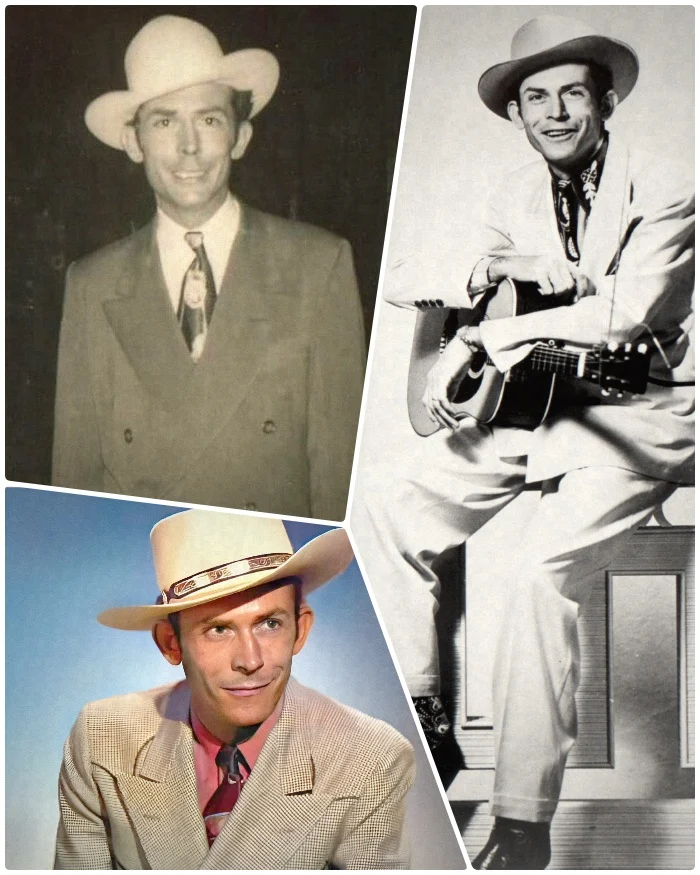
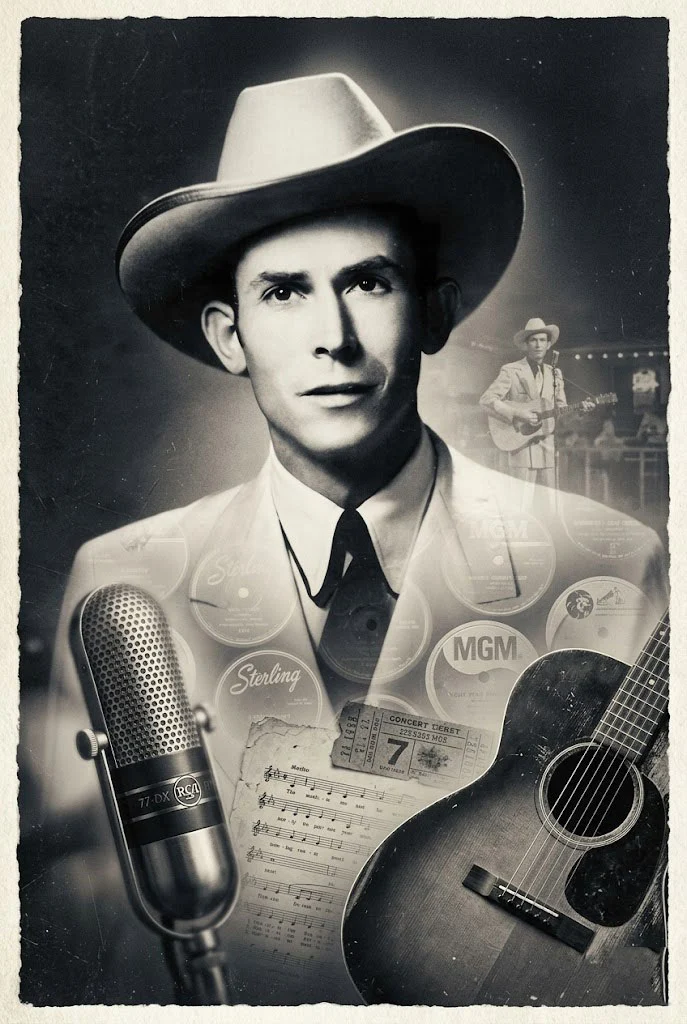
He poured his dying breath into a microphone to record an anthem of betrayal, never knowing millions would eventually sing his pain back to him.
In September 1952, Hank Williams entered a Nashville recording studio to lay down what would become his defining masterpiece. Standing alone before the mic, he captured a pure, unvarnished expression of heartbreak. Yet, the young music legend would not live long enough to witness the profound impact of his creation.
Just a few months later, on New Year Day 1953, the twenty-nine-year-old icon passed away quietly in the backseat of a Cadillac. He left behind a legacy that fundamentally transformed American country music, having captured the heavy realities of human sorrow.
THE GHOST IN THE PASSENGER SEAT
His greatest work did not originate in a formal writing room. It was born on a quiet highway as Hank tried to navigate the wreckage of his shattered marriage to Audrey, the love of his life who had inflicted his deepest wounds. With his new fiancée seated beside him, his mind refused to move forward.
Gazing through the windshield at the blurring pavement, he uttered the words that changed history.
Audrey has a cheatin heart
A MASTERPIECE BORN IN MOTION
Right there inside the moving vehicle, the legendary lyrics took shape over the drone of the engine. He translated his raw betrayal into a timeless melody of quiet resignation. When released shortly after his sudden death, Your Cheatin Heart skyrocketed to the top of the charts and became an enduring standard.
He transformed his most devastating personal defeat into a permanent sanctuary for the brokenhearted, leaving his sorrow to echo across generations while he slipped quietly into history.