
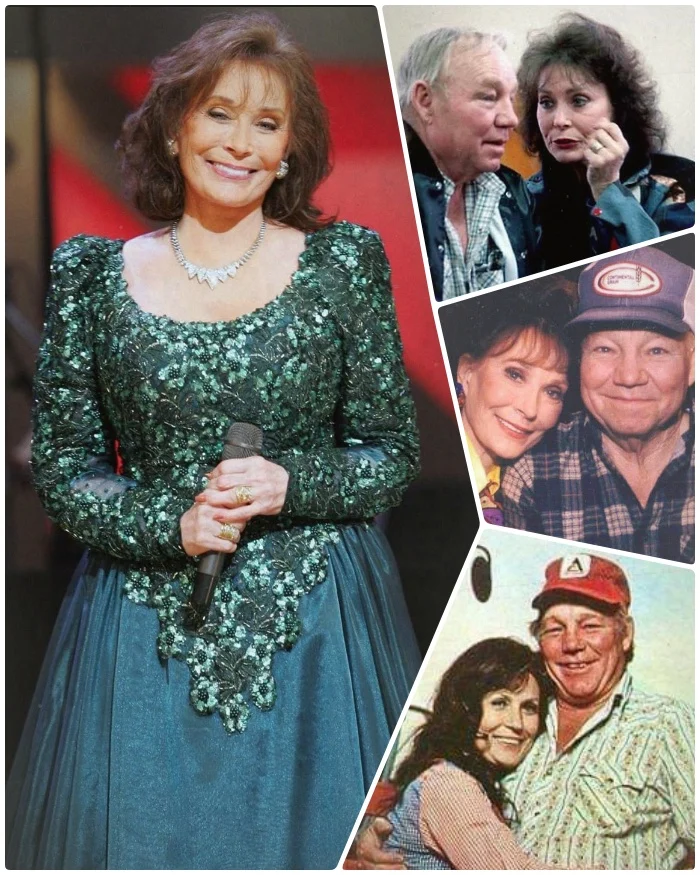
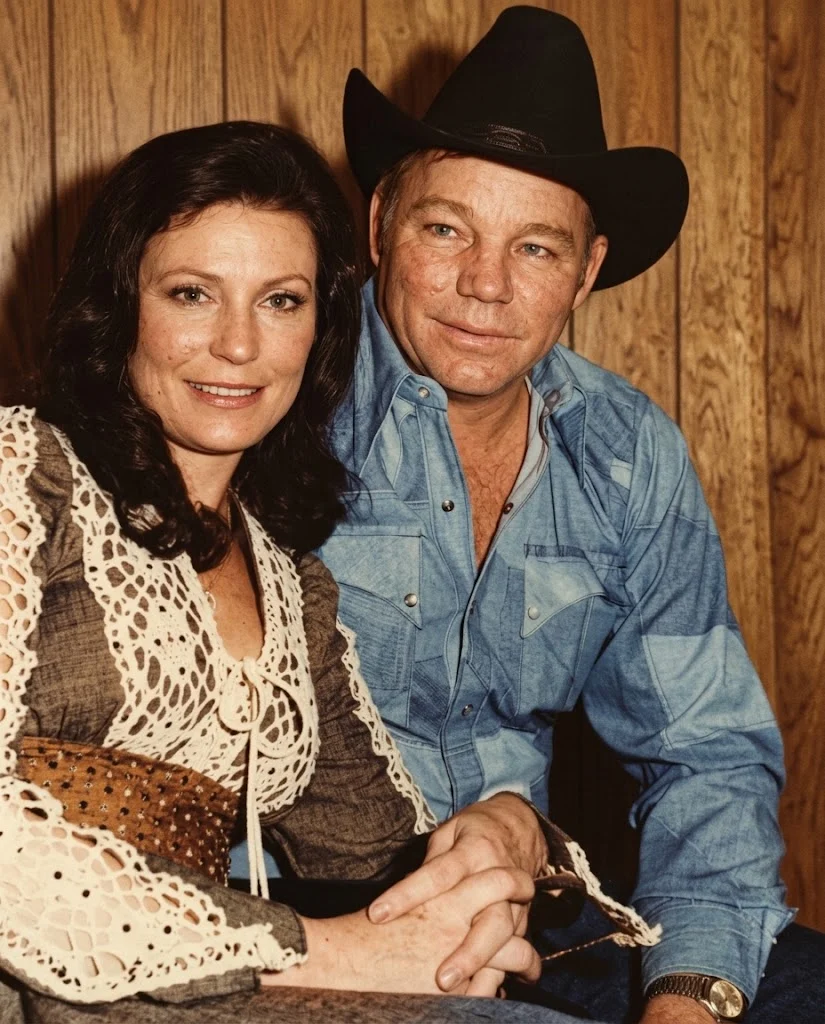
The skillet was still sizzling when Loretta Lynn made her choice. In one furious motion born of years of betrayal and broken promises, she lifted the pan of hot creamed corn and poured it straight over her husband’s head. It was not a polite protest or a quiet tear behind a closed door. It was a declaration that she would no longer swallow her pain in silence.
That kitchen explosion did not come from nowhere. Loretta had married Oliver ‘Doolittle’ Lynn when she was only a teenager, leaving the isolated coal mining community of Butcher Holler in Kentucky for a hard new life in Washington state. Poverty pressed in from every side while endless chores filled her days and her husband’s repeated infidelity shattered her trust again and again.
Yet the young mother refused to become the quiet and long suffering victim the world expected her to be. When arrogance or late night wandering pushed her past her limit, she answered with fierce physical and verbal strength.
I never took a hit without giving two in return.
That fiery defiance refused to stay inside the walls of their kitchen. Instead of hiding the bruises of her turbulent marriage, she poured the shouting matches, the empty whiskey bottles and the betrayals directly into her songwriting. Her pain became her material and her anger became her voice.
The most complicated contradiction in her story was the gratitude she still held for the very man who had caused so much grief. Beneath the anger and the tears stood one undeniable fact. Doo was the man who bought her a $17 Harmony guitar from a Sears catalog. He was the man who saw her raw talent and pushed her onto a local tavern stage when she was too terrified to sing in public.
With that cheap guitar in her hands, she began writing about the reality of being a working class wife. Her groundbreaking hit Don’t Come Home A’ Drinkin’ (With Lovin’ on Your Mind) captured a domestic truth that country music had previously ignored. It told the unapologetic story of a tired and frustrated wife who refused her husband’s late night romantic advances after he had spent the night out drinking.
Well, you thought I’d be waitin’ up when you came home last night. You’d been out with all the boys and you ended up half tight.
Taking those unfiltered words into a Nashville studio in the mid-1960s was an unprecedented gamble. At that time the Nashville establishment was dominated by the polished and heavily orchestrated Nashville Sound. Female country singers were expected to sing polite and submissive ballads about heartbreak or standing by their man.
When Loretta walked into recording sessions with legendary producer Owen Bradley at Decca Records, she brought a completely different energy. Studio executives were initially hesitant about recording such blunt and controversial material. The unwritten rules of Music Row said that female artists could not sing about drinking, domestic violence or marital defiance.
But Bradley recognized the undeniable authenticity in her voice and allowed her to record the tracks exactly as she had lived them. Those specific sessions in Bradley’s Barn broke the mold. When songs like Fist City and Don’t Come Home A’ Drinkin’ hit the radio, they did not just climb the charts. They shattered the industry’s conservative standards.
Radio programmers and label executives quickly realized that working class women across America were buying the records by the thousands. Loretta forced the establishment to accept that female artists could be commercially successful while singing about the harsh and unvarnished realities of modern marriage.
By refusing to sanitize her life for the studio microphones, she unintentionally became a national voice for millions of women who were silently enduring the exact same hardships. She gave them anthems of defiance and survival when the world expected them to simply endure.
Loretta Lynn built an immortal and historic legacy not by escaping her darkest struggles but by putting them on a vinyl record for everyone to hear. The revolution of female independence in country music did not begin in a corporate boardroom. It began with a $17 guitar, a turbulent marriage and a woman who decided she had finally had enough.