
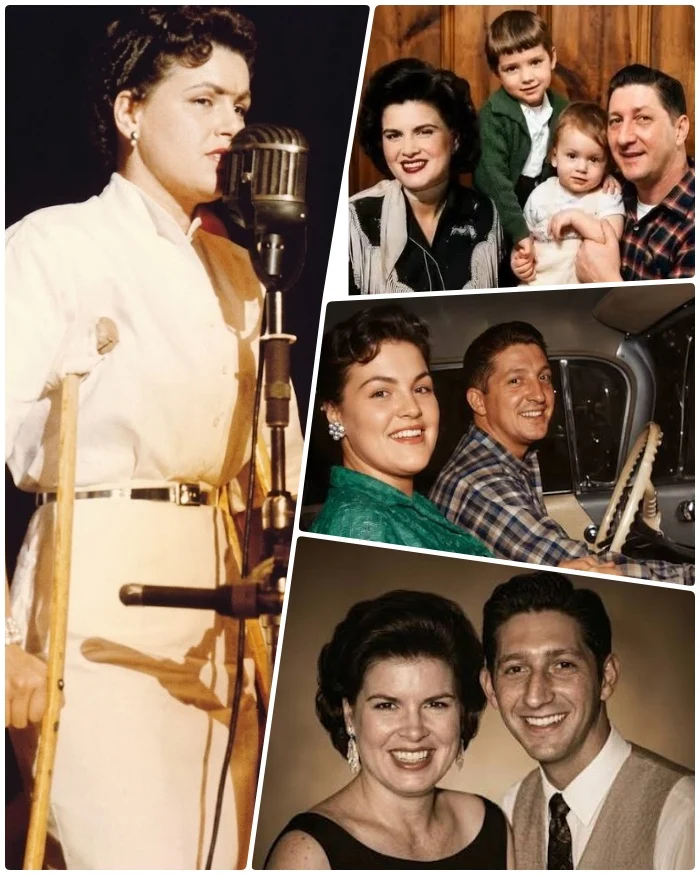
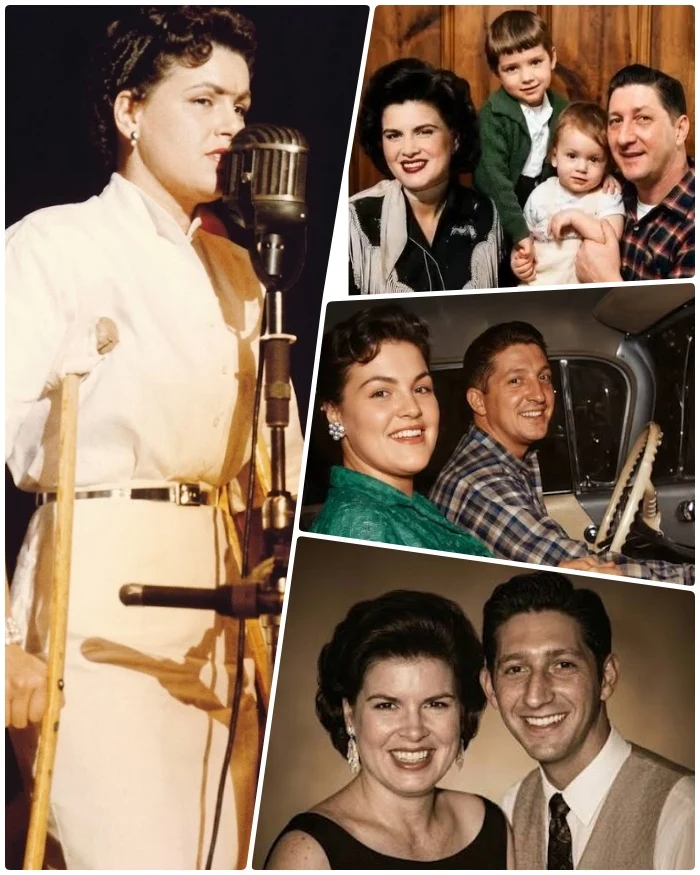
She could barely draw a deep breath without pain shooting through her ribs, yet when Patsy Cline stepped up to the microphone she delivered a performance so restrained and so aching that it would outlive her.
That single take vocal, laid down over a band track recorded days earlier, became Crazy, the Willie Nelson ballad that turned a wounded singer on wooden crutches into a timeless voice.
Her voice did not overpower the song. It carried it, gently and brokenly, the way only someone who had survived could.
Nine weeks before that August night, on June 14 1961, Cline had been riding along Old Hickory Boulevard in Madison, Tennessee, in an Oldsmobile driven by her brother Sam Hensley. They were on a simple errand to buy fabric for clothes she planned to sew herself when a car struck them head-on at high speed.
The impact hurled her through the windshield. It broke her wrist, dislocated her hip, bruised her ribs and left a deep jagged gash across her forehead. At the crash site, even as she bled, she urged ambulance attendants to help the passengers in the other car first, where two people had died.
For more than a month she lay in traction at Nashville General Hospital. Her husband Charlie Dick took leave from his printing-shop job and left their two young children with relatives so he could stay beside her bed. Friends Dottie West, Loretta Lynn and June Carter came to the ward and helped wash tiny shards of windshield glass from her hair.
Dick also tried to calm her fear about the heavy scarring on her forehead, scars she would later hide beneath bangs and headbands. He brought a small radio into her room so she could hear her earlier single I Fall to Pieces climb to number one on the Billboard country chart that summer.
With I Fall to Pieces topping the chart in August, producer Owen Bradley booked four summer sessions at his Quonset Hut studio at 804 16th Avenue South to finish the album Patsy Cline Showcase. Still leaning on crutches after her discharge, Cline returned to the microphone on the afternoon of August 17 and cut four album tracks, including San Antonio Rose and True Love.
For her next single, songwriter Hank Cochran and Dick played her a demonstration tape of Crazy, written by a struggling Texas songwriter named Willie Nelson. Dick had first heard the tune on the jukebox at Tootsie’s Orchid Lounge, and Cochran drove Nelson out to the couple’s house one night so the writer could teach her the song in person.
Cline first resisted Nelson’s demo because he sang the lines in an almost spoken cadence that drifted ahead of and behind the beat. She also hoped to record another Nelson ballad, Funny How Time Slips Away, during the August sessions, although Billy Walker’s June recording of that song was already climbing the country charts.
On the evening of Monday August 21 1961, at seven fifteen in the evening, the 28-year-old singer walked on wooden crutches into Nashville’s Bradley Film and Recording Studio to try Crazy. Bradley had gathered his core Nashville session crew under engineer Selby Coffeen. Grady Martin directed the band from the studio floor on electric lead guitar, alongside Harold Bradley on six-string electric bass, Bob Moore on upright bass, Walter Haynes on steel guitar, Randy Hughes on acoustic guitar, Buddy Harman on drums and The Jordanaires on harmony vocals.
Working without headphones or written musical scores, Bradley sat behind a small Hammond organ while pianists Floyd Cramer and Hargus Pig Robbins shaped the keyboard arrangement. Together they slowed Nelson’s halting demo into a smooth pop-country ballad transposed into a comfortable key for Cline’s contralto.
In an era when Nashville sessions routinely produced four finished masters in three hours, Cline spent four straight hours trying to get through the song. Supported by her crutches, she felt sharp pain in her healing ribs every time she drew the deep breath needed to reach the high notes.
Before calling a halt at eleven fifteen at night, Bradley had the musicians and The Jordanaires record a clean master of the instrumental and vocal backing track without her. Cline came back on the afternoons of August 24 and August 25 to cut eight less demanding album numbers, including the single’s flip side, the Sammy Masters song Who Can I Count On?
Once her bruised ribs had rested, Cline walked back into Bradley’s studio to overdub her voice onto the August 21 band tape. Rather than holding out every long note at full volume, she paced her breathing around her rib injury and sang the entire lead vocal in a single take.
She did not sing past the pain. She sang through it, and that restraint made the song unforgettable.
Decca Records released Crazy on October 16 1961, a month before issuing the Patsy Cline Showcase album. The single rose to number two on the Billboard country chart and number nine on the pop Hot 100, becoming the highest-charting crossover hit of the two years she had left before March 1963.
Two months after Charlie Dick set a small radio beside her traction bed at Nashville General Hospital, the voice she had recorded in one take over Owen Bradley’s studio tape was playing from jukeboxes across the country.