
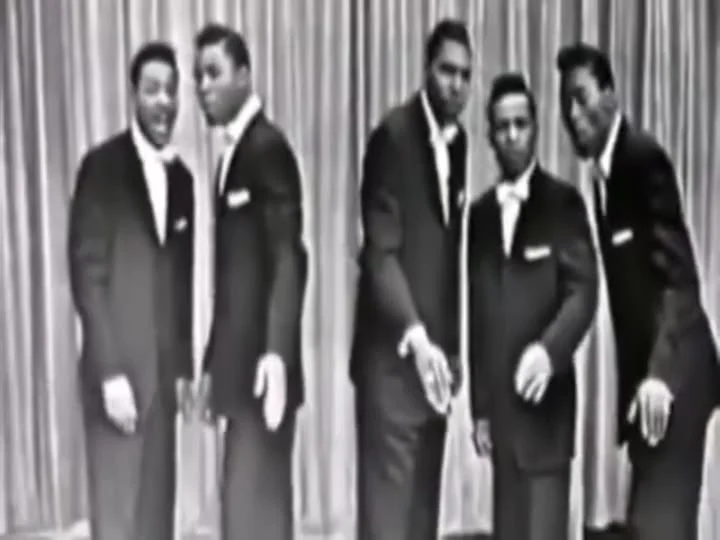
The first time you hear it through the static of an old car radio, something shifts. The crackle and hiss of a dying AM signal give way to voices that seem to float up from another world, untouched by time. It is a sound that asks a question you have asked yourself a hundred times in the dark of night, and it asks with a tenderness that makes the hair on your arms stand up. Could This Be Magic, the 1957 masterwork by The Dubs, arrives not as a song but as a confession, a seven-decade-old whisper that still finds its mark.
The recording itself is an artifact of atmosphere. It carries the ghost of stale coffee and late-night rehearsals, the weight of young men standing together on Harlem street corners, harmonizing against the cold. To hear it outside a pristine digital playlist, to catch it with the grit and warmth of an analog transmission, is to understand that this track is more than music. It is a time capsule, a four-minute passage into the moment when doo wop reached its most vulnerable and exalted expression.
The Dubs were born from the collision of two earlier groups, The Five Wings and The Scale-Tones, and they found their center in the voice of lead tenor Richard Blandon. His voice carries a vulnerability that feels almost unbearable, cracking just slightly on the highest notes, as if the emotion itself is breaking through the technique. Behind him, the harmonies of Cleveland Still, Billy Carlisle, James Miller, and Tommy Grate form a velvet cushion, a slow-breathing instrument that rises and falls with impeccable control. This is not a song performed by five individuals. It is a single, aching voice speaking through five throats.
The arrangement itself is a lesson in restraint. There is no orchestral swell, no dramatic flourish. A walking bass line holds the floor, steady and unhurried. The piano plays sparse chords, full of air and sorrow, while a chime-like guitar picks high, arpeggiated notes that flash like brief moments of hope. The rhythm section whispers, brushes on drums, a hush that frames the vocal drama. Every element is in service of the question at the heart of the song: Could this be magic, or is this really a lie?
That question is the song’s thesis and its gift. It captures the fragile moment when desire meets doubt, when the possibility of happiness feels too good to be true. The lyrics, penned by Richard Blandon with Hiram Johnson, avoid the melodrama of teenage pop and offer instead a grown-up kind of uncertainty. It is the sound of stepping onto a cloud that might be a mirage, the terror of believing in something real. This emotional landscape has not aged a day. Listen today on a pair of studio headphones, and the subtleties of the vocal blending are startling. You can feel the five men leaning into a single, unified tone, committed to the ache.
“The magic of this song lies not in a grand gesture, but in its perfect, agonizing calibration of doubt and desire.”
The legacy of Could This Be Magic extends far beyond its modest chart position, which reportedly peaked in the low twenties on the Billboard Pop chart in August 1957. It became a cornerstone of every serious doo wop compilation, a touchstone for vocal groups that followed. Its influence is heard in the arrangements of The Five Satins, Little Anthony and the Imperials, and The Flamingos, groups that understood how minimal instrumentation and maximum vocal skill could achieve a depth that big budgets often missed. This is vintage R&B at its most exposed, a song that demands to be cherished.
To listen again, truly listen, is an act of historical and emotional recovery. It invites us to stop, to breathe, and to consider the magic unfolding in our own lives, however transient it may be. The question remains unanswered, suspended in the air like the last note of a harmony that fades into silence. And that, perhaps, is the magic itself.
Further listening for those who wish to stay in this world:
The Five Satins – In the Still of the Night (1956): The same late-night vulnerability and iconic close-harmony arrangement that defined an era.
Little Anthony and the Imperials – Tears on My Pillow (1958): A soaring, emotionally intense lead tenor performance against polished group harmonies.
The Flamingos – I Only Have Eyes for You (1959): An ethereal ballad that stretches doo wop into pure vocal artistry.
The Skyliners – Since I Don’t Have You (1959): A dramatic, orchestrated ballad that retains the heartbreak while embracing formal arrangement.
The Moonglows – Ten Commandments of Love (1958): A slow, deep, and sincere ballad showcasing rich bass vocal leads and dignified performance.