
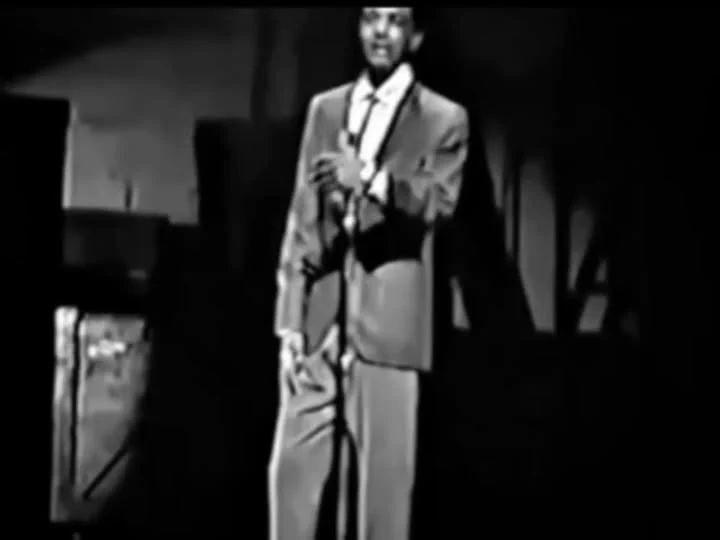
There is a moment when the quietest voice becomes the loudest truth. It happens on a lonely stretch of highway at midnight, when the radio dial lands on a forgotten frequency and a string section unfurls like a velvet curtain. The song is Johnny Mathis singing My Love For You, and in that instant, the mundane world falls away. This is not a song that shouts for attention. It waits. It breathes. And when it finally arrives, it settles into the bones like a promise made long ago.
The year is 1960. Rock and roll is the king of noise, but Mathis rules a different kingdom. He is the voice of the quiet revolution, the one who speaks to the hearts that still crave elegance and sincerity. Five years into his reign at Columbia Records, under the guidance of Mitch Miller, he has built a fortress of lush ballads. Miller, often remembered for his sing-along hits, found in Mathis a canvas for orchestral grandeur. With arrangers like Glenn Osser, they crafted soundtracks for slow dances and late-night confessions.
My Love For You arrived as a single in 1960, later finding its home on the 1961 compilation Portrait of Johnny Mathis. It never climbed the charts like Chances Are or Misty barely entering the top 50. But that modest performance is perhaps its greatest credential. This is music designed not for fleeting glory but for enduring intimacy.
His voice never seeks to overpower the material it simply perfects it.
The arrangement by Glenn Osser is a lesson in controlled opulence. It begins with a hesitant whisper of strings, the piano acting as a sensitive confidante rather than a rhythmic engine. The rhythm section offers only gentle support, setting a stage for closeness. When Mathis enters, his voice is a breath shared across a candlelit table. He sings of love deep and endless as the sea, with a vibrato that never decorates but deepens. The microphone capture is impossibly near, making every listener feel like the sole recipient of a secret.
As the song unfolds, the orchestra swells. The strings rise in a magnificent wave, but Mathis holds back. He does not plead. He states a natural truth. Muted trumpets and warm trombones enter the chorus, adding a quiet gravity. An acoustic guitar pulses beneath the surface, barely felt but essential. This is a ceremonial declaration, not a quick dance. It demands a premium audio system to catch every whispered nuance every distinct timbre nestled in the sonic field.
The lyrics by Abner Silver and Sid Wayne are straightforward vows of devotion. Mathis elevates them beyond cliché by focusing on narrative the heart that keeps beating for one person alone, the love that is ever faithful and ever true. The song bypasses infatuation and lands on enduring commitment. It is the soundtrack to a quiet decision, a realization that love can be as strong and mighty as a tree.
The middle section offers a dynamic shift a moment of lightness before the final return. Mathis allows the instrumental break to breathe, the orchestration fluid and almost conversational. When the vocal returns, the emotional tension peaks with restraint. A younger singer might have pushed for dramatic crescendo, but Mathis understands that power lies in sincerity. He ends on a sustained warm note, the orchestra fading gently, leaving behind a profound sense of closure.
For students of the Great American Songbook, My Love For You is essential listening. Vocalists study the masterful breath control and phrasing. Piano students marvel at the elegant understated chord voicings. In an era of fleeting singles, sitting with this track is a quiet act of resistance. It reminds us that some truths of the heart, of craft, of enduring beauty are best delivered with a velvet touch.
If you want to explore more of this romantic world, consider these companion recordings
Misty by Johnny Mathis (1959) offers another quintessential showcase of his vocal control over a classic arrangement
Moon River by Andy Williams (1961) shares the grand orchestral sweep and sophisticated longing
The Very Thought of You by Nat King Cole (1958) provides similarly warm intimate vocal timbre with lush strings
I’ll Never Smile Again by Frank Sinatra (1940) is an earlier template of romantic melancholic vocal pop that Mathis perfected
More by Vic Dana (1964) features a passionate vocal climax with expansive mid-60s orchestration for romantic maximalists
Portrait of My Love by Matt Monro (1960) matches Mathis dedication to vocal polish and dramatic orchestral backdrop