
The calendar marks November 14th as the birthday of Freddie Garrity. Rather than revisiting the high-kicking energy of “I’m Telling You Now,” we delve into a curious later-career track that reveals the man behind the manic grin. This is a song less about chart ambition and more about sheer untethered showmanship, a poignant testament to an enduring spirit that refused to fade.
The track in question is audacious. Freddie and the Dreamers taking on Glenn Miller‘s evergreen swing standard “In the Mood.” On paper this marriage of musical opposites should curdle but in practice it captures the zany charm that defined Garrity’s entire career. By the late 1960s the original Dreamers had dissolved. The group known for its frantic stage presence and novelty appeal was effectively over as a charting unit. Garrity the short bespectacled frontman with the perpetually grinning gap-toothed face morphed into an enduring television personality notably on children’s shows like Little Big Time. The music that followed was a glorious occasionally chaotic attempt to bridge the gap between their 1960s fame and the need to entertain a generation now nostalgic for simpler times. The track appears on various compilations reflecting the band’s post-chart reality in the 1970s and beyond often recorded for minor labels catering to the nostalgia circuit far removed from their Columbia EMI heyday.
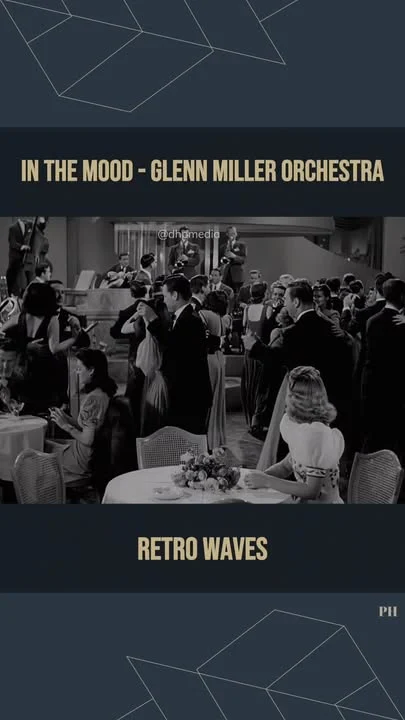
To approach a piece of music as monolithic as “In the Mood” requires either reverence or rebellion. Freddie chose the latter filtering the smooth glamour of the Big Band era through a distinctly British slightly tinny cabaret lens. The original Glenn Miller arrangement is famed for its complex brass-heavy interlocking riffs and the precision of its dynamic control. Freddie’s version is looser, cheekier, and deliberately more scrappy. The instrumentation retains the essential skeleton of the swing classic but substitutes a genuine Big Band sweep with a more economical rock-revival backing. The brass section likely studio musicians has a bright almost synthesized timbre lacking the warm resonance and rich room feel of Miller’s 1940s recordings. The primary riff is faithfully rendered creating that irresistible tension and release through the repetitive descending figure. A central honky-tonk piano line frequently jumps out adding a ragtime flavor that undercuts any attempt at polished professionalism. This deliberate lack of polish is the point. It is a pub singalong version of a ballroom standard.
Garrity’s vocal approach truly separates this recording. Where Big Band leaders are cool detached conductors Freddie is the hyperactive cheerleader. His high-pitched distinctive Mancunian tenor a voice that was always more suited to pure uninhibited novelty pop than serious rock is completely unleashed. He does not merely sing he directs cajoles and interjects with bursts of pure unscripted enthusiasm. You can practically see the sweat dripping under the stage lights. His phrasing is energetic riding over the tightly syncopated rhythm section but he treats the classic melody not as a sacred text but as a playground. He stretches vowels and adds little guitar scrapes of vocal inflection that are pure Garrity. For anyone interested in the technicalities of music contrasting this recording’s informal structure with the highly codified composition found in traditional sheet music offers a fascinating study in performance versus notation. The lead guitar solo when it arrives is brief and biting a distorted simple phrase that sounds less like a jazz improvisation and more like a rockabilly flourish. It is a small sonic nod to their initial Beat roots a quick reminder that this showman came up through the early gritty Manchester clubs.
Freddie’s cover of ‘In The Mood’ is less a tribute to Big Band music and more a gleeful hijacking of its pomp and ceremony.
This tension between the musical structure and the manic execution is the heart of the track’s charm. It perfectly encapsulates Freddie’s post-chart philosophy embrace the absurdity give the audience a good time and never take the spectacle too seriously. The track is built for the cabaret stage demanding a physical response. It is not a piece for quiet reflection on studio headphones it is a song for clapping and inevitably the signature Freddie dance. In a world increasingly stratified by genre and cultural moment this later work from Freddie Garrity reminds us that pure unpretentious fun has a timeless quality. The song like Freddie’s entire persona is an act of defiant simplicity against the shifting tides of rock sophistication. It is an essential link in the chain of British performers who chose warmth and accessibility over cool detachment. The legacy is clear a man whose very presence guaranteed a smile even when repurposing a forty-year-old album staple for a new nostalgic audience.
For those seeking similar musical mischief consider Chubby Checker‘s “Limbo Rock” which shares the same emphasis on novelty dance and unpretentious fun. The Goons‘ “The Ying Tong Song” highlights the British tradition of zany absurd vocal driven humour. Herman’s Hermits‘ “I’m Henry the Eighth I Am” is another British Invasion act that prioritized novelty and simple infectious singalongs. The Temperance Seven‘s “Pasadena” successfully revived and played with early 20th century jazz dance band aesthetics. Bill Haley and His Comets‘ “Rock Around the Clock” features that driving prominent saxophone led rhythm that translates swing energy to early rock. Little Richard‘s “Good Golly Miss Molly” captures the raw uninhibited vocal energy and the slightly frenetic manic sense of fun embodied by Garrity. To witness some of the stage antics that defined Freddie Garrity’s career look for performances of his biggest hits the life and death of Freddie and the Dreamers remains a testament to pure entertainment.