
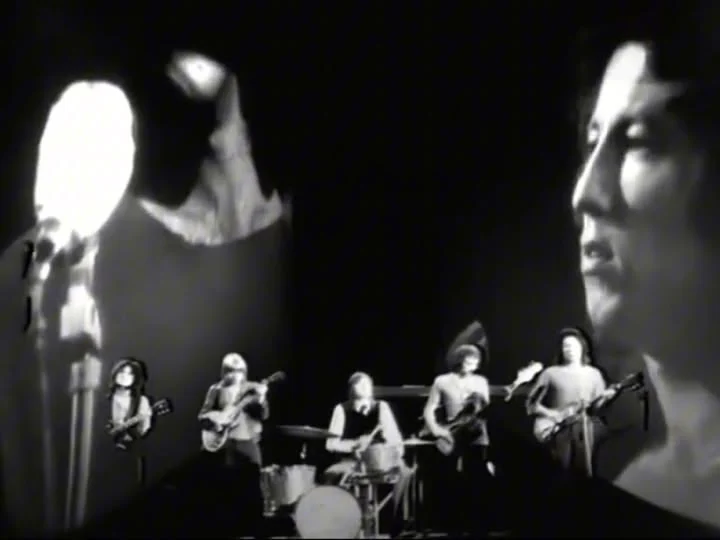
Sometimes the loudest truths arrive in the softest packages. One rainy Sunday afternoon, a song floated through the air from an old turntable, and the world seemed to stop. It was a piece of music so stark that it felt like eavesdropping on a soul stripped bare. That song was Fleetwood Mac’s “Man Of The World,” released in 1969, long before the band became synonymous with California sunshine and tabloid drama. It remains a fragile monument to the brilliance and the eventual tragedy of its creator, Peter Green.
But I just wish I’d never been born.
These words do not belong to the realm of typical rock star angst. They arrive as a quiet confession, an existential shudder from a man who had achieved everything a musician could dream of. Green had inherited the guitar mantle from Eric Clapton in John Mayall’s Bluesbreakers, led Fleetwood Mac to a number one instrumental with “Albatross,” and was hailed as Britain’s most gifted blues guitarist. Yet, “Man Of The World” reveals the hollow core behind the accolades. Released as a standalone single in April 1969, it hit number two on the UK charts, bridging the ethereal grace of “Albatross” and the raw energy of “Oh Well.” It was never placed on a studio album, a fact that only heightens its mystique as a spiritual centerpiece of the early Mac catalogue.
The lineup that created this song is still revered by purists: Peter Green on vocals and lead guitar, Mick Fleetwood on drums, John McVie on bass, and dual guitarists Jeremy Spencer and the recently added Danny Kirwan. Yet the arrangement is anything but a blues-rock jam. It is a masterclass in restraint. Two acoustic guitars intertwine—one plucking a melancholy descending chord progression, the other adding delicate arpeggios that shimmer like light through rain. The production, finalized by engineer Martin Birch after producer Mike Vernon departed due to contractual issues, is sparse. Every fret creak and reverb tail is audible on a premium audio system, creating a sense of vast, empty space.
Green’s vocal is immediate and unadorned, almost conversational. “I could tell you about my life / They say I’m a man of the world.” His voice does not bellow; it whispers. Fleetwood’s drums are brushed cymbals and soft snare taps. McVie’s bass provides a warm, round anchor. The song’s only moment of lightness comes in a brief bridge where Green sings of wishing for a “good woman” to help him find happiness—a flicker of romantic longing against the backdrop of spiritual poverty. Then the gut punch returns: the final chorus, where the line about never being born echoes.
The orchestral strings, added by Birch after Vernon’s departure, deepen the melancholy. They are mixed low, never overwhelming the acoustic skeleton. They swell like a velvet curtain, painting Green’s isolation not as a bad mood but as an inescapable horizon of sadness. This dynamic—the raw acoustic core wrestling with the rising tide of strings—is what makes the track endure. As a retired financial analyst once wrote in a letter, he discovered the song during a period of burnout and played it quietly through studio headphones late at night. Green’s final whispered line, “And I wish I was in love,” felt like a shared secret.
“Man Of The World” marks the aching end of the first great version of Fleetwood Mac. Green left the band in 1970, and his subsequent decades-long battle with mental illness became part of rock’s tragic lore. This song is his final, beautiful wave goodbye—a testament to the power of a songwriter to articulate pain so clearly that it becomes immortal. Listen again, and you might hear the future of rock and roll dissolving into a single, heartbroken sigh.
For those seeking adjacent moods, consider Peter Green’s Fleetwood Mac – “Albatross”, which shares the instrumental restraint and ethereal beauty. The Beatles – “Julia” offers similarly stripped-down acoustic sorrow. Nick Drake – “Northern Sky” captures fragile romantic melancholy with delicate guitar and strings. Badfinger – “Day After Day” presents acoustic power-pop with wistful vocal melody. Traffic – “Dear Mr. Fantasy” blends blues-derived structure with mournful introspection. And Led Zeppelin – “Tangerine” is a quiet acoustic ballad of regret and cinematic tenderness.