
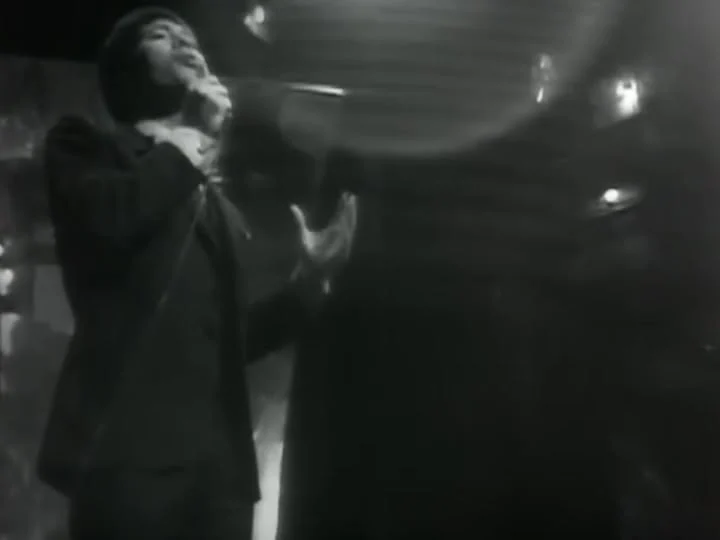
There is a particular kind of silence that arrives after a love has been given entirely and then returned empty. It is not the quiet of peace but the stillness of a world that has stopped making sense. In 1967, Sir Cliff Richard captured that exact moment in sound.
The late nineteen-sixties were a riot of sonic experimentation. Electric guitars screamed, sitars droned, and the air itself seemed to vibrate with the promise of revolution. Yet amidst this cacophony of change, a different kind of statement was being made, one that moved with the unhurried grace of a candlelit ballroom rather than the frenzy of a crowded festival. It came not from a young firebrand but from a seasoned survivor of the British pop scene, a man who understood that some emotions demand not noise but grandeur. Cliff Richard’s All My Love (Solo Tu) was that statement, a meticulously crafted orchestral ballad that sought to break hearts rather than eardrums.
The recording emerged from the hallowed halls of Abbey Road, a product of the EMI machine at its most refined. It was not part of a contemporary album but instead stood alone as a single, later finding its way onto a budget release in 1970 that repackaged his earlier work. This singular status only underscores its importance in Richard’s career arc, marking a deliberate pivot from the rock and roll energy of his youth toward a more sophisticated, continental pop sensibility. The raw edges of the fifties had been polished away, replaced by the smooth, sweeping lines of European romanticism. At the helm of this transformation was producer Norrie Paramor, a man whose steady hand had guided Richard through countless sessions and who understood the architecture of a hit as intimately as any conductor knows a symphony.
Paramor, working alongside arranger Bernard Ebbinghouse, took the Italian melody Solo Tu originally performed by Orietta Berti and rebuilt it from the ground up. This was no mere translation but a complete reimagining. Lyricist Peter Callander supplied English words that traced the hollow ache of a devotion that had led nowhere, fitting the emotional contours of the music with surgical precision. The result was a piece that felt both deeply personal and universally resonant, a pop song masquerading as a monument.
The opening bars of All My Love announce themselves with deliberate restraint. Double basses thrum in the lower register, a dark sonic carpet that prepares the listener for what follows. Then the string section enters, cascading like water over stone, rich and full. This is sound designed to fill a space, to command attention without demanding it. The tempo moves at a languid andante, unhurried and reflective, perfectly suited to the song’s theme of loss examined in the quiet hours. The rhythm section remains remarkably subdued, providing a foundation rather than a spotlight. Drums and bass and a softly present piano anchor the harmonic structure while the orchestra breathes freely above them. Listen carefully and you can detect the subtle bloom of Abbey Road’s signature reverb, the sense of a room large enough to hold the weight of grief.
Ebbinghouse’s arrangement is the true virtuoso performance here. The violins do not merely swell; they weep, executing rapid tremolos in the transitions that telegraph the emotional intensity of the chorus before a single word is sung. Lower brass and woodwinds weave counter-melodies that circle Richard’s vocal like half-forgotten memories, adding layers of texture that reward repeated listening. This is an arrangement that demonstrates sorrow rather than explaining it, a rare skill in any era of pop music. It is worth noting the absence of The Shadows, Richard’s longtime companions, in their usual instrumental roles. If a guitar appears at all, it is likely a gentle acoustic fingerpicking somewhere in the background, a whisper of texture rather than the electric flair of Hank Marvin. The focus is singular, directed entirely at the voice and the cinematic backdrop that supports it. This was a commercial bet that paid off handsomely, earning strong chart placements across Europe and beyond.
Richard’s vocal performance deserves careful study. He commands an exceptional clarity of tone, a tenor’s precision that he deploys with controlled restraint. The verses are delivered with an almost conversational intimacy, a man trying to maintain composure while his world collapses around him. Then comes the chorus, and he releases the full force of his power on the soaring high notes: All my love came to nothing at all, my love. When I woke up to find, you were no longer mine. This contrast between gentle verse and cathartic chorus is the engine that drives the song’s emotional narrative. It mirrors the human experience of grief itself, the struggle to hold oneself together until the pressure becomes too great and the flood finally comes.
The song is built not merely with notes and chords but with the quiet dignity of a soul preparing to break in the most beautiful way possible.
What gives All My Love its lasting power is not nostalgia but structure. Its theme is timeless, the total investment of self into a love that yields only emptiness. Every generation produces its own heartbreaks and seeks its own soundtracks. Consider the young professional sitting alone in the quiet of late night, scrolling through digital memories on a phone. The week has been managed, appearances maintained, but when this particular melody drifts through studio headphones, the grandeur of the arrangement gives permission for a private sadness long denied. The soaring strings become a substitute for tears that cannot fall in public view. This is what a great ballad does; it builds a container large enough to hold the messiest of feelings.
Or picture a couple driving a long highway at dusk, the landscape blurring past the window. They are not heartbroken, yet the dramatic weight of the song lends gravity to their peaceful shared moment, making their current contentment feel earned, as if they have survived the smaller heartbreaks that Richard sings about. That is the mark of a recording that transcends its era, one that continues to find new contexts and new listeners decades after its creation.
This track is the sonic equivalent of a wide-screen mid-century drama, high in contrast and higher in emotion, utterly unforgettable. While many artists of Richard’s rock and roll generation struggled to adapt to the rapidly shifting tastes of the mid to late sixties, he and Paramor demonstrated a shrewd understanding of market segmentation. They recognized a substantial audience for sophisticated, beautifully rendered pop, particularly music with a romantic European pedigree. This deliberate shift allowed Richard to remain a relevant chart presence through his 1968 Eurovision entry, Congratulations. It was a remarkable cultural balancing act, executed with flawless grace.
For any aspiring musician or serious listener seeking to understand the architecture of the romantic ballad, this recording offers rich material for study. It demonstrates how to deploy the full tonal palette of a large orchestra not as a gimmick but as essential storytelling. The original sheet music for piano may be found, but the true lesson lives in the master recording’s arrangement choices, the marriage of technical skill and emotional instinct that produces popular art of lasting value. All My Love does not shout; it resonates. It is a song for the deep breath after the final word has been spoken, a monument to what we lose when we give everything and receive nothing in return. It deserves to be rediscovered not as a historical curiosity but as a vibrant, breathing meditation on loss and the extraordinary beauty of its expression.
Listening Recommendations
For those who find themselves moved by this track, several contemporary recordings offer similar satisfactions. Engelbert Humperdinck’s The Last Waltz from the same year shares the dramatic waltz-time rhythm and massive orchestral sweep. Tom Jones’ Delilah features an intense narrative vocal over a dynamically rich arrangement. Scott Walker’s Joanna provides deeply felt non-rock delivery with lush string arrangements. Matt Monro’s Born Free offers high-quality vocal performance and cinematic orchestration. And Elvis Presley’s It’s Impossible reflects the same sustained dramatic emotionality against a string-heavy backdrop. Each of these recordings shares DNA with Richard’s masterpiece, a lineage of songs that understand the power of vulnerability dressed in elegance.