
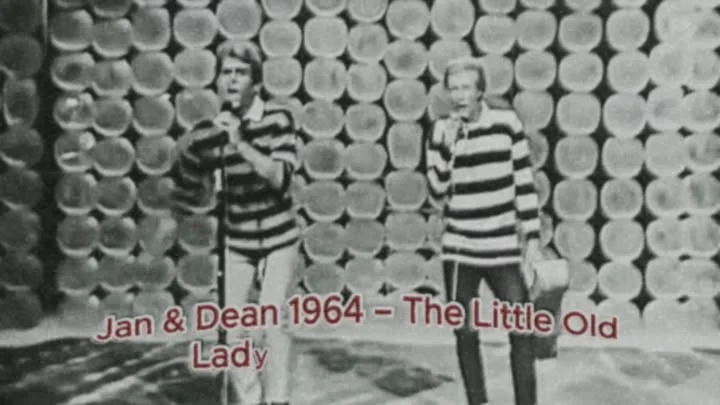
Go Granny go That chant, a roaring exclamation of pure joy, erupts from the speakers and paints a picture so vivid it feels like a movie scene unfolding in real time. The year is 1964. A supercharged Dodge GTO sits at a starting line in the San Gabriel Valley, and behind the wheel is the last person anyone would expect a grandmother with a taste for asphalt and a lead foot. This is the world of Jan & Dean The Little Old Lady from Pasadena, a song that turned a cartoonish image into an American pop classic and cemented its creators as the court jesters of the California drag strip.
The track arrived during a strange, transitional summer for American music. The Beatles had stormed the shores with mop tops and a shriek, threatening to wash away everything that came before. Yet on the West Coast, the sound of surfboards and hot rods was making one last, glorious stand. Jan & Dean, already veterans of the California Sound, unleashed this piece of comic hyperbole a three minute drama of chrome and horsepower that shot to number three on the charts and anchored an album of the same name. It was proof that Jan Berry production genius could still hold its own against the British Invasion, even as the duo stood at the commercial apex of their career.
The Engine Room To achieve that explosive sound, Jan Berry turned to the finest musical machinery Hollywood had to offer The Wrecking Crew. This was no garage rock recording. It was a meticulously arranged session at United Western Recorders, a finely tuned machine. The rhythm section is thunderous and perfectly syncopated, with the legendary pairing of drummers Hal Blaine and Earl Palmer reportedly driving the beat, their combined attack giving the track an almost military precision forward momentum. The bass, held down by Ray Pohlman and Jimmy Bond, is thick and aggressive, a low growl beneath the revving engine of the song’s tempo. The harmonic density is surprisingly rich Leon Russell is credited on piano, providing a bright, honky tonk pulse that doubles the rhythm and adds a playful texture. Multiple guitar players—Tommy Tedesco, Bill Pitman, and Billy Strange—intertwine clean, twangy lines with forceful strum, operating as a tightly rehearsed block of sound supporting the vocalists.
Vocals are where the production truly shines. Jan Berry arrangements were heavily influenced by his close collaboration with Brian Wilson, but Berry’s style here is arguably more polished and punchy. The lead vocal is clear and upfront, layered with multiple backing tracks. The frenetic, soaring falsetto that gives the chorus its manic lift was famously sung by a young P.F. Sloan on this specific recording, adding a distinctive edge. The sound quality, particularly the original mono mix preferred by purists, is remarkably hot and immediate. Even through modern home audio setups, the raw compressed energy of the mid sixties session tape leaps out of the speaker. This compression, a hallmark of Jan Berry production style, gives the music its characteristic driving intensity.
The Little Old Lady From Pasadena isn’t just a novelty hit it’s a brilliant polished showcase of early rock production mastery delivered with a wink and a roar.
The Camp and the Context This song marked the moment Jan & Dean fully embraced their role as comic relief of the California scene. They took the genre’s key tropes fast cars, local settings, teen exuberance and gave them an unexpected hilarious twist. Actress Kathryn Minner, the real life Little Old Lady who later appeared in promotional materials, cemented the song’s status as a cultural phenomenon, leading to a series of commercials for Southern California Dodge Dealers. While The Beach Boys were moving toward the lyrical and orchestral complexity of Pet Sounds, Jan & Dean remained defiantly on the surface, celebrating the joy of the simple, potent moment. They were the court jesters of the drag strip, and this song is their greatest comedy routine.
The sheer audacity of the premise a powerful car belonging to the least likely owner subverts the machismo typically found in drag racing tunes. It reminds us that at its best, the surf and hot rod genre wasn’t just about adrenaline it was about imagination, creating short perfect vignettes of Southern California mythology. For anyone interested in the technical blueprint of this style, available sheet music details the complex rhythmic interplay between multiple guitars, bass, and piano parts, showcasing the true structural sophistication behind the apparent simplicity. It is a masterclass in fusing humor with tightly composed pop.
Listening Recommendations For those who want to ride the same wave, consider these tracks also rooted in the era’s hot rod and surf pop scene. The Rip Chords “Hey Little Cobra” shares the genre and Wrecking Crew personnel. The Beach Boys “I Get Around” offers a direct influence with rapid fire tempo changes and layered vocals. Ronny & The Daytonas “GTO” is a rival chart hit focusing on the car itself. The Surfaris “Wipe Out” delivers instrumental raw power driven by an iconic drum break. Shadows of Knight “Gloria” shares the same raw compressed recording fidelity and driving rhythm section. And The Hondells “Little Honda” rounds out the list with clean production and bright melodic vocals, squarely in the same Liberty Records surf pop orbit.