
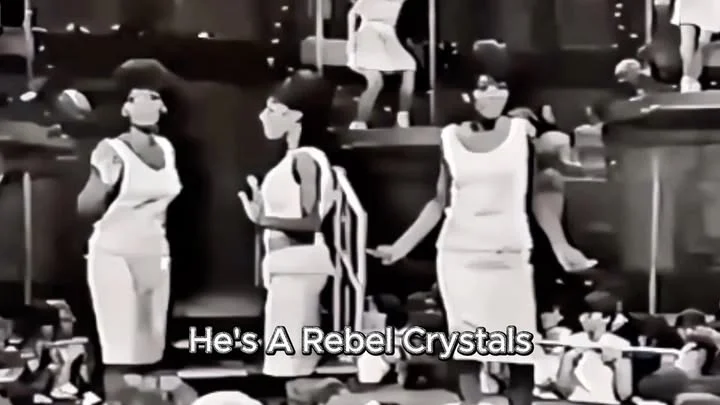
Decades after its release, He’s a Rebel still arrives with the force of a summer storm. The drums don’t just enter the room; they command it. And when Darlene Love’s voice rises above the Wall of Sound, the song becomes something more than a pop single. It becomes a declaration of independence, a three-minute argument that never needed a rebuttal.
Recorded in 1962 at Gold Star Studios under Phil Spector‘s meticulous direction, the track was written by Gene Pitney and arranged by Jack Nitzsche. It was released as a single on Philles Records and later appeared on the 1963 Crystals album also titled He’s a Rebel. But here the story takes a familiar twist in pop lore. The lead vocal belongs to Darlene Love, backed by her group the Blossoms, yet the record bears the Crystals name. It is a reminder that credit in the early sixties could be as fluid as the echo that spills through Spector’s chambers.
Pop works best when it sounds like a private certainty overheard in public.
That line captures what makes this record endure. The singer stakes a claim without flinching. She is not asking for permission; she is announcing a verdict. In 1962, when girl group songs often framed longing as a gentle ache, He’s a Rebel flipped the script. It turned romantic fascination into an act of public allegiance. The narrator becomes the true rebel, calm and defiant, already done explaining.
The arrangement itself is a masterclass in controlled chaos. Drums are doubled and tripled. Basses braid together, upright and electric. Pianos hammer chords that bloom into reverb like headlights on a wet boulevard. Strings climb impatiently. Saxophones add grit at the edges. Castanets and handclaps peck through the mix like sparks. Nothing here seeks solitude. Every instrument leans into the next until the whole track moves like a single organism.
Listen closely to the snare. It does not just mark the backbeat; it speaks in exclamation points, pushing the vocal forward. The tambourine behaves like a nervous foot under a table, steady but restless. A rhythm guitar locks in tight, its chords clipped and insistent. A piano elbows through the middle register, percussive and decisive. The result is a sonic density that feels like sculpture, a structure built from pressure and release.
And over it all, Darlene Love delivers a performance that carries steel in the smile. Her phrasing is a lesson in pop authority. Short lines sit forward in the pocket. Bursts of air on leading consonants. A touch of vibrato used like a signature rather than ornament. You can hear the famous Gold Star echo chamber, giving every syllable a tail that brushes the next beat. It is not nostalgia; it is architecture.
I imagine the first listeners in a borrowed sedan at dusk, riding past storefronts with the windows cracked. The song comes on and a passenger taps the dashboard to the backbeat. They are not thinking about production credits. They are thinking about the person who makes their parents frown and their pulse quicken, and the radio seems to be defending their case.
Another scene: late night radio in a small apartment. The bed is unmade. A cup of tea cools. You have just ended something sensible. The record drops and for three minutes the room grows bolder around you. The backing vocals sound like a small committee voting for mischief. The drums feel like shoes finally landing on pavement. You breathe differently when it ends.
And then a Saturday afternoon decades later. A vintage soul DJ cues it between Northern stompers and Brill Building gems. The floor fills with curious twenty somethings and veterans of many dance floors. They find the same downbeat at once. No one needs instructions. That is the thing about records built this sturdily. They keep living in rooms they were never designed to see.
Historically the record rose to the top of the US charts, proof that the culture was ready to cheer for a love that did not ask permission. Gene Pitney supposedly worried the song might not suit his own voice. In a clever twist of pop destiny, it suited Darlene Love perfectly. The Crystals name opened the door to mass radio play. Whatever one thinks of the crediting decision, the musical result is undeniable.
Instrumentally this track is a study in layers rather than virtuoso spotlights. The guitar scaffolds, pushing eighth note figures that keep the chorus taut. The piano thickens the middle and gives the drums something to lean against. Strings flash and recede. Saxophones scuff the texture in ways you feel more than parse. If you are a mixer, you hear not parts but planes, foreground, midground, background, with the vocal anchored just ahead of the snare rim.
What is striking today is how modern the record still sounds through good studio headphones. The drums punch, pull back, and return with more urgency. The strings arrive like a dramatic curtain raise at the exact moment the chorus wants more space. Vocals mass behind the lead like a small crowd of friends cheering a decision. The sonic density converts private certainty into public spectacle.
There is glamour here, strings that glow and echo that flatters. But there is also grit. The drumstick on the rim carries enough wood noise to keep the track human. The saxophones never polish themselves into anonymity. Even the backing vocals carry a little rasp, like friends who have run up the block to catch you before you make a mistake and are relieved to find you are making a different, better one. Simplicity meets orchestral sweep. Restraint meets catharsis. Something durable is forged.
If you are encountering the song today for the first time, it may feel like a postcard from the pre Beatles moment. But it lines up neatly with contemporary pop’s love of declarative hooks and room sized choruses. You could slide it into a playlist between modern anthems and it would hold its own, not because it is louder but because it knows exactly what it wants to say and how long it needs to say it. The heart of this record survives translation because it rests on performance, not sheen.
When I try to explain to younger listeners why early sixties pop still matters, I often start here. It is not just history. It is the feeling of a song that understands its own stakes. In three concise minutes, it argues that desire can be both public and principled. If that sounds lofty for a jukebox single, listen again to the verses calm insistence and the chorus radiant refusal to yield. The record does not wobble. It stands.
Play it once more. Not to chase nostalgia, but to hear confidence learning how to sing.
If this track captures your ear, these six songs share its spirit and sophistication
- The Ronettes – Be My Baby Another Gold Star epic where drums and echo wrap a fearless lead in cinematic light
- The Crystals – Then He Kissed Me A more romantic, gliding take from the same era, trading swagger for star swept promise
- Darlene Love – Today I Met the Boy I’m Gonna Marry Love on the label this time, with the same poised conviction in the vocal
- The Shangri-Las – Leader of the Pack Motorcycle drama mythmaking, similar rebel energy with a darker narrative arc
- The Chiffons – He’s So Fine Breezier and brighter, keyed to harmony hooks that stick like summer
- The Shirelles – Will You Love Me Tomorrow Earlier and more reflective, its strings and tempo balance intimacy and poise