
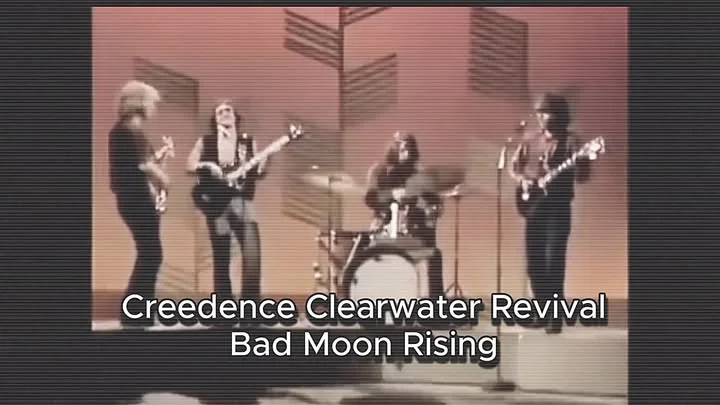
There is a certain magic in a song that manages to feel both like a celebration and a warning, a musical paradox that burrows deep into the soul. Creedence Clearwater Revival’s “Bad Moon Rising” is exactly that kind of masterpiece. With its rollicking guitar riff and John Fogerty’s unmistakable growl, it invites you to tap your feet even as a shiver runs down your spine. This 1969 classic, born from the Green River album, has become more than just a hit; it is a cultural touchstone that perfectly captured a moment of national turmoil and has refused to let go of our collective consciousness ever since.
The genius of the song lies in its deliberate, jarring contradiction. It is a deceptively upbeat soundtrack to a prophecy of doom. How did Fogerty achieve this alchemy, and why does it still feel so urgently relevant more than half a century later? The answer begins with the chaotic era that gave it life and ends with the universal, haunting truth that some fears never fade.
To understand the power of “Bad Moon Rising”, you must first look at the storm it was born from. The late 1960s in America were a crucible of anxiety. The Vietnam War was tearing the nation apart, the civil rights movement faced violent opposition, and a general disillusionment with authority hung in the air. Fogerty, a master of channeling everyday dread, took this collective unease and condensed it into a three-minute rock anthem. He found his spark, oddly enough, in the old film The Devil and Daniel Webster. The movie’s dramatic storm scene became a perfect metaphor for the darkness he saw consuming society. The music might have been bright, but the message was a clear, grave warning.
“I see a bad moon rising, I see trouble on the way, I see earthquakes and lightnin’, I see bad times today.”
These opening lines are not a suggestion; they are a prophecy. The imagery of unstoppable natural forces—earthquakes and lightning—speaks to a chaos that is inevitable and beyond human control. This resonated with a generation that felt powerless in the face of global events. That same sense of impending, uncontrollable destruction is what gives the song its eerie power today, whether we are confronting climate disasters, political strife, or the fragile state of our own world. The “bad moon” itself is a universal symbol of bad luck and dark revelations, a mythological anchor that makes the song feel ancient and timeless, far beyond the specific political context of 1969.
The most brilliant trick CCR ever played on the listener is the sheer joyfulness of the tune. It is a lesson in musical irony. The lively beat, the catchy rhythm, the almost playful guitar work—they all make you want to smile and dance. Many a fan has found themselves singing along to the chorus before the weight of the words finally hits them. It feels almost like a dark joke, forcing you to confront a grim reality while you are still caught up in the groove. This was a relatively bold move for rock music of the time, and it adds a layer of complex unease. It is the sound of laughing in the face of danger, a desperate, defiant energy that makes the song so addictive for listeners who appreciate depth in their rock anthems.
Beyond the immediate shock of the upbeat delivery, the song digs into deeper themes of inevitable change and fate. The chilling line “Don’t go around tonight, well, it’s bound to take your life” is a stark, personal warning. It suggests a world where danger is hiding around every corner. While not a direct protest song like those of other artists, “Bad Moon Rising” functions as a subtle, powerful protest anthem. It uses potent symbolism to mirror society’s dangers, allowing each listener to find their own reflection in its foreboding lyrics.
The legacy of the track is undeniable. It has been covered by artists across every imaginable genre, a testament to its universal appeal. It has found a permanent home in movies, from horror films to comedies, and regularly surfaces in television shows. The song has a unique ability to reemerge during times of high social tension. It saw a notable spike in interest during the COVID-19 pandemic, as people found a strange comfort in having their feelings of imminent threat and caution articulated so perfectly. It is as if the song is waiting in the wings for the next crisis, ready to step forward and provide the soundtrack for our collective anxiety.
Ultimately, the reason “Bad Moon Rising” remains an eternal fixture in our cultural landscape is its profound emotional honesty. It gives a voice to the quiet dread we all carry. It is a powerful reminder that rock music is often at its best when it offers a space to process difficult feelings. CCR created a song that offers solace not by promising a happy ending, but by acknowledging the darkness head-on. For music lovers who crave that deeper meaning, this track remains a perfect example of an artist encapsulating a complex anxiety in a deceptively simple package. It remains a stark, driving warning about the challenges ahead, wrapped in a melody you cannot help but hum along to.