
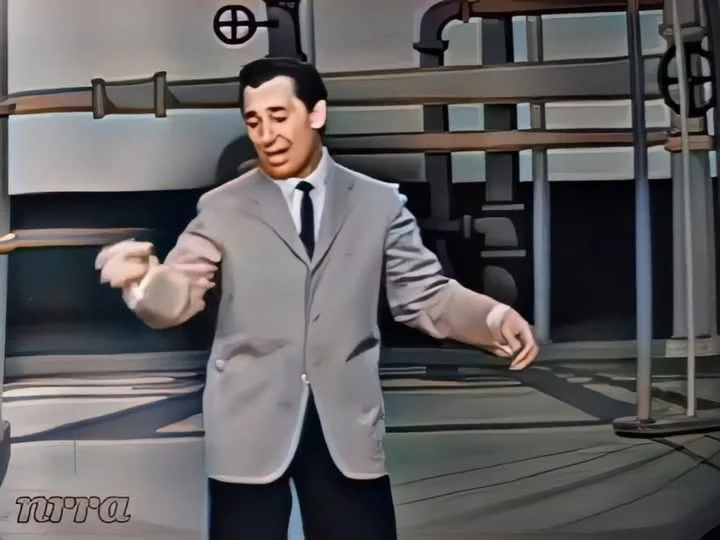
Neil Sedaka sat at the piano, his fingers finding that now‑legendary riff, and in that moment a pop classic was born. He was writing for a girl named Carole Klein—the woman the world would later know as Carole King. That song, “Oh Carol,” captured the giddy ache of teenage infatuation, and when it dropped in 1959, it shot straight to No. 9 on the Billboard Hot 100. More than six decades later, the track still feels as fresh as the first time a transistor radio crackled it out to a lovesick teenager.
“Oh Carol, I am but a fool / Darling, I love you though you treat me cruel”
Those lines, so disarmingly simple, are the heart of a song that refuses to age. Sedaka, a classically trained pianist with roots in the Brill Building, fused rock‑and‑roll energy with pop sensibility. His self‑titled album, Neil Sedaka, became a showcase for that talent, and “Oh Carol” remains its brightest jewel. The track is both a time capsule of late‑1950s innocence and a masterclass in songcraft—proof that a perfect hook needs no gimmickry.
What makes the record leap out even now? Start with the piano. Sedaka’s formal training lets the ivories bounce with precision, driving the melody forward like a joyful engine. The guitar slips in with clean, upbeat strums, locking into a rhythmic groove that makes you tap your foot before you realize it. Beneath it all, a steady bassline and light percussion give the song a subtle, danceable swing. Background harmonies—a hallmark of early rock and roll—add warmth without crowding Sedaka’s vocal, which is delivered with an earnest, almost conversational charm.
This is not just a nostalgic throwback. It is a lesson in enduring pop. The production, polished by the standards of its day, lets every instrument breathe. The structure—verse, chorus, verse, brief bridge—is straightforward, yet it sticks in your mind like the sweetest earworm. Sedaka’s voice, smooth and charismatic, sounds as if he’s singing directly to you.
For anyone drawn to this sound, the era offers a treasure trove. If “Oh Carol” has you craving more, dive into Sedaka’s own “Breaking Up Is Hard to Do”—a ballad that morphs into an uptempo gem. Listen to Carole King’s “Will You Love Me Tomorrow,” a lush answer to the very muse who inspired Sedaka’s classic. The doo‑wop romance of “Earth Angel” by The Penguins echoes the same yearning, while Jerry Lee Lewis’s “Great Balls of Fire” amps up the piano energy. And for sheer rock‑and‑roll DNA, Chuck Berry’s “Johnny B. Goode” remains the gold standard of guitar‑driven storytelling.
Decades after its release, “Oh Carol” transcends its era. It stands as a testament to the timeless power of a well‑crafted song—where simple words, a skipping piano line, and a voice full of heart can connect across generations. Whether you’re discovering Neil Sedaka for the first time or revisiting a childhood favorite, this track belongs in every music lover’s collection. In a world of constant change, some melodies refuse to fade. “Oh Carol” is one of them.