
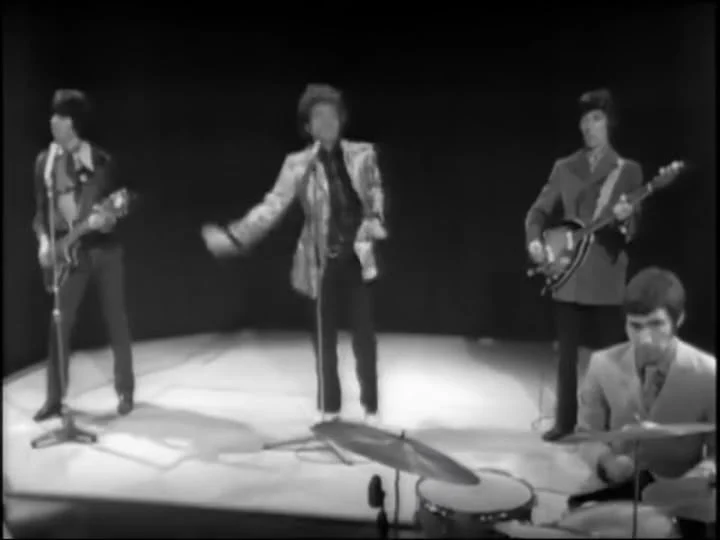
The Rolling Stones never made polite requests. In 1967, when the world was draping itself in flowers and psychedelic pastels, the band delivered a blunt force statement that echoed through the decades. On the Ed Sullivan show that fall, Mick Jagger famously mouthed “Let’s spend some time together” to appease censors, but everyone knew the real line. That moment of cultural compromise, captured in grainy black‑and‑white, became a symbol of authentic rebellion. The song itself, a three‑minute sprint of raw desire, had already ignited a moral panic before its first televised performance.
“I believe the raw unvarnished urgency of this recording captures a truth about The Rolling Stones that no ballad or psychedelic experiment ever could”
Released in January 1967 as a double A‑side with the wistful Ruby Tuesday, this track split the band’s identity in two. One side offered a melancholic swirl of baroque pop, the other a two‑chord assault that stripped away all pretense. The single also led the American version of their fifth British album Between the Buttons, a record often described as a bridge between rhythm and blues roots and the mod‑inflected experimentation of the era. Producer Andrew Loog Oldham shepherded this pivotal work just as his creative bond with the group began to fray.
The track’s engine is deceptively simple. A frantic drum fill from Charlie Watts explodes into the opening, followed by Keith Richards hypnotic cyclical guitar riff. That riff, far from being flashy, locks into a rhythmic trance that becomes the song’s backbone. But the real architecture lies in the keyboards. Brian Jones organ floats high in the mix with a low‑fidelity drone that pushes toward psychedelia, while Richards and Jack Nitzsche layer bright piano notes over the relentless beat. This dual keyboard approach gives the track a surprising melodic richness despite its aggressive stance. The interplay between strummed guitar and ivory creates a dense wall of sound, less Spector‑esque wash more tightly coiled spring.
For a young couple driving home from a gig in the small hours, the song feels eternal. The windows are down, the volume turned up. It does not sound dated. It sounds like the promise of something forbidden hanging heavy in the air. On premium audio equipment the tightness of Charlie Watts drums and the clarity of those double pianos cut through like razor wire. The recording itself carries a gritty compressed quality miles away from the crystalline pop of the era. This roughness is intentional, a sound designed for cheap radios and car speakers pushed too loud. It is rock and roll in its elemental function, a soundtrack to defiance.
Decades later this song remains a cornerstone of the Rolling Stones catalogue. Its chart performance was strong in the United Kingdom reaching the top five, while facing significant airplay limitations in the United States due to the controversy. Yet cultural impact far outweighs initial chart position. It captures a world waking up to its own desires voiced by the least apologetic band on the planet. In an era of euphemism and veiled suggestion Mick Jagger simply told it like it was. The audacity was not in the idea but in the directness of phrasing. That frankness an unguarded late‑night invitation remains as vital today as it did in 1967.
For those seeking similar raw energy listen to Jumping Jack Flash from 1968 which shares the same driving riff structure and primal force. All Day and All of the Night by The Kinks offers a similarly two‑chord hyper‑aggressive momentum. The Who captured the small package urgency of British Invasion singles with I Cant Explain. Even the Beatles with Taxman showed how a driving bass line and focused rhythm guitar could power a mid‑60s rock song. Later David Bowie channeled that frantic energy in Panic in Detroit and the Small Faces delivered soul‑infused propulsion in Tin Soldier. Each of these tracks carries the same irresistible pull, the same unwillingness to apologize for its own intensity.