
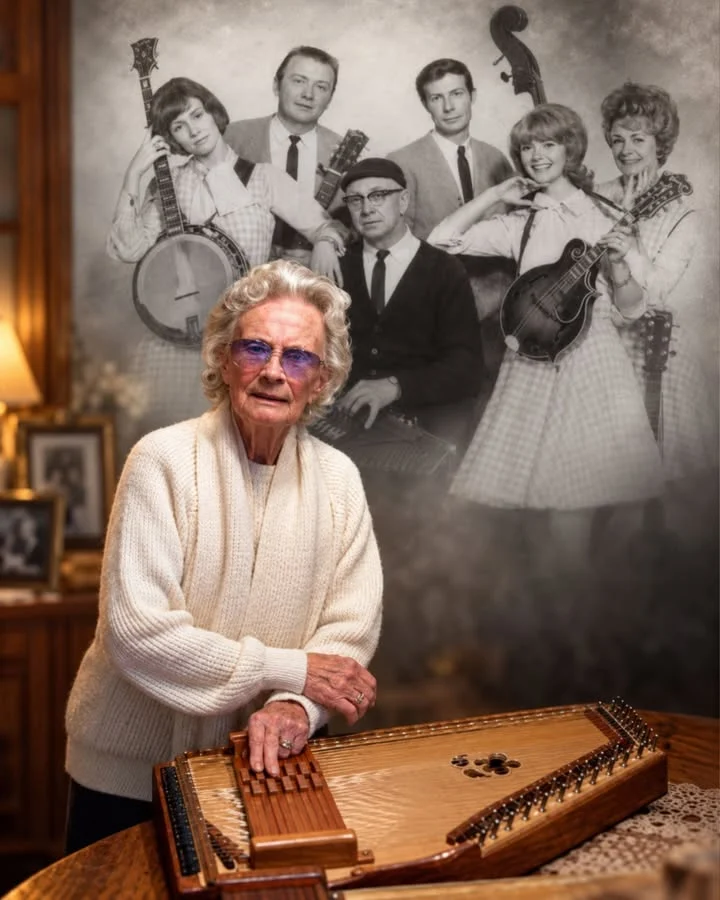
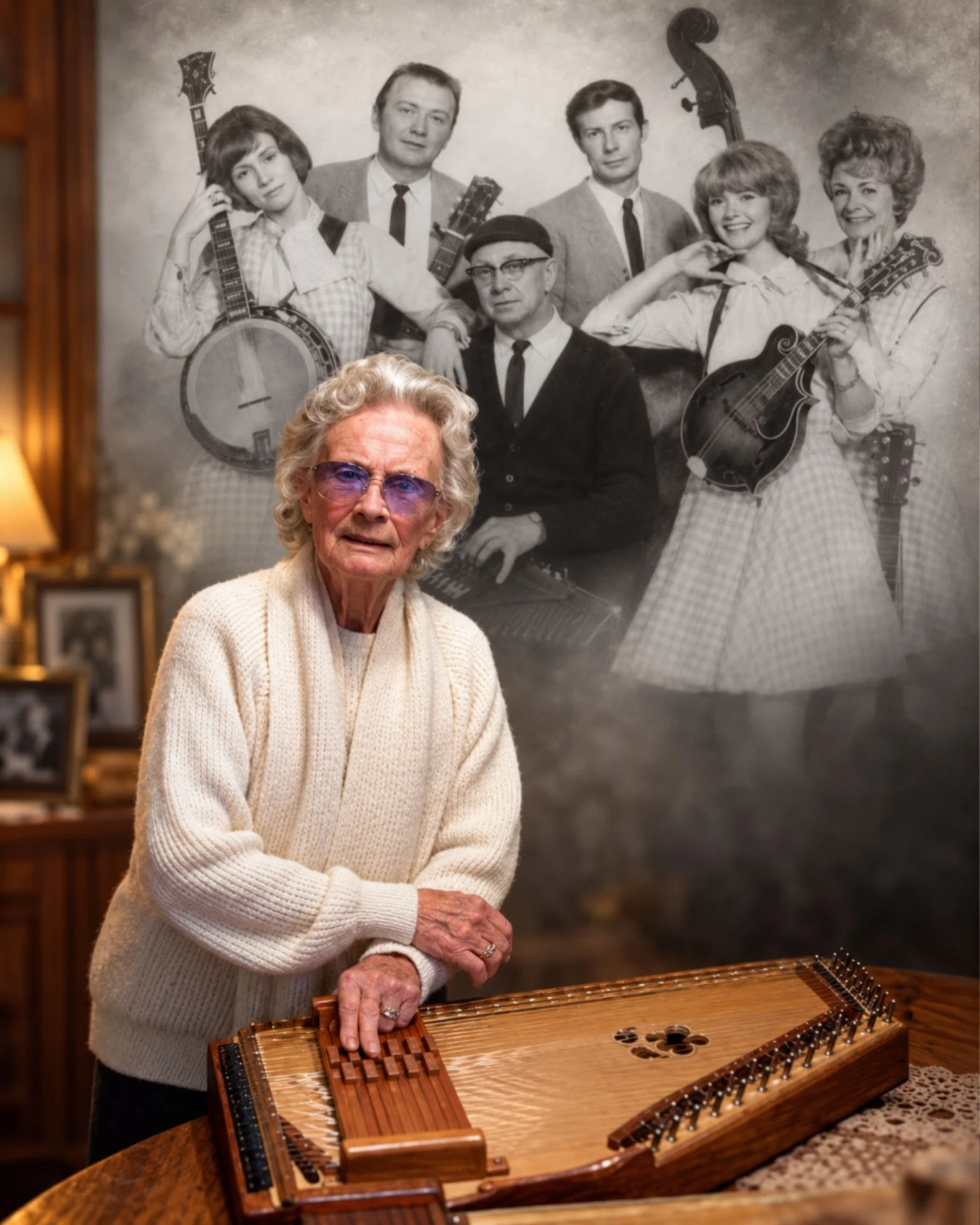
The Stoneman Family had barely finished celebrating their Country Music Association Vocal Group of the Year award when heartbreak struck. Ernest “Pop” Stoneman died in June 1968, leaving behind an empty spot at the center of the band – and a battered autoharp that his daughter Patsy refused to let gather dust.
That instrument became a lifeline. Patsy picked it up and stepped into her father’s place, not as a replacement but as a carrier of a legacy that stretched back to the earliest days of commercial country music.
“The oldest surviving music in the household still needed someone to carry it.”
Pop Stoneman had first recorded in 1924, helping to shape the Bristol Sessions that launched the Carter Family and Jimmie Rodgers. But the Depression wiped out his earnings and sent the family scraping through poverty. Ernest and his wife Hattie raised twenty three children, though only thirteen survived to adulthood. For years the family lived in a Maryland house with a canvas roof, barely enough food, and no toys except each other and a few precious instruments.
Instruments had to be guarded. A child who put down a banjo or fiddle risked losing it to a sibling. Competition and rehearsal became the same noisy environment. Music was not a choice; it was survival. The homemade bass known as the Whomper, a drum body with a neck and strings, symbolized Pop’s resourcefulness – when proper equipment was unavailable, the family built something that could make sound.
Patsy learned early to hold tight. She led her own bluegrass band in Washington before returning to the family fold. In 1966 the Stonemans moved to Nashville, landed a syndicated TV show, secured a long nightclub engagement at the Black Poodle, and signed with MGM. Their polished act mixed old repertoire with comedy and sibling energy, finally bringing Pop the recognition the Depression had stolen. The 1967 CMA award came near the end of his life.
Then cancer took him. Patsy did not try to become the new patriarch. She took over the autoharp and part of the vocal center, letting the siblings cycle in and out while she kept the bus rolling. The family moved to RCA, absorbed more losses, and gradually contracted until Patsy, Jimmy, and Van carried the name.
A 1979 newspaper reporter found them still traveling by bus. They remembered sleeping several to a bed and guarding food with one hand while holding an instrument with the other.
“It had meant too much for them to quit.”
The childhood instruments had become professional equipment; the sibling competition had become tradition.
As the years passed, Patsy worked quietly to secure her father’s place in history. She gathered family stories, spoke about the legacy, and pushed for his induction into the Country Music Hall of Fame. In 2008 – four decades after his death – Pop Stoneman took his place among the greats. Patsy held his medallion during the ceremony, accepting the institutional memory on behalf of the household that had carried the music through poverty, loss, and a canvas roof.
The autoharp had traveled from a Depression era living room to a Nashville stage to a Hall of Fame display. And Patsy Stoneman, the daughter who stepped into the empty place, had made sure the oldest music in the household never stopped playing.