
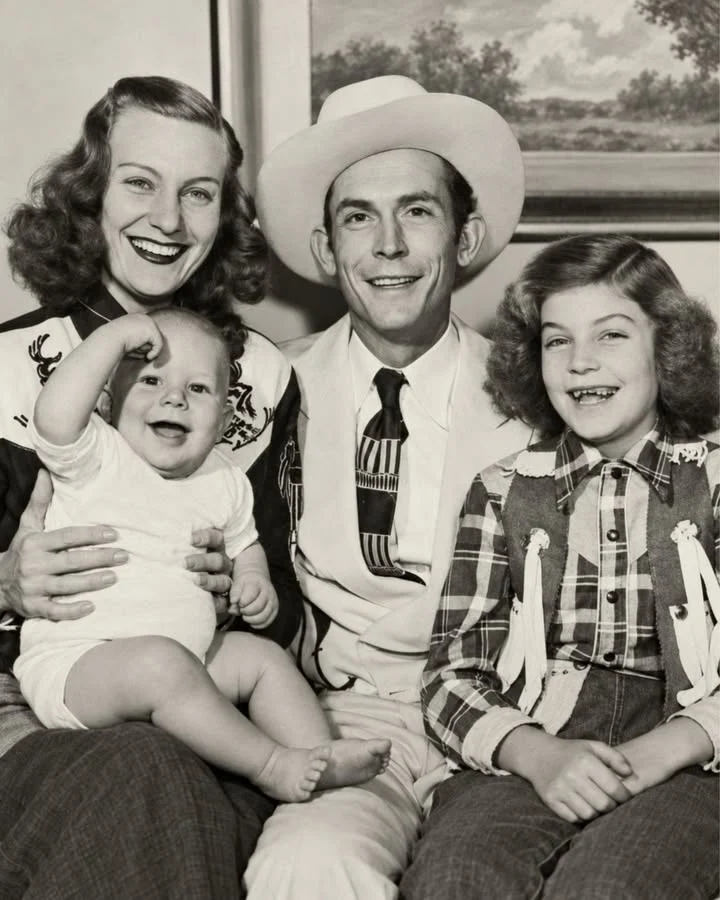
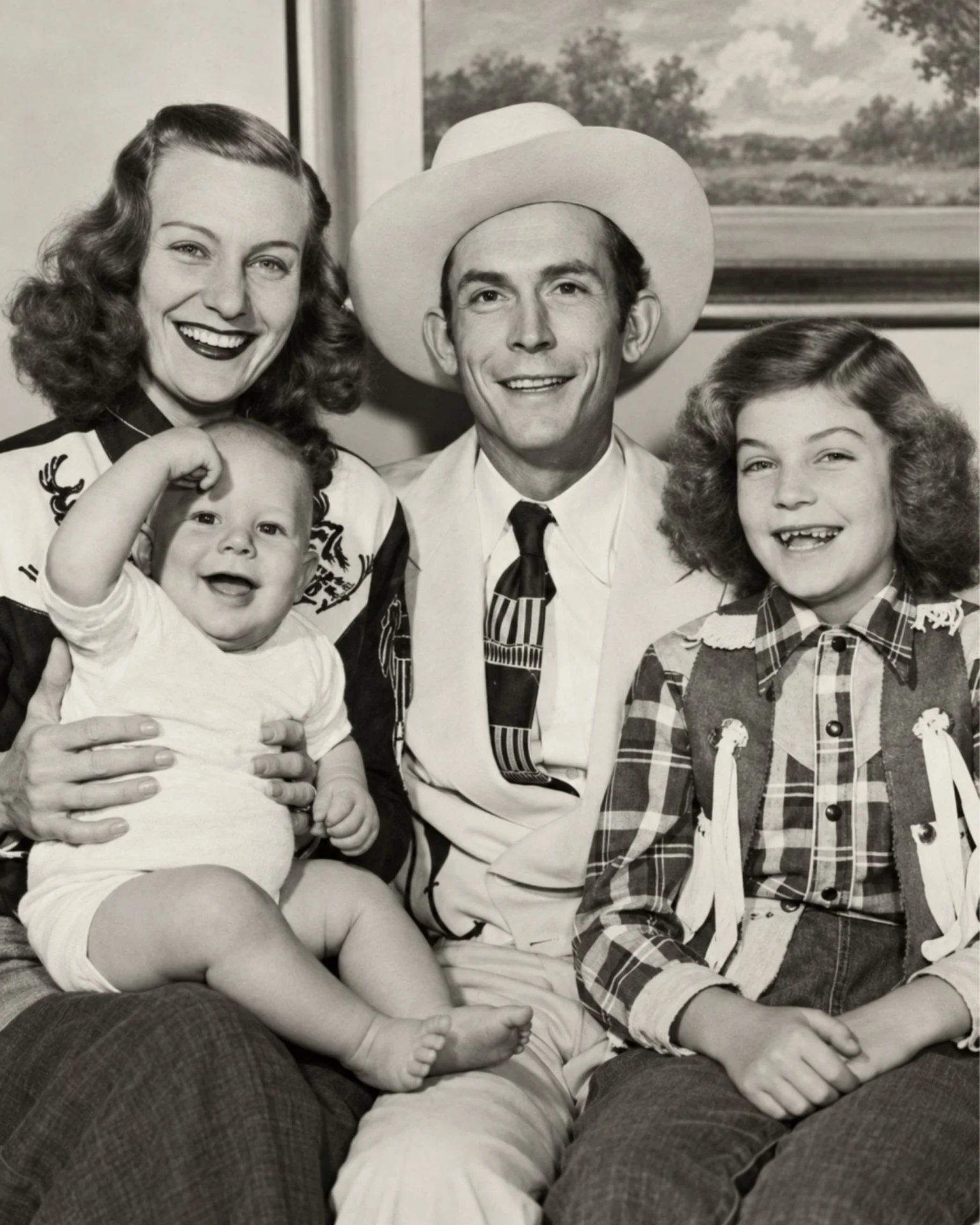
In 1952, Hank Williams was riding toward Louisiana when a single bitter phrase stopped him cold. He turned to Billie Jean Jones, the woman he would soon marry, and asked for paper. Within minutes, the skeleton of Your Cheatin’ Heart was on the page—born not from a quiet room, but from a marriage that had just shattered.
The phrase came as he spoke of Audrey, his former wife. After eight years of love, jealousy, poverty, drinking, and reunion, she had asked him to leave in early 1952. Their divorce became final that July. Now, just weeks later, Hank heard something in his own accusation:
“Her cheatin’ heart will pay.”
He knew it was a song.
Audrey was not a distant figure. She had stood beside him before the Grand Ole Opry and national fame, singing and fighting through years of struggle. The wreckage of that partnership was still fresh. On September 23, barely two months after the divorce, Hank entered Castle Studio in Nashville. In roughly three hours, he cut four songs—including Your Cheatin’ Heart. There was no distance between domestic collapse and the record.
The song was released after Hank’s death, turning it into a ghostly farewell. But the family story continued. Audrey raised Hank Jr. and pushed him onto stages, forcing him to carry his father’s name—and the song’s weight—long before he could escape the comparison.
The line that became a legend started with a man talking about the wife he had lost, in a car on a Louisiana road, while the wound was still bleeding.
Your Cheatin’ Heart survives because millions hear themselves in it. But before it belonged to everyone, it belonged to one failed marriage, one car ride, and a man who turned pain into melody before the world could catch its breath.