
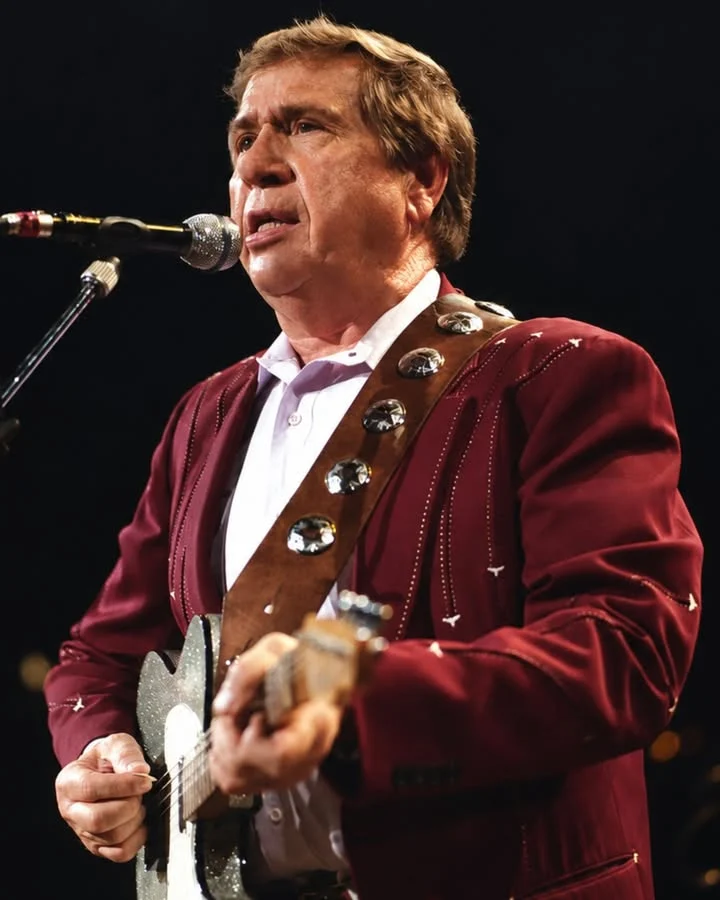
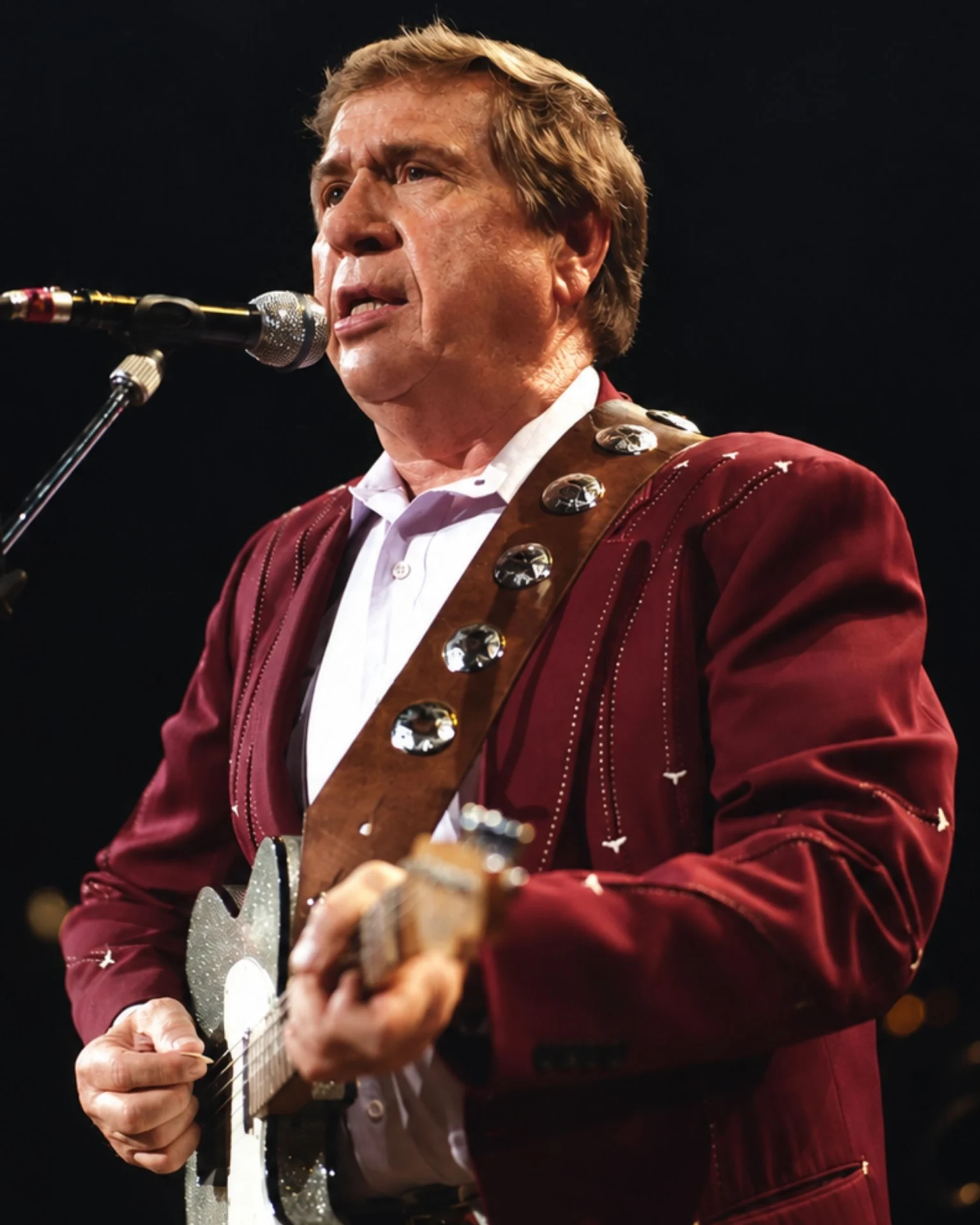
On March 25 1966, a packed Carnegie Hall watched a band from Bakersfield turn the most prestigious stage in Manhattan into a dance hall. The man leading that band had tried to walk away from the invitation before it became a concert.
Buck Owens was not afraid of hard work. He was afraid of being misunderstood. Carnegie Hall felt like a different country. It was not Fresno or a California honky-tonk where the crowd already knew the rhythm. It was New York, and country music still carried old assumptions there. A Library of Congress history of the concert says Owens was so worried about whether Manhattan would turn out that he initially asked his manager Jack McFadden to decline.
The fear did not survive the first note.
By the fall of 1965, Buck had already established himself as country music’s dominant chart force. He was deep into a long run of No. 1 singles. The Buckaroos were one of the tightest road bands in America. They did not need a night at Carnegie Hall to prove their talent. They needed it to prove something else, that the Bakersfield sound could travel beyond California and still sound exactly like itself.
Don Rich played lead guitar and fiddle and sang harmony. Tom Brumley played steel guitar. Doyle Holly played bass and sang. Willie Cantu played drums. These were the same working musicians Buck used in the studio. That is why the records had a live and muscular precision that stood apart from much of Nashville’s polished output at the time.
Carnegie Hall did not receive a costume version of country music. It received the Buckaroos.
The set tore through “Act Naturally,” “Together Again,” “Love’s Gonna Live Here,” “Waitin’ in Your Welfare Line,” “Buckaroo” and “I’ve Got a Tiger by the Tail.” The songs were funny, wounded, plainspoken and sharp. None of them asked for permission to be country.
Tom Brumley later remembered that the album did not need any fixing after the show. Years of road work had trained the band to get performances right in the moment. The resulting Carnegie Hall Concert became the first country album recorded in that hall, according to Carnegie Hall’s own history. Buck was not the first country artist to appear there, but he was the first to make a country album in the room.
The significance went beyond a sold-out ticket. Trade coverage at the time described the concerts as helping break down country-music barriers in New York. Later critics pointed to the album as proof that country had fully entered America’s urban popular-music mainstream.
That was a major shift. For years, Bakersfield had been discussed as Nashville’s outsider alternative. Nashville had polish, industry power and the smooth Nashville Sound. Bakersfield had bright Telecaster guitars, hard drums, pedal steel, high harmonies and an energy that came from dance halls and working people. Nashville reached toward pop audiences. Bakersfield did not soften its edges for anyone.
At Carnegie Hall, those edges did not need to be filed down.
Buck Owens did not become Nashville that night. He did not add strings or orchestration. He gave Manhattan the same band and the same sound that had already conquered California. The room did not ask him to change. It simply made space for what he was.
For one night in 1966, Bakersfield stopped sounding like the outside. It sounded completely at home on one of America’s most prestigious stages.