
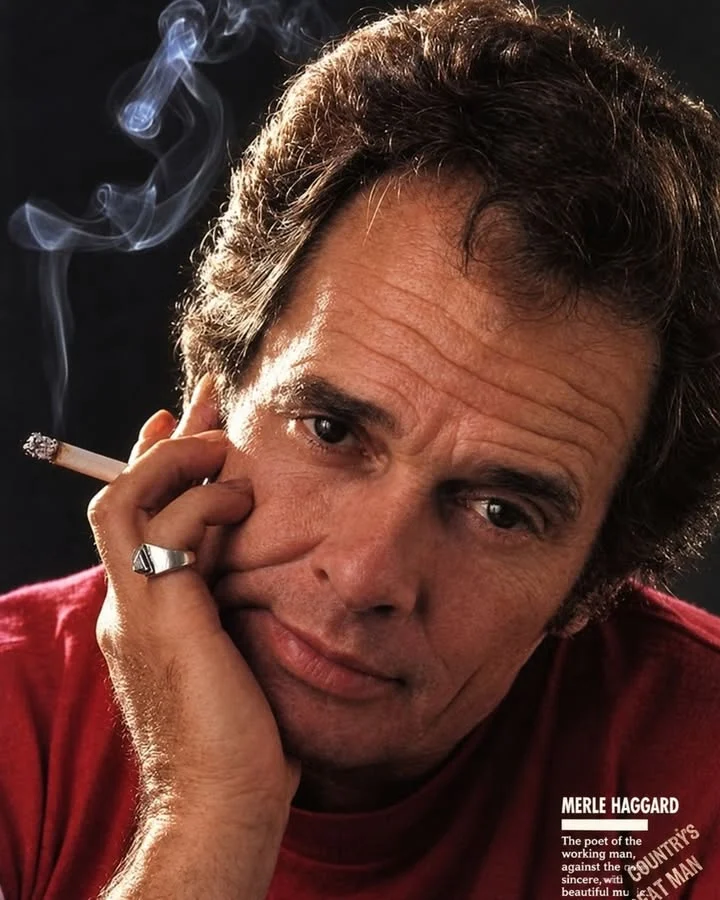
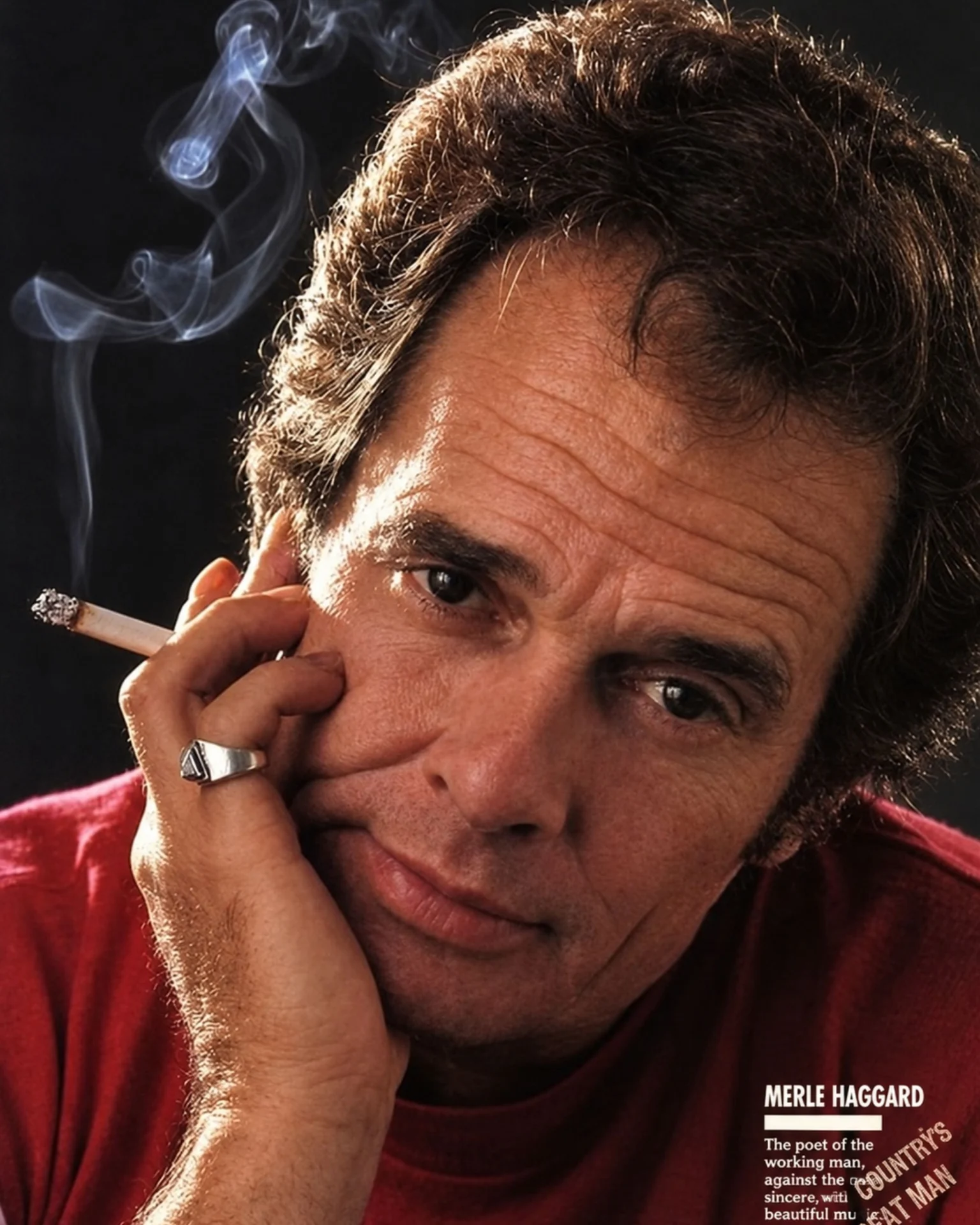
On a March evening in 1982, Merle Haggard made Ronald Reagan laugh with a request no one expected. He asked the president to pardon him again. The joke was a reminder of how far he had come. Ten years earlier, Reagan had signed the document that cleared Haggard’s name. Now the former inmate was standing in front of the president with a guitar. Haggard walked out of San Quentin in 1960, but the past followed him on paper. Years of arrests and reform schools had led to a conviction in Kern County for second-degree burglary and escape without force. The official clemency record shows he served two years and nine months behind bars and then spent more than two years on parole. He was discharged from his sentence in 1963. By then, a new life had begun to take shape. Haggard worked labor jobs and played bass for Wynn Stewart in Bakersfield. The music there had a sharper edge than the polished Nashville sound. His voice carried the weight of a life that had never been easy. Songs like ‘Mama Tried,’ ‘Sing Me Back Home,’ ‘Workin’ Man Blues,’ and ‘Okie from Muskogee’ turned him into one of the most powerful voices in country music. Success did not wipe away the old record. The state still saw the ex-convict. Publicly, Haggard was a star. Legally, the old convictions still hung over his name. That is why the pardon mattered. In July 1971, California’s Adult Authority recommended a pardon on the grounds of rehabilitation. Because Haggard had more than one felony conviction, the case went to the California Supreme Court. The justices recommended clemency that October. On March 1, 1972, Governor Ronald Reagan signed a full pardon. The date comes from Reagan’s official report to the California legislature. Haggard called the pardon a genuine second chance. It did not erase what happened. It simply said the old life no longer had the final word. Ten years after the pardon, Haggard performed for President Reagan at a private concert in California. Before he sang, he told the president he hoped the performance would please him as much as the pardon had. Then he added the line that made the room laugh.
I have come to beg your pardon one more time.
Reagan laughed. The man making the joke had once been known as A-45200 inside San Quentin. The number belonged to an old government file. The man holding the guitar belonged to a much bigger story. The state once knew him by that number. Country music came to know him as Merle Haggard. Between those two names sits a truth his songs carried.
A man can be marked by his past without belonging to it forever.