
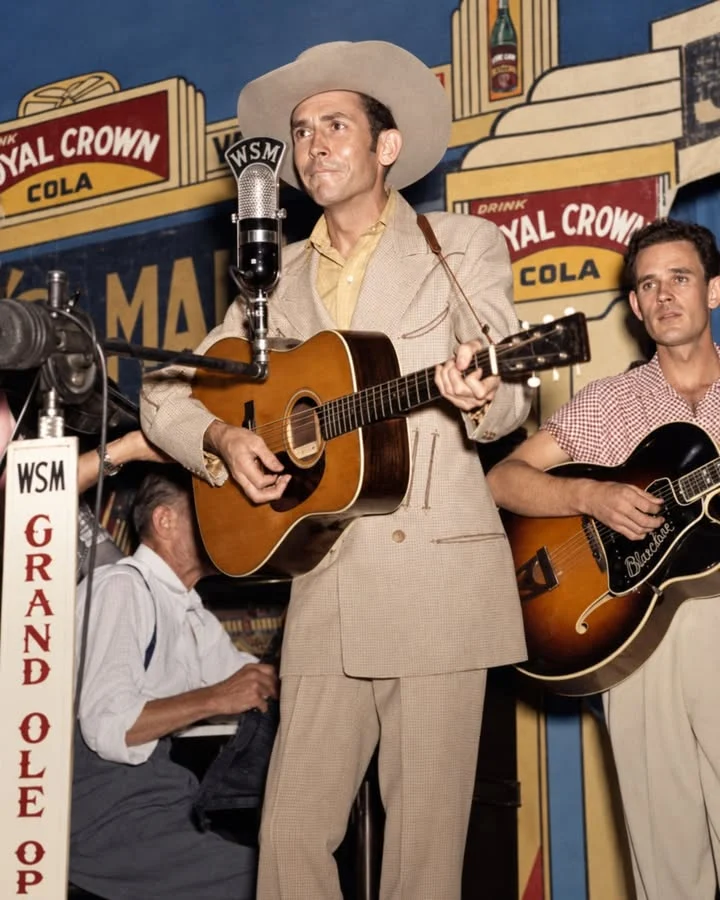
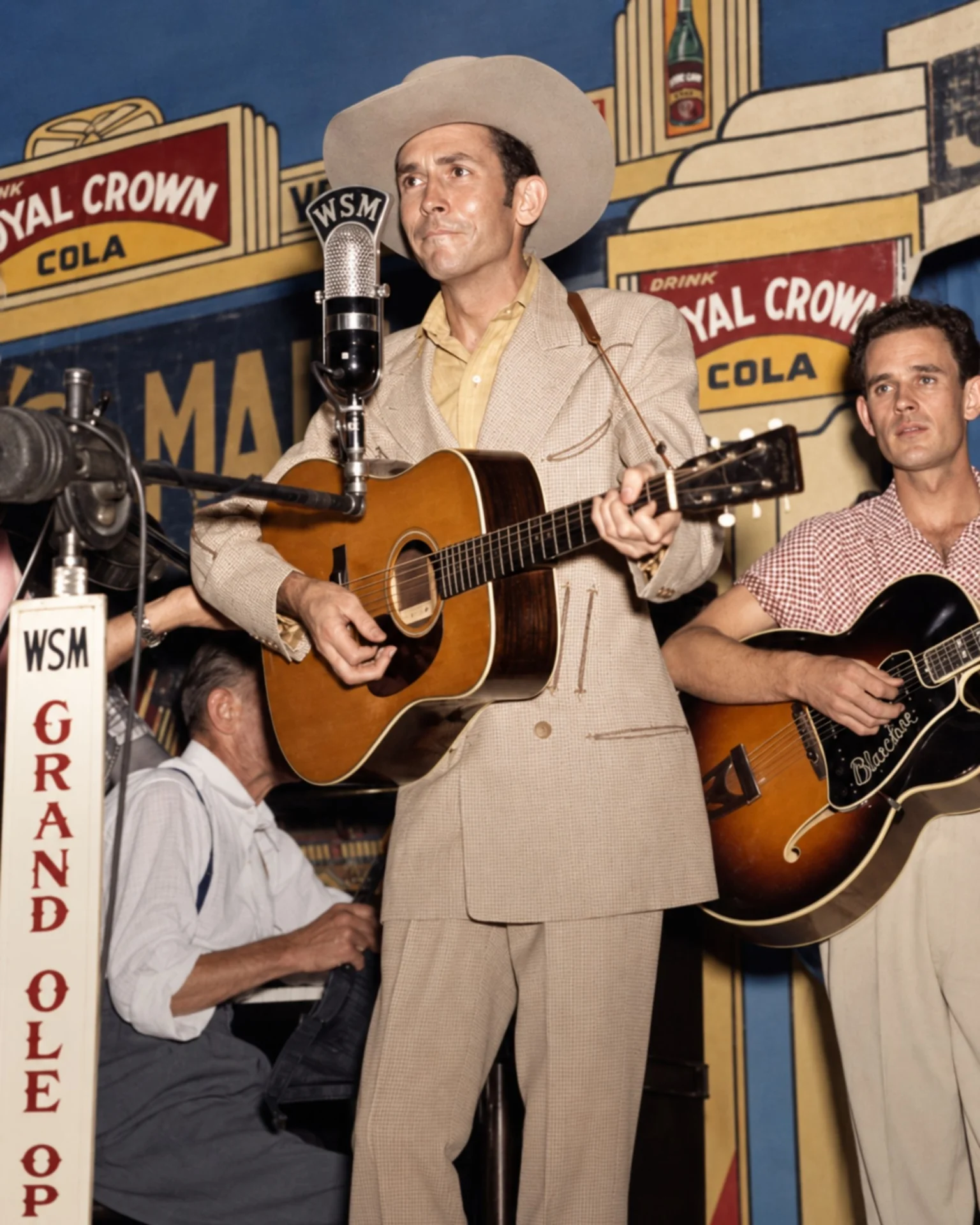
In 1949, a twenty-five-year-old man with a voice that seemed older than his own bones stepped onto the Grand Ole Opry stage. The crowd didn’t just applaud — they refused to let him leave. Six encores later, Hank Williams had conquered the very heart of country music. Three years after that legendary night, the same stage would banish him, even as his records soared to No. 1. 🎶
“The voice could still cut. The man carrying it could not always make the stage.”
The pain was already there before the fame. Severe back pain had plagued Hank for years, and alcohol had long been a crutch. Nashville didn’t create these demons — but it gave them a louder stage and a relentless schedule. By 1951 and 1952, the lines blurred between physical agony, emotional turmoil, and the seductive danger of prescription drugs.
His marriage to Audrey crumbled. His band fractured. Missed appearances became a pattern that even the most forgiving institution couldn’t ignore. In June 1952, Hank largely stopped working. The Grand Ole Opry, patient as it was, reached its limit. In August, they dismissed him from the cast — not for poor record sales, but for the very human chaos he could no longer contain.
Here’s the cruel irony — as his live career crumbled, his records only grew stronger. “Jambalaya (On the Bayou)” topped the charts while he was being pushed out of country music’s most hallowed hall. Colin Escott, historian at the Country Music Hall of Fame, put it plainly: the smaller the bookings, the bigger the hits. 📈
After the Opry, Hank returned to the Louisiana Hayride in Shreveport. The stages were smaller now — some just beer halls in East Texas. His drinking remained severe, worsened by a questionable doctor’s prescriptions. But when he stepped into a recording studio, the collapse outside faded. The songs that poured out were clear, sharp, and unmistakably alive.
In September 1952, just a month after the dismissal, Hank recorded what would become his eternal anthem. “Your Cheatin’ Heart” came from a casual remark during a car ride with Billie Jean Jones, the woman he’d soon marry. He dictated the words while she wrote them down — a phrase that would outlive them both.
“Sometimes the voice that cannot save the singer is still strong enough to outlast everyone in the room.”
There was almost no time left. On December 30, 1952, Hank left Montgomery in the back seat of his Cadillac, too unwell to drive to shows in West Virginia and Ohio. Somewhere during that cold overnight ride, he died. Pronounced dead in Oak Hill, West Virginia, on January 1, 1953, at just twenty-nine.
His songs, though, refused to die. After his passing, “Your Cheatin’ Heart” was released and became another No. 1 hit. The Opry had fired him, but no institution could erase what he’d already laid down in grooves. Hank Williams the worker might have failed, but Hank Williams the artist achieved immortality.
That’s the heartbreak and the triumph — the man who once held an Opry audience spellbound for six encores ended his journey in the back of a car, between shows he’d never play. Yet those recordings, born in his final collapse, carried him into eternity. He didn’t need the Opry’s stage anymore. He had built his own with every song that still echoes today. 🕊️