
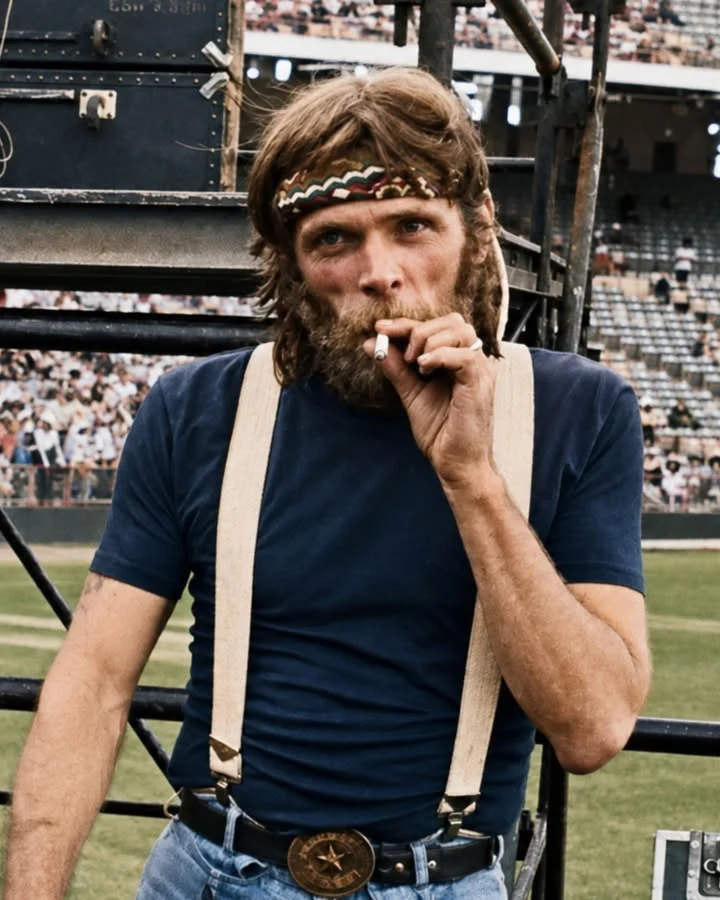
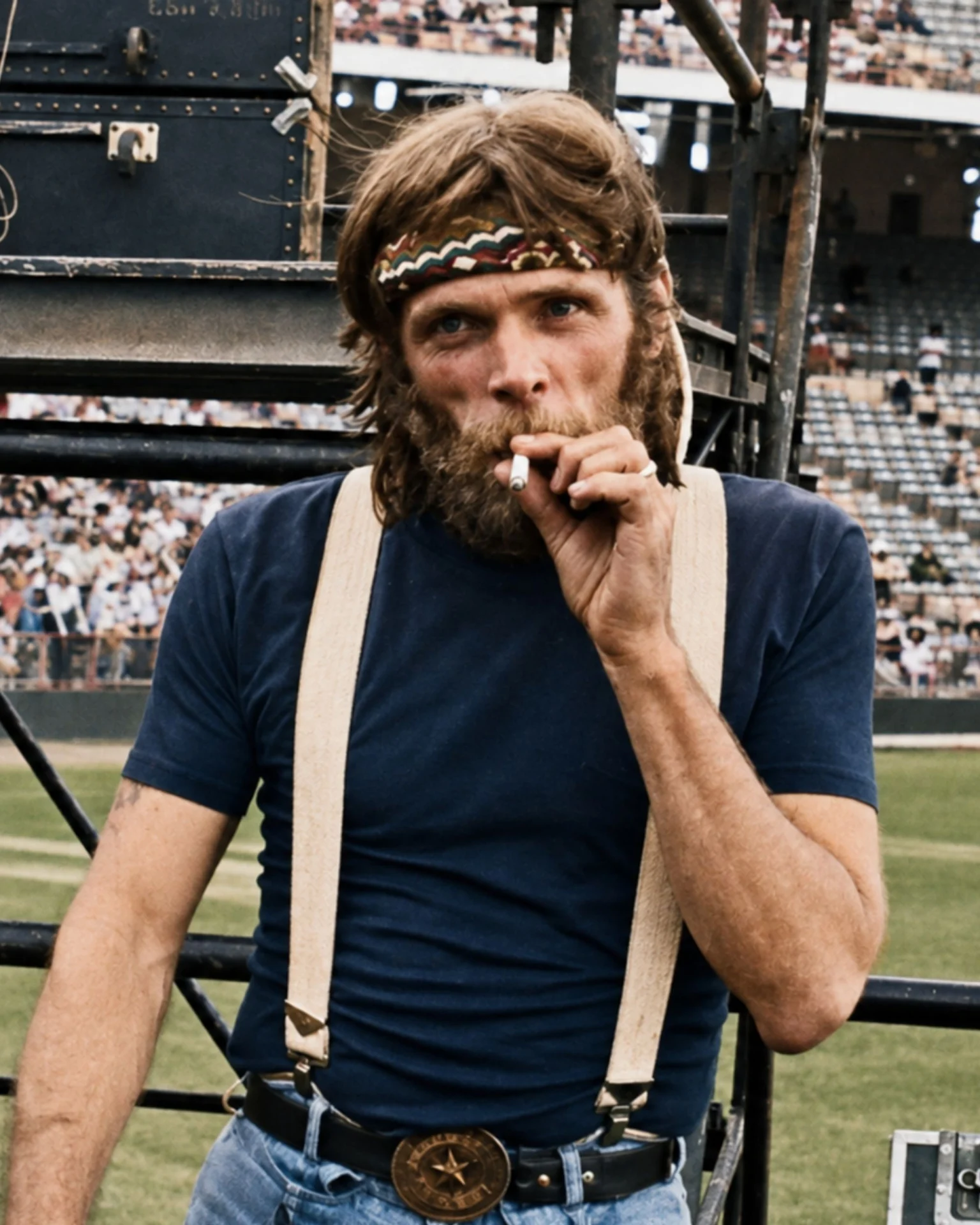
The man who would one day stare down a factory foreman in “Take This Job and Shove It” spent his hardest nights sleeping under Nashville’s Shelby Street Bridge. That was Johnny Paycheck before the outlaw legend existed. That was Donny Young.
He had learned hard country from the inside. He played bass and sang harmony for Porter Wagoner, Faron Young, Ray Price and George Jones. He knew the road, the late shows, the cheap rooms and the sound of a voice that carried real pain. But his own name did not carry a record anywhere.
Before the defiance and the headlines there was a singer who had nearly run out of places to sleep.
Producer Aubrey Mayhew later remembered hearing about the struggling artist and finding him beneath the bridge. Most of Nashville had already looked past Donny Young. Mayhew heard something worth saving.
He began recording Young and helped give him a new identity. Johnny Paycheck was born from a ring name, not a joke. The surname came from boxer Johnny Paychek. It had a tougher ring to it. It sounded like the hard-edged records Mayhew believed the voice deserved.
Then came “A-11.” Hank Cochran wrote it about a jukebox number that a broken man could not stand to hear again. Mayhew cut Paycheck’s version in New York with George Jones’s band. The performance landed with real weight. “A-11” gave Paycheck his first significant chart success and gave Mayhew proof that his faith was not misplaced.
That momentum became Little Darlin’ Records. The label released some of Paycheck’s rawest honky-tonk sides. “The Lovin’ Machine,” “Motel Time Again” and “Jukebox Charlie” were not polite country songs. They leaned into the desperation and the late-night regret. Paycheck also wrote or co-wrote songs that reached other artists. Tammy Wynette’s first charting single “Apartment #9” came from his pen. Ray Price carried “Touch My Heart” into the Top Five. For a short while the man who had slept under a bridge had found solid ground.
The ground did not hold. By the end of the decade Little Darlin’ was buried in debt. Drinking and drugs pulled Paycheck down again. The instability that had nearly swallowed Donny Young never fully disappeared. Another comeback would have to wait until the 1970s.
Mayhew did not just give a singer a new name. He heard value in a voice that Nashville had missed.
That later comeback brought the defiant anthem that made Johnny Paycheck a household name. But it did not create him. The artist was built earlier, in a dark moment under a bridge, with a producer who listened and a song called “A-11” that told the truth about heartbreak.
The public met the outlaw later. The singer worth finding showed up much sooner. That is the real beginning of Johnny Paycheck.