
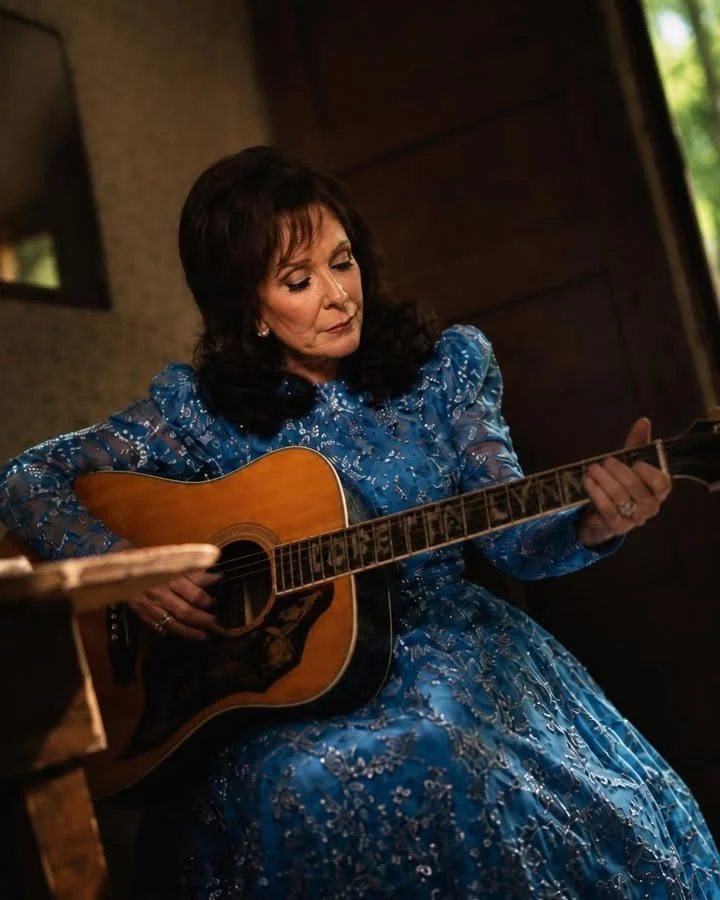
Even after the stage lights dimmed and the applause faded, Loretta Lynn carried Butcher Hollow with her everywhere. The world gave her every reason to leave that Kentucky hollow in the past. Fame arrived with wealth, awards, and a legacy that most artists only dream about. Yet the woman who sold more than 45 million records never once pretended to be anything other than a coal miner’s daughter.
Born Loretta Webb in Butcher Hollow, Kentucky, she grew up in a one-room log cabin as one of eight children. Her father spent his days deep in the coal mines, and the family knew the weight of poverty. Those early years never faded. They became the raw material for a songbook that spoke directly to the lives of working people.
Loretta did not sing about palaces or fairy tales. She sang about the strain of making ends meet, the joy of raising children, the sting of jealousy, and the steady rhythm of hard work. She married young and became a mother early, and her music carried the weight of those real experiences. Her honesty turned her into one of country music’s most beloved voices and carried her from a rough start to the top of the charts.
Success brought a flood of honors. Four Grammys, a place in the Country Music Hall of Fame, and record sales that reached deep into the millions. But the trophies never dimmed the memory of the cabin. Loretta kept telling the old stories, cooking the same recipes, and holding close the people who knew her before the gowns and spotlights.
She never treated her background like a costume. She treated it like a compass that always pointed home.
The phrase coal miner’s daughter never sounded like a slogan when Loretta said it. It sounded like memory. It sounded like pride. And it sounded true. That truth is why her music still echoes in the hearts of fans long after the final note fades.