
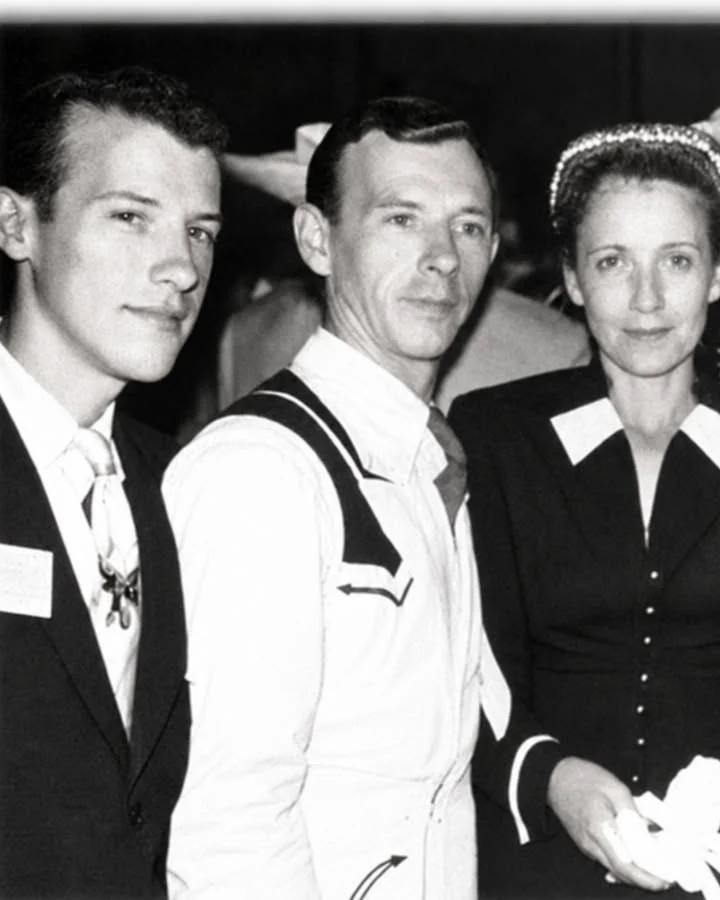
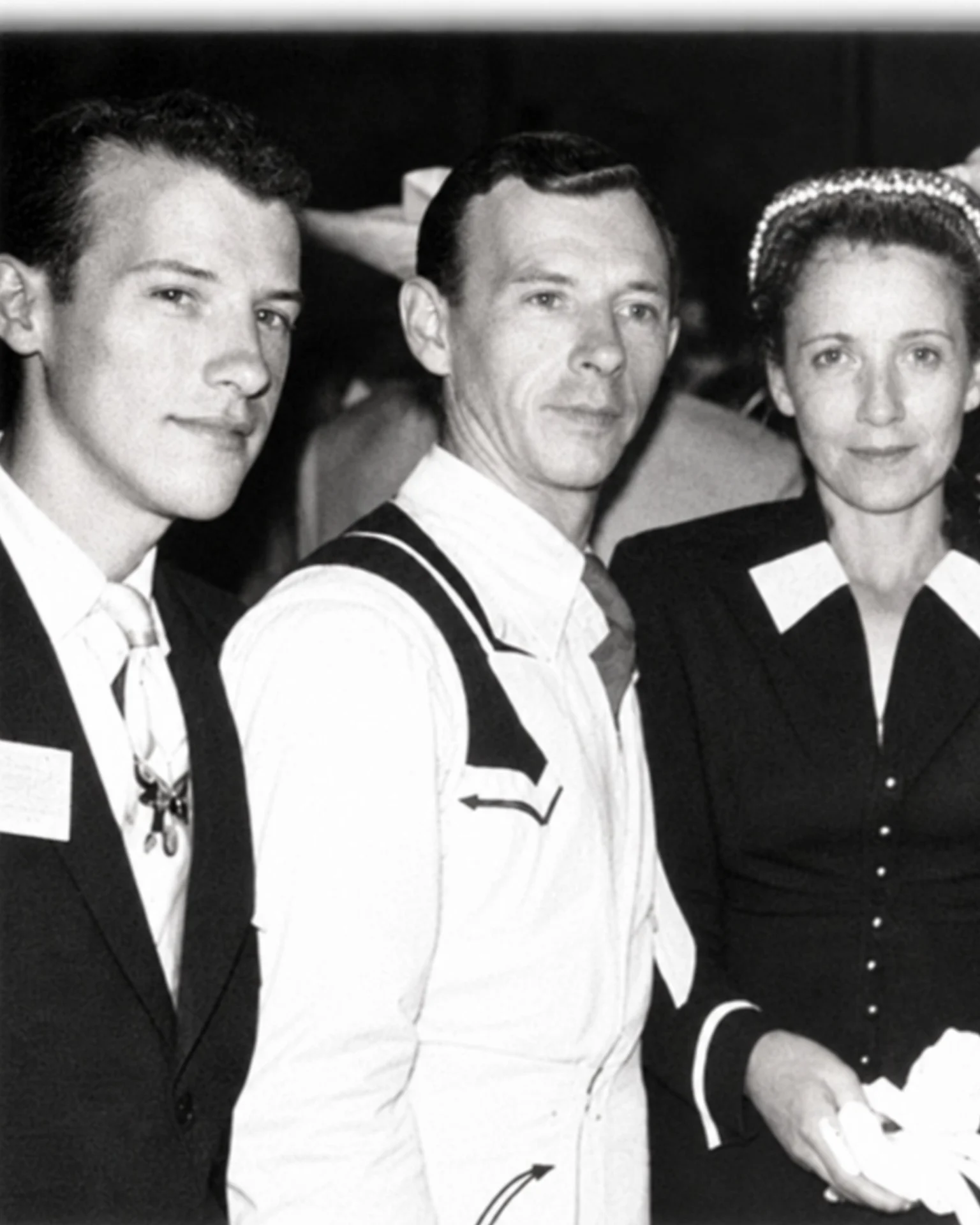
When Hank Snow died at Rainbow Ranch in 1999, it was Reverend Jimmie Rodgers Snow who spoke publicly for the family. That moment — the son who had traded a country career for a pulpit — was the culmination of a journey that had begun decades earlier.
At eighteen, Jimmie sat down for a WSM radio interview and thanked three people for whatever career might come next. His father. His mother. And the listeners buying his first RCA record. He had grown up traveling with Hank Snow, performing on package shows, and living inside the Grand Ole Opry world that had carried his father from hard beginnings into stardom. Even his name carried a map. Hank had named him after Jimmie Rodgers, the singer who had shaped his own life. By his mid teens he was recording for RCA and appearing alongside established country acts. The road ahead seemed too obvious to question.
But in 1957, just as success began opening, Jimmie felt called toward the ministry. He later said he had been in show business since childhood and was starting to find success when the pull came. That timing gives the story its tension. He did not leave because there was no door available. He left while the door was beginning to open. He gradually moved away from the recording career he had been built to enter and moved toward Evangel Temple in Nashville. There he eventually became pastor.
His congregation never sat entirely apart from the old world. Johnny Cash, June Carter, Connie Smith and Larry Gatlin were among the country figures who passed through Evangel Temple. It was there that Kris Kristofferson attended a service in the early 1970s that helped inspire Why Me.
The son who had stepped away from a country career had not left Nashville music behind. He had simply become part of it from another room.
Hank and Jimmie remained connected through family, faith and the long history surrounding the Snow name. Their paths did not become opposites so much as different expressions of the same inheritance. Hank had carried songs to people who needed to hear loneliness named. Jimmie carried ministry to people who needed something beyond song. Both lives moved through Nashville, through country music, through the complicated relationship between suffering and expression.
The deeper meaning of Jimmie’s life is not that he rejected country music. He found another way to serve the people around it. He stood in a church where singers sometimes arrived carrying the private weight fame had not solved. Music could lift people but it could not always answer what happened after the show, after the applause, after the bad night, after the marriage trouble, after the drugs, after the guilt, after the silence. Evangel Temple became one of the places where those questions could be brought. Jimmie Rodgers Snow, raised among musicians, knew the world they came from. But now he met them from another side.
By the time Hank died, the name he had borrowed from his own musical hero had traveled somewhere he probably could not have predicted. Jimmie Rodgers Snow had inherited a country music name but built his adult life around people who came to him when the music alone was no longer enough. He served the people music could not fully save.