
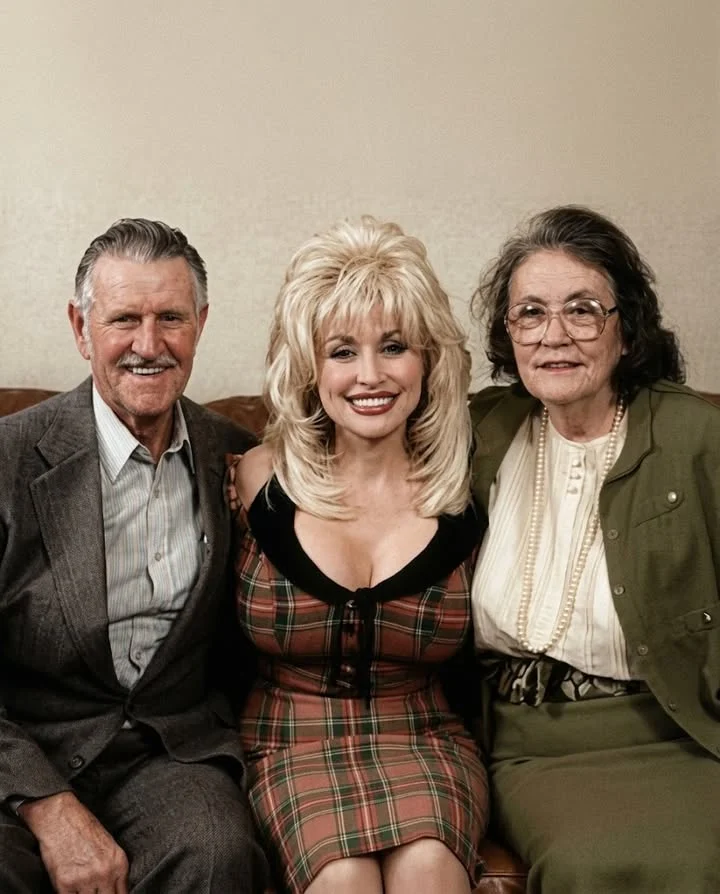
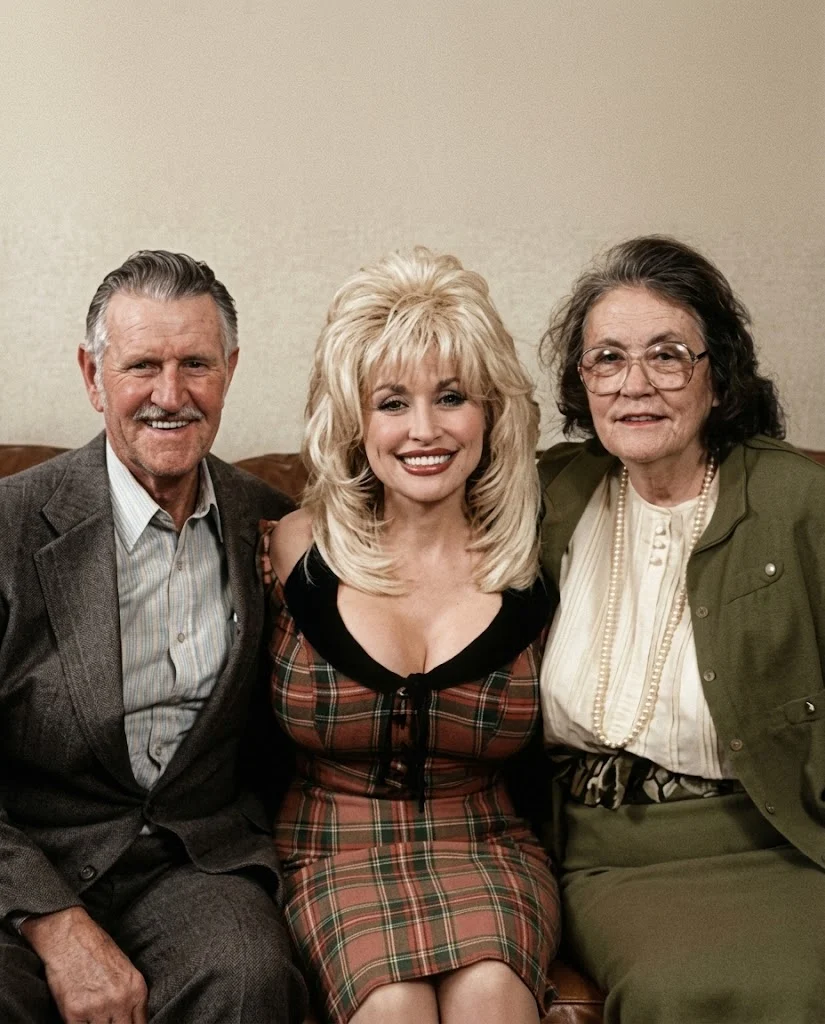
On a freezing Appalachian night, inside a cabin without electricity or running water, a mother planted the seed of a dynasty. Avie Lee Parton looked at her young daughter Dolly and whispered a promise that defied their crushing poverty. She told the girl that one day she would perform on the very stage they could only hear through the static of a battery-powered radio.
Fourteen people shared that one‑room wooden structure deep in Locust Ridge, Tennessee. Robert Lee Parton worked the rocky hillsides as a sharecropper while Avie Lee raised twelve children in conditions most would consider unimaginable. During the brutal winters, the kids crowded around a wood fire for warmth. Their only connection to the outside world sat on a small table: a battery-operated radio.
Every Saturday night the family tuned to the Grand Ole Opry. Through heavy interference, the voices of country music pioneers drifted into the drafty cabin. Avie Lee would sit exhausted from her relentless work and listen as Dolly sang along. Standing in the dark, Dolly pretended the glowing embers were the bright lights of a theater. Her mother never told her to be realistic. Instead she became Dolly’s first audience, offering reassurance that one day her daughter would step onto that Opry stage.
The belief planted by Avie Lee grew into armor against the crushing reality of poverty. That armor drove Dolly forward. Her maternal uncle Bill Owens recognized the raw power of her voice and began taking her to local radio and television stations in East Tennessee. By age ten she was performing on the Cas Walker Farm and Home Hour in Knoxville, a crucial platform for regional artists. She was a child but carried the determination of someone who knew exactly what was at stake.
The ultimate target remained the broadcast she had heard by the fire. In 1959, at just thirteen years old, Dolly and her uncle traveled to Nashville to visit the Ryman Auditorium. They had no scheduled slot on the Grand Ole Opry. Owens hustled backstage, desperate to find someone willing to let the teenager sing. That night country artist Jimmy C. Newman heard her and gave up his own spot on the live broadcast so she could have a chance. Johnny Cash introduced her to the crowd. Stepping up to the microphone, Dolly sang George Jones’s “You Gotta Be My Baby” and earned three encores from an audience that had never heard her name.
That thirteen-year-old debut was a breakthrough, but building a permanent career required a complete leap of faith. In 1964, the day after she graduated from Sevier County High School, Dolly packed her belongings into paper grocery bags and left for Nashville. She was eighteen years old, carrying only original songs and the survival instincts of a sharecropper’s daughter. She spent her initial years in Music City writing songs for other artists, navigating a male-dominated industry that often underestimated the blonde girl from the mountains. She matched the grueling pace with the work ethic her parents had applied to the tobacco fields.
By 1969, Dolly Parton had released enough hits to earn official induction as a member of the Grand Ole Opry. When she walked into the wooden circle, she brought the exact voice her mother had nurtured in front of that Locust Ridge fire. Avie Lee lived to see the impossible promise become historical fact.
One day you will actually step onto that stage
The distance between a freezing cabin and the pinnacle of country music was crossed by sheer will and a mother’s quiet faith. Dolly Parton did not just reach the stage she heard on that battery-powered radio. She became the voice reaching out to the next generation listening in the dark.