
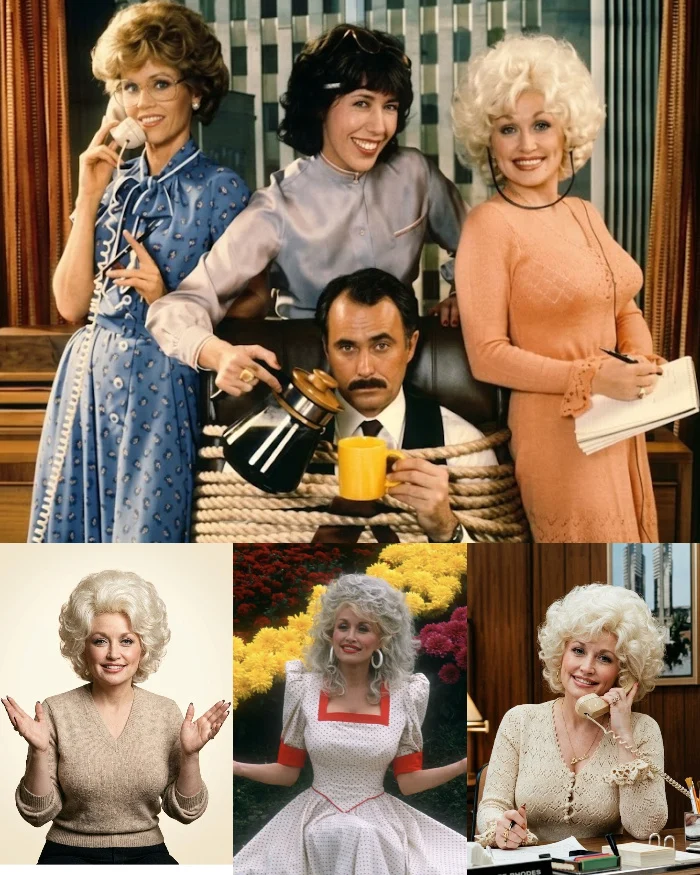
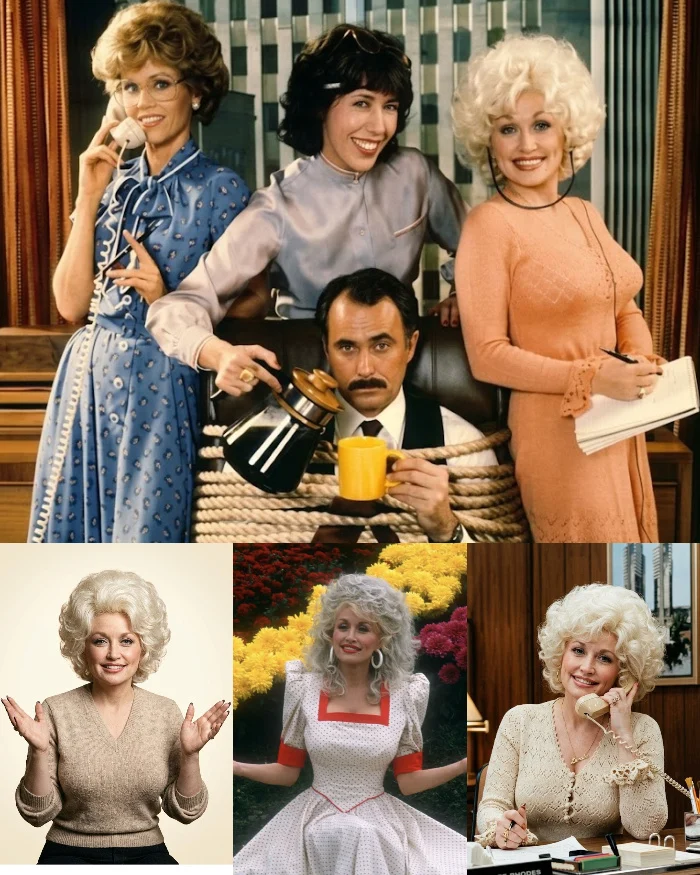
Before she became a national hero for working women, Dolly Parton’s iconic look was inspired by a woman her hometown called the ‘town tramp.’ As a child in Sevierville, Tennessee, Parton watched adults sneer at that glamorous outsider. She saw something entirely different. She saw the absolute pinnacle of glamour. That seed of defiance would later bloom on a Hollywood soundstage.
When parton arrived in Hollywood in 1980 for her acting debut in 9 to 5, costume designers assumed they would need to soften her larger-than-life image to make her character believable. Parton flatly refused. She insisted that Doralee Rhodes—her on‑screen secretary—wear the same massive wigs, heavy makeup, and famously tight clothes she wore on tour. The aesthetic she had carried from the Appalachian mountains was not up for negotiation.
Jane Fonda, producing and starring in the film, had actively recruited Parton after hearing her on the radio. Fonda was building a comedy around a real national association of female office workers. She needed a third lead who could instantly connect with working‑class women across the country, and she recognized Parton’s raw warmth as the missing piece. Parton accepted on one condition: she had to be allowed to write the film’s title track.
Once signed, Parton arrived on set with zero acting experience and a deep fear of slowing down production. She showed up the first day having memorized the entire script—not just her own lines, but every word spoken by Fonda, Lily Tomlin, and Dabney Coleman. To compensate for her lack of on‑camera training, she forged a quiet alliance with her co‑stars. She asked Fonda and Tomlin for guidance on hitting marks and navigating a set, offering to help them with their vocal deliveries in return. That behind‑the‑scenes camaraderie bled into the screenplay.
The script played on the era’s prejudices. Doralee’s exaggerated appearance makes her an immediate target of vicious office rumors. Her coworkers ostracize her, assuming she is having an affair with the boss. Meanwhile, the boss himself fuels those lies while subjecting her to relentless sexual harassment behind closed doors. The entire corporate building operates on the assumption that her wardrobe is an open invitation and a direct measure of her intellect.
Then the character flips the stereotype completely. Doralee is revealed as highly capable, deeply intelligent, and fiercely loyal to her husband. When she finally learns about the rumors, she becomes the most formidable woman in the building. Instead of retreating in shame, she physically corners the boss in his office, threatens him with a hunting rifle, ties him up, and demands the professional respect she is owed. That confrontation shifts the film’s entire dynamic, allowing Doralee to build a genuine, powerful alliance with the same female coworkers who had initially judged her based on appearance.
The performance shocked critics who expected a simple novelty casting. Parton earned two Golden Globe nominations for her acting alone, proving she could hold the screen alongside established Hollywood veterans. Yet the character resonated far beyond theaters and awards circuits. For millions of working women in the 1980s dealing with rigid corporate dress codes and pervasive sexism, Doralee Rhodes became an unexpected hero.
“Parton took the style of a ridiculed outcast from a Tennessee mountain town and forced Hollywood to take it seriously. By refusing to tone herself down, she showed an entire generation of women that they never have to surrender their own definition of beauty to command a room.”