
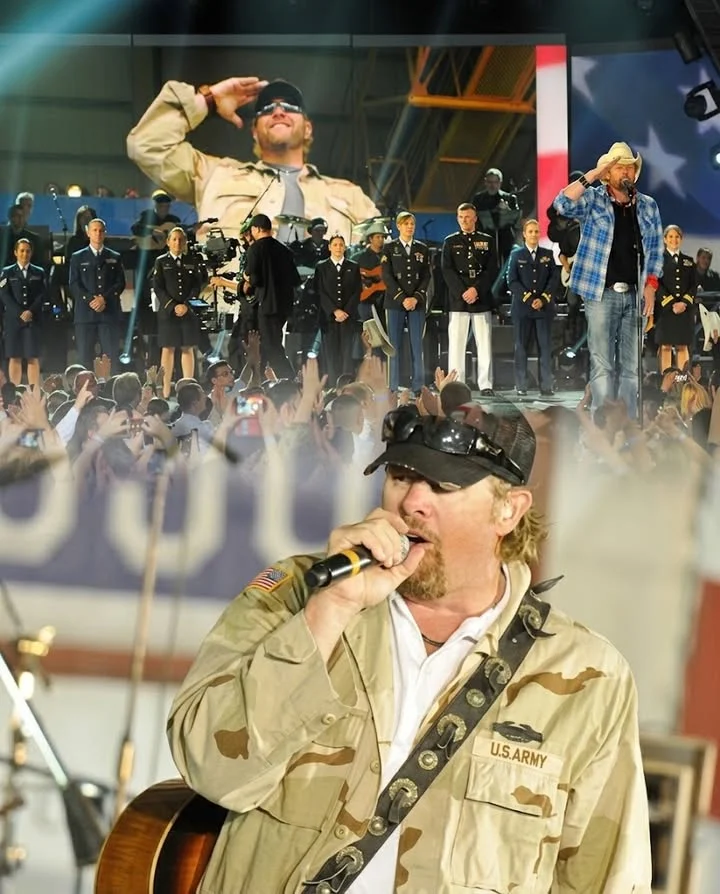
When the helicopter blades finally stilled in the scorching desert, a lone figure stepped onto a stage that swayed under his weight. It was built from splintered wood and empty ammunition boxes, hastily nailed together by soldiers who had spent their morning sweating in the heat. This was Toby Keith, a country music superstar who had chosen this dangerous outpost over any comfort he could have had back home.
Driven by the deep respect he held for his father, a U.S. Army veteran, Keith turned his gratitude into a lifelong mission. Over 11 USO tours, he performed more than 200 shows across 17 countries, reaching over a quarter of a million service members. But he refused to limit himself to the large, well-protected military bases where most entertainers stayed. Instead, he insisted on flying to the remotest Forward Operating Bases, where the dust was thick and the threat of attack was constant.
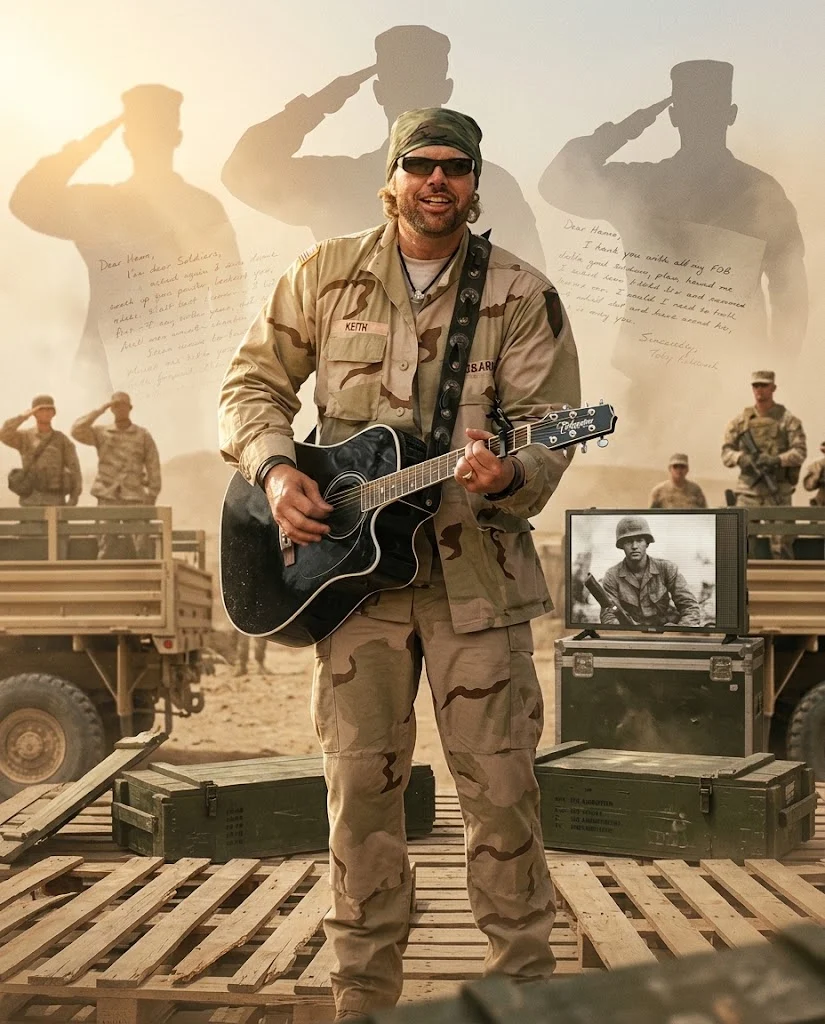
He demanded these dangerous flights, determined to go exactly where the isolation was greatest. When troops saw his helicopter arrive, they scrambled to assemble a platform from whatever they could find. They used shipping pallets, cargo truck tailgates, and stacked empty ammo crates to give him a place to stand. Keith left his Kevlar vest and helmet behind, wanting no physical barrier between himself and the soldiers. With only his acoustic guitar, he performed his set even as mortar sirens wailed in the distance, refusing to let the war dictate the music.
The shows themselves were a brief escape from the grueling reality of deployment, but the true weight of his visits came after the final chord faded. The superstar who commanded sold-out stadiums did not rush back to safety. He stayed in the stifling heat, shaking every single hand and looking exhausted men and women in the eye. He sat down in the dirt with them, opening standard MRE combat rations and listening to their stories instead of telling his own.
Soldiers documented these afternoons with disposable cameras, capturing the surreal makeshift stages before the wood was broken down. They wrote letters home, carefully folding paper that would travel thousands of miles to American living rooms. They did not write about the imminent threats or the exhaustion of the frontlines.
They wrote about the afternoon a country music giant sat on an ammo box in the blistering heat and treated them like family.
Those letters and photographs became prized family heirlooms, serving as proof that their sacrifices were recognized by someone who had no obligation to be there.
Keith pushed through sandstorms, extreme temperatures, and active threat warnings to reach the most forgotten outposts. The stages were eventually dismantled, and he always had to leave. But for a few hours in the middle of a war zone, he brought more than a melody.
He brought them a piece of America.