
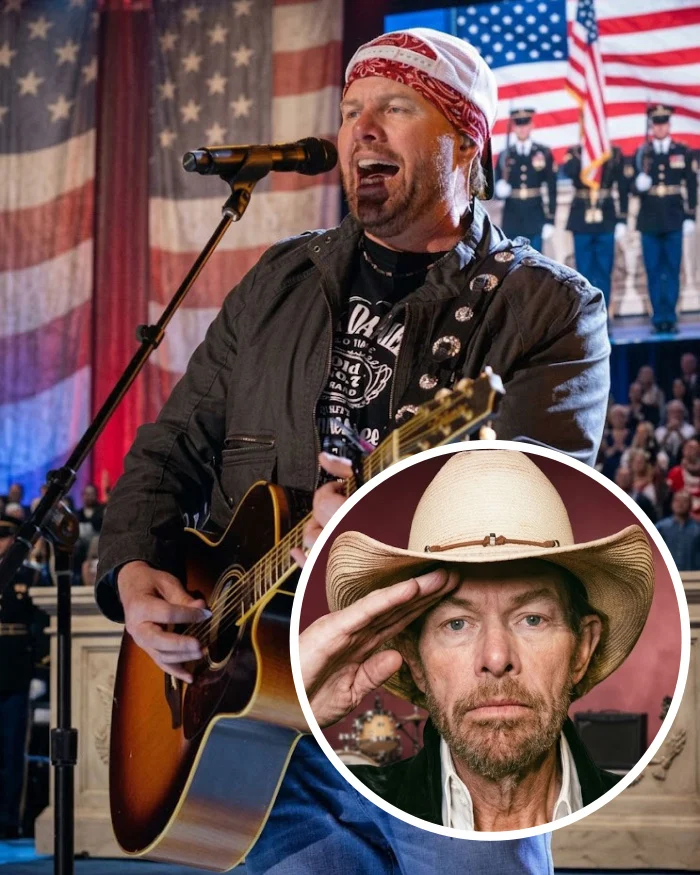
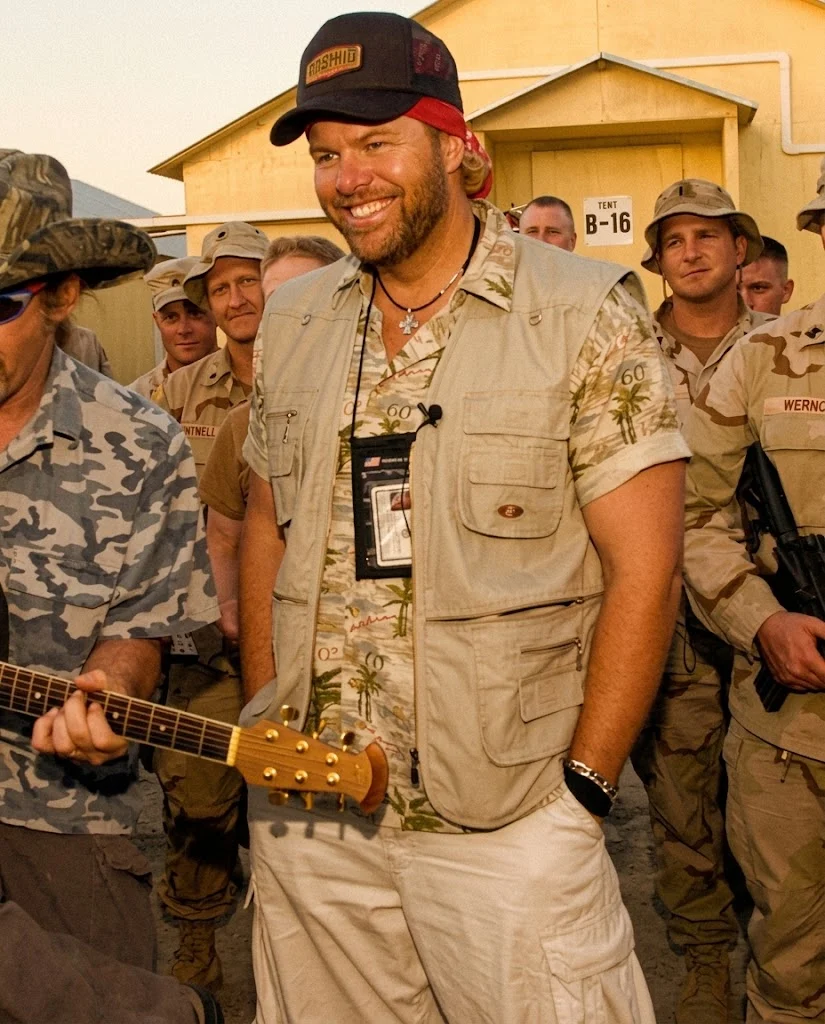
Under a relentless hail of mortar fire, Toby Keith sat in a cramped concrete bunker in Kandahar, Afghanistan. The warning sirens had just forced him and his band into the shelter alongside the young soldiers he had been performing for. But instead of cowering in fear, the country superstar pulled out a marker and began signing autographs, taking photos, and shaking hands with every single service member huddled around him. When the all-clear sounded, he walked back to his stage of ammunition crates and flatbed trucks and finished the show as if nothing had happened.
That moment encapsulated the quiet, unshakeable patriotism that defined Keith’s legacy far more than any platinum record. For over a decade, he carved out two weeks each year to travel with the USO, refusing any payment for his first seven tours. He turned down millions in stateside concert revenue and lucrative sponsorships during the peak of his career, all to bring his guitar directly to the most dangerous corners of Iraq and Afghanistan.
Keith grew up as the son of Army veteran H.K. Covel, who lost his right eye in combat. That upbringing instilled in him a deep respect for the uniform and a desire to serve those who served. He quickly grew frustrated with the standard USO itinerary that only visited heavily guarded headquarters. Instead, he insisted on ‘FOB hopping’ — boarding Blackhawk helicopters and C-130 transport planes to reach the most remote Forward Operating Bases.
There were no stadium acoustics or green rooms. His stages were cobbled together from flatbed trucks and ammunition crates, set up in blinding desert dust under the harsh Middle Eastern sun. He traded his signature stage wear for heavy body armor and field rations, stripping away the superstar image to stand next to service members as just another American.
In the middle of an active war, surrounded by exhaustion and uncertainty, his familiar baritone became a temporary flight home. He gave isolated soldiers a brief moment of peace and a reminder that someone remembered exactly where they were.
Over 11 USO tours, he performed for more than 250,000 troops across 18 countries. The logistical nightmares of moving a band through a war zone, the close calls under fire, and the silent bonds formed in those harsh outposts remain a chapter of his legacy that runs far deeper than any commercial success.
Keith once called the smiles and cheers of those troops the greatest paycheck of his life. He proved his patriotism not with anthems on a safe stage, but with the dirt on his boots and a willingness to share the risk.