
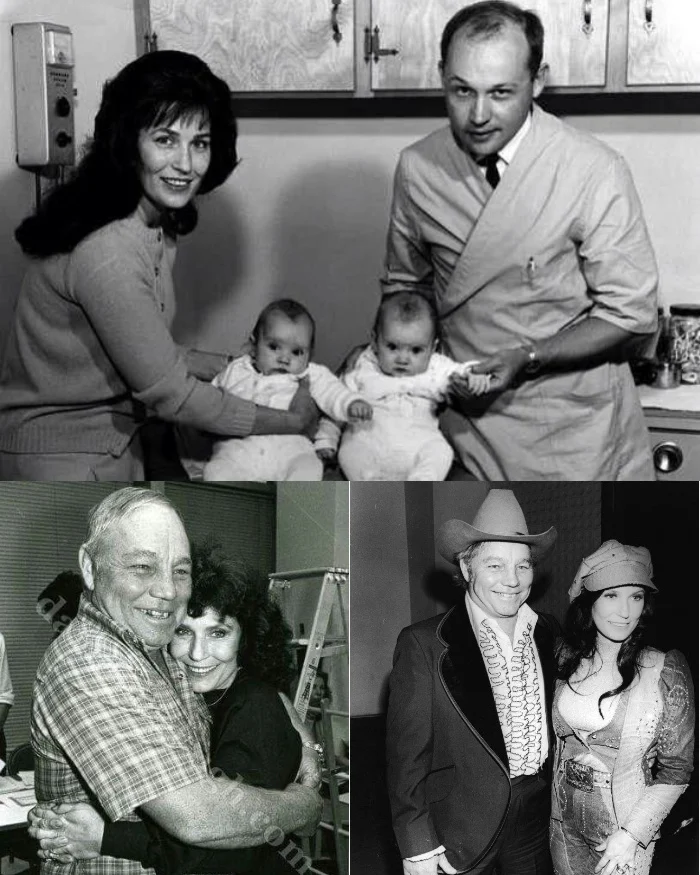
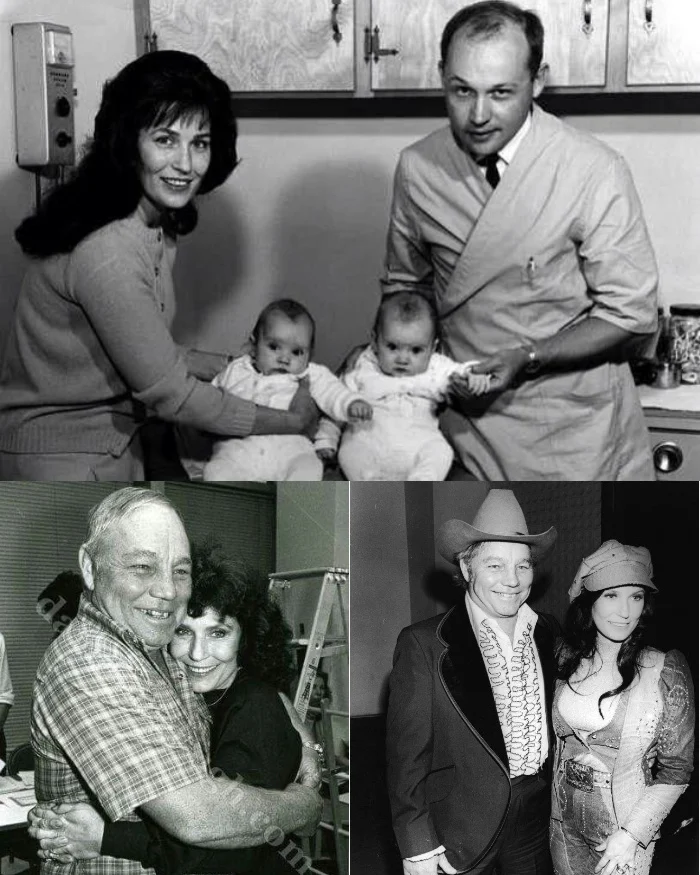
Loretta Lynn sat beside her husband’s bed and sang to him one last time. She sang about wanting to hear him say he loved her with a clear, sober mind. It was a truth she had never dared to admit when he was healthy and drinking. But in that room, with the clock running out, the walls she had built around her heart finally crumbled.
O.V. “Doolittle” Lynn died in August 1996 at age 69 from severe complications of diabetes and heart failure. For nearly five decades, they had shared one of the most complicated marriages in country music history. His drinking and infidelity were public knowledge, giving Loretta the raw material for a historic career. But as his body weakened, the bitterness gave way to a deep, quiet loyalty.
When his condition worsened, Loretta halted her touring schedule entirely. She retreated to their Hurricane Mills home in Tennessee, trading sold-out arenas for the daily routines of a bedside caregiver. The man who had bought her first guitar and pushed her onto her first stage was now entirely dependent on her. She refused to walk away.
Their story began in the late 1940s when Loretta was just a teenager. They married in 1948 and left the poverty of Butcher Holler, Kentucky, to seek work in Washington state. In a remote cabin, isolated and raising four children, Loretta sang lullabies. Doolittle heard her potential. He bought her a $17 Harmony guitar and insisted she could compete with the women on country radio. He pushed her onto the stage of a local tavern in Blaine, Washington.
He was the architect of her early career. When she recorded her first single, they drove across the country, stopping at small-town radio stations to hand the vinyl to DJs. But the same man who championed her talent also caused her greatest pain. His heavy drinking and chronic infidelity became a permanent fixture of their household.
Instead of hiding the dysfunction, Loretta weaponized it. She took the reality of their fractured home and turned it into sharp, uncompromising country records.
He actively encouraged her to record the very songs that publicly condemned his behavior, she later recalled.
He managed her early touring days, fully aware that the angry, defiant anthems resonating with millions were written about his own failures.
They fought bitterly, sometimes physically, but they never completely broke apart. That fierce energy eventually faded as age and illness set in. By the mid-1990s, the husband who had once dominated their household was largely confined to his bed. The anger that fueled so many hits dissolved into a quiet, enduring loyalty.
In his final days, the reality of their relationship was stripped down to its most basic foundation. Loretta sat beside him and sang. She later shared that vulnerable admission, a truth she had guarded fiercely during the years he was healthy. Acknowledging how much she needed his affection had felt like surrendering in a war she was determined to win. But in that room, the need for a tough exterior vanished.
When Doolittle passed away, Loretta was right there beside him. They had spent nearly fifty years navigating a chaotic, bruised partnership. Her final act of devotion proved that the loyalty holding them together was just as real as the heartbreak she had sung about for the world.