
In 2002, Alan Jackson took the stage to perform a new song. It reached Number One on the charts almost instantly. But the lyrics weren’t about barroom heartbreak or rebel anthems. They painted a picture of a plywood boat and an old dirt-road Ford. The real subject was a man who never sought the limelight. That man was Eugene ‘Daddy Gene’ Jackson, the mechanic who raised him in Newnan, Georgia.
Daddy Gene passed away in January 2000. The loss sent the country star into a quiet retreat. He processed his grief the only way he knew how. He wrote a song. ‘Drive (For Daddy Gene)’ became a deeply personal tribute. It resonated with millions who saw their own fathers in the storytelling. But the memories that inspired it began decades earlier, under the hood of a 1955 Ford Thunderbird.
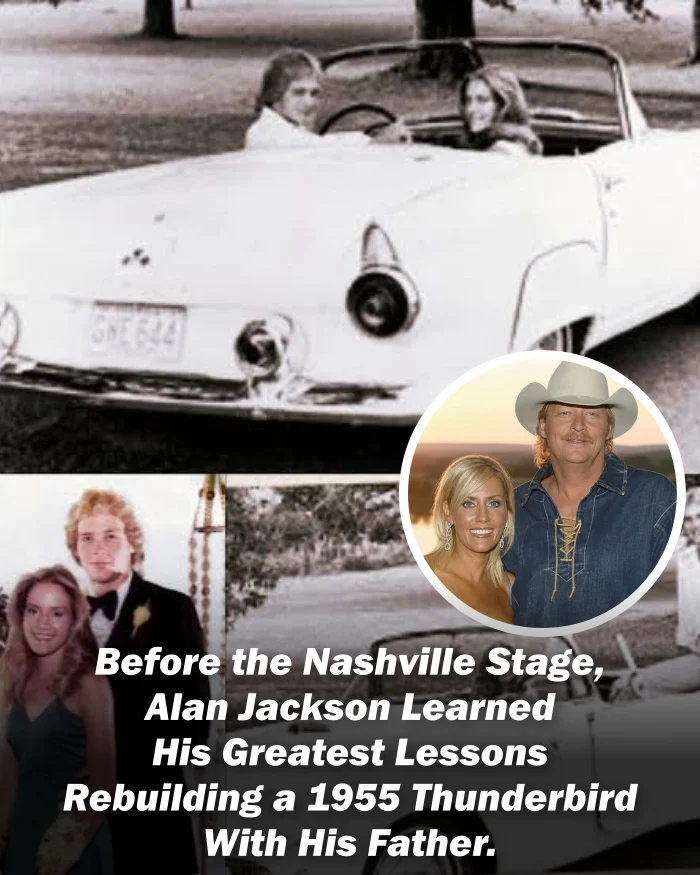
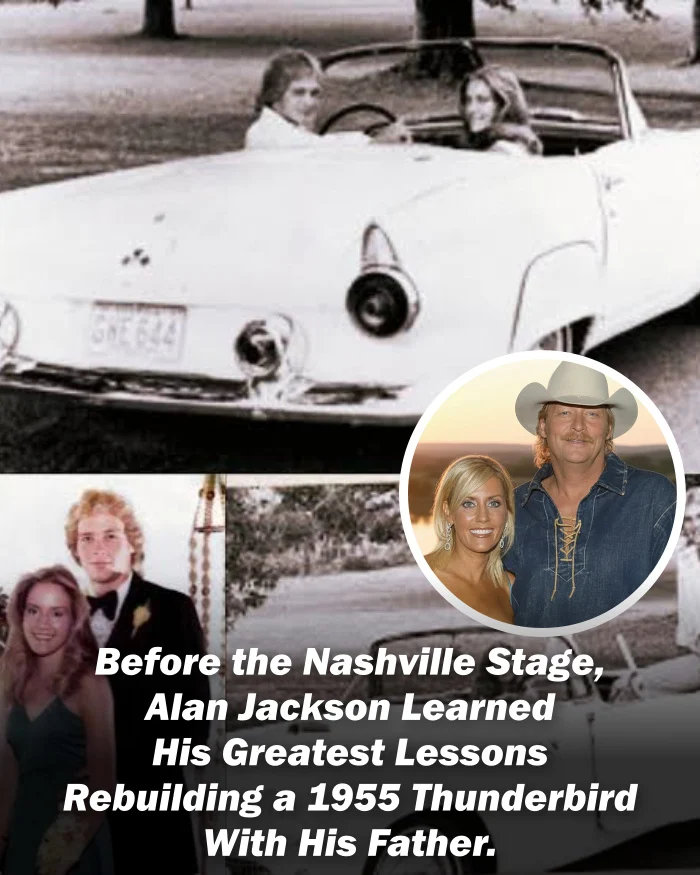
When Alan was just 15 years old, his father made a silent decision. He was already exhausted from long shifts repairing cars to support his wife and five children. Free time was almost nonexistent. Yet night after night, Daddy Gene carved out hours in a dim garage to help his teenage son rebuild a salvaged Thunderbird from the frame up. Alan held the flashlight while his father taught him patience and precision.
Love was translated through a passed wrench
Daddy Gene belonged to a generation of rural Southern fathers who rarely spoke about feelings. Their deepest conversations happened through action. A shared effort sanding rust. A quiet nod when the engine finally turned over. For Alan, the scent of motor oil and worn leather became forever tied to his father’s steady presence. That garage was not glamorous. It was a classroom where a boy learned to take something broken and give it a second life.
Those values never left him. When Alan traded grease-stained hands for a guitar and bright Nashville lights, the lessons from the Thunderbird remained his anchor. He built a massive musical career but never lost the working-class reality his father had quietly handed down.
The physical legacy of those garage sessions still survives. The original white 1955 Thunderbird is not behind velvet ropes in a museum. It stays in Jackson’s personal collection, maintained in pristine running condition. When it came time to film the music video for ‘Drive,’ Jackson brought that exact car out of storage. The story came full circle, immortalizing the vehicle his father had helped him build.
Daddy Gene built a beautiful running car. But the true gift was the hundreds of hours he spent standing next to his son. The restoration project was simply a father’s quiet excuse to keep his boy close before the world called him away.
That mechanic from Georgia never sought stadium lights or applause. Yet every time his son steps up to a microphone to sing about an old dirt road and a heavy steering wheel, Daddy Gene is still sitting right beside him.