
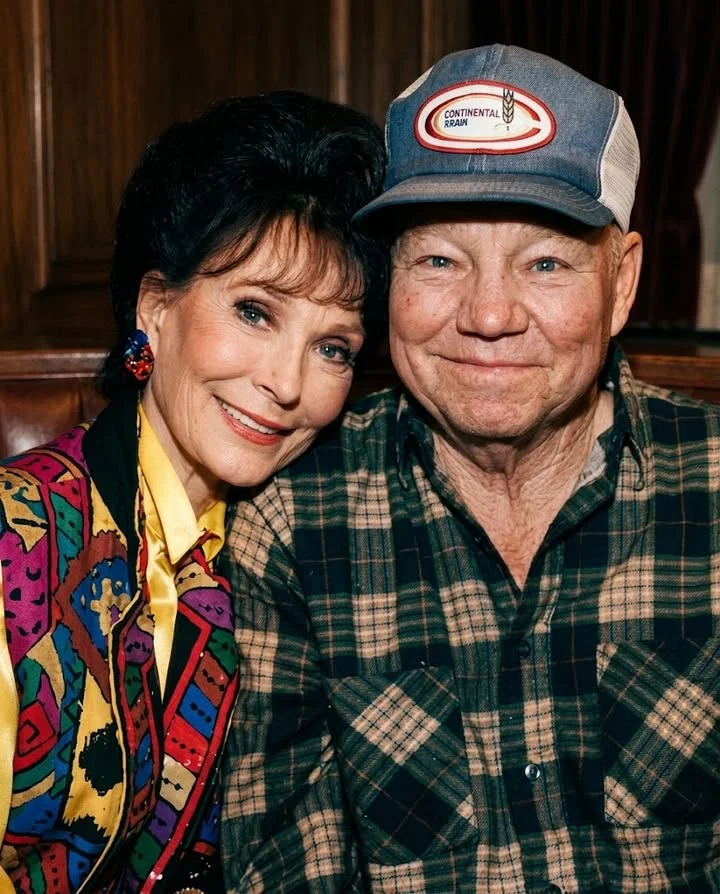
A $17 Harmony guitar from a Sears Roebuck catalog did not just change one woman’s life. It rewired the entire sound of country music and gave millions of women permission to tell the truth about their own kitchens. That guitar was a gift from the same man who made Loretta Lynn cry more than anyone else on earth. And she used it to sing every single tear back at him.
He caused the pain and then he handed her the exact tool she needed to sing about it.
On January 10 1948 in Paintsville, Kentucky, a 15 year old coal miner’s daughter named Loretta Webb married Oliver Doolittle Lynn. There was no grand ceremony and no long courtship. The quick vow stripped away her childhood and placed the heavy weight of adult survival on her young shoulders.
Doo Lynn was desperate to escape the deadly coal mines around Butcher Holler. He moved his teenage bride thousands of miles away to Custer, Washington. By the time she turned 20 Loretta was isolated in a rainy unfamiliar logging town with four small children and two more on the way. She picked strawberries and cooked for farmhands just to keep food on the table. It was a brutal lonely existence for a girl still growing up.
Their marriage was built on a ferocious contradiction. Doo drank too much and chased other women and made Loretta’s nights miserable. Yet he was also the first person to believe in her voice. He bought her that guitar from the catalog. He insisted she was better than the singers on the radio. He pushed her onto a stage at a local Grange hall when her legs were shaking and she wanted to run.
Instead of hiding those battles Loretta turned them into working class anthems. When a real woman in town began chasing Doo, Loretta did not just argue behind closed doors. She wrote Fist City as a direct public warning and used her pen like a loaded weapon.
When he stumbled in late after another night out she answered with Don’t Come Home A Drinkin’ (With Lovin’ on Your Mind). These songs were not polished Nashville fiction. They were real time dispatches from a turbulent marriage.
In February 1960 Doo’s relentless hustle pushed them into a recording studio in Los Angeles. At that first Zero Records session Loretta laid down I’m a Honky Tonk Girl with seasoned West Coast musicians. The song proved she could hold her own in a professional room. But the records that followed told the real story from their living room.
By naming the mistresses calling out the drinking and refusing to play the victim, she smashed country music’s polite rules. For the first time rural and working class women heard their own unvarnished domestic reality coming through the radio. She said the exact things they were not allowed to say in their own kitchens.
She put every flaw every tear and every fight on vinyl.
Loretta and Doo stayed together for nearly fifty years until his death in 1996. Outsiders saw the fighting and wondered why she never left. But they shared something deeper than romance. They shared the memory of Appalachian poverty sleeping in their car surviving on bologna sandwiches and driving across the country to hand deliver copies of that first record to radio stations.
Doo was her biggest champion and her most frequent heartbreak. He gave her a reason to cry and then he made sure the whole world heard her cry in perfect tune. She did not hide her scars to protect his reputation or to make the public comfortable. Instead she pressed every flaw every tear and every fight into vinyl.
He handed her a guitar and she used it to tell the exact truth about the man who bought it.