
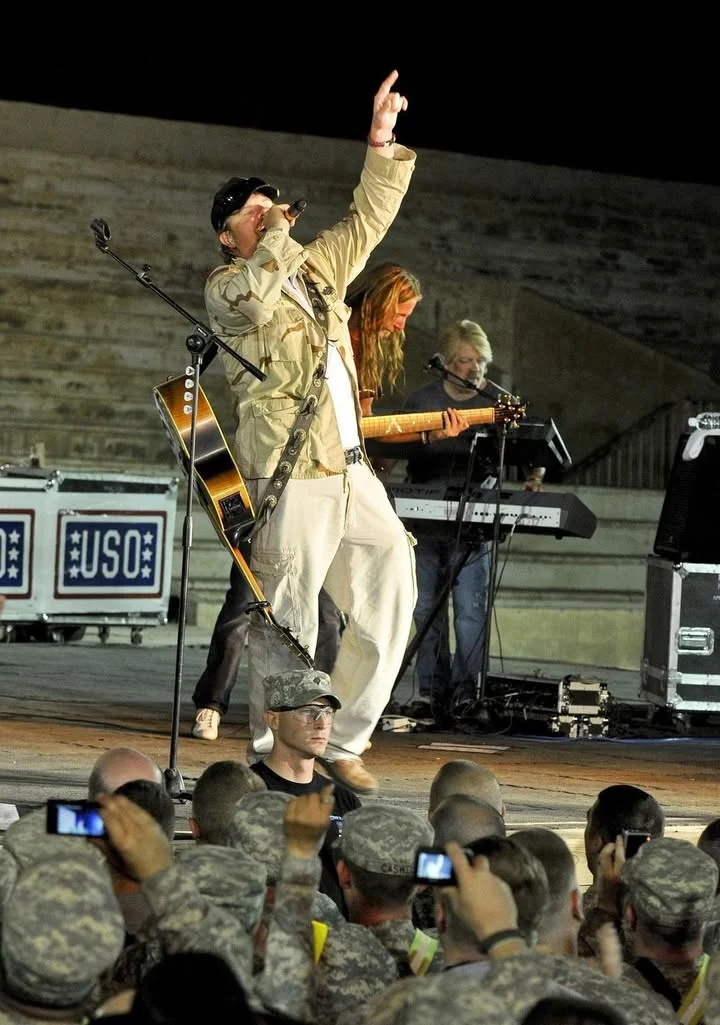
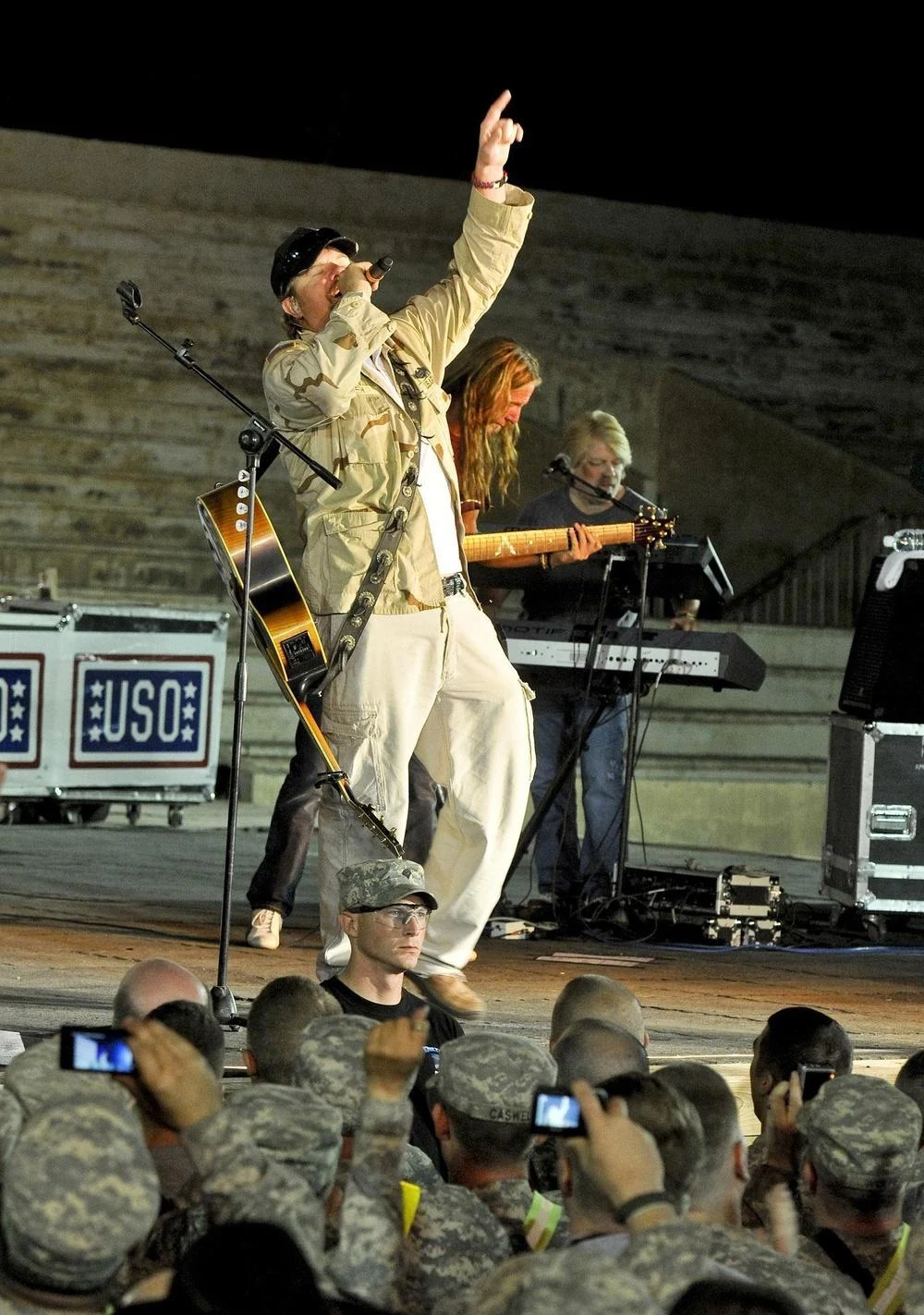
The sirens ripped through Kandahar Airfield in Afghanistan in 2008 as Toby Keith stood on a makeshift stage in the dust. Mortar fire sent thousands of troops scrambling for cover. The country music superstar did not run for a VIP shelter. He sprinted about a hundred yards alongside the soldiers and crowded into a reinforced concrete bunker.
For more than an hour, while the attack continued outside, Keith sat in the dirt with the troops. He did not complain about the danger or demand special treatment. He listened to their stories, signed autographs in the dim light, and let them know their sacrifice mattered.
Just getting to see their faces light up on a remote base is the only reward I ever need for making this trip.
When the all-clear finally sounded, coalition military police advised him to cancel the rest of the show. Keith refused. He walked back to the makeshift stage and picked up the exact verse where he had been interrupted.
That moment captured a legacy built far from Nashville stadiums. Over the course of his career, Keith completed 11 USO tours and made more than 160 overseas trips. During his 2009 USO tour in Afghanistan, he refused to remain in the safety of massive military hubs like Bagram and Kandahar. He insisted on flying by Black Hawk helicopters and armored MRAP vehicles to the most isolated forward operating bases and combat outposts near the Pakistan border.
In those remote places, soldiers often went months without seeing a single visitor or entertainer. There were no stadium lights and no elaborate sound systems. Keith’s stages were hastily assembled from stacked ammunition crates or the dropped tailgates of military trucks. He performed with the same raw intensity he carried into sold-out arenas back home, even when the crowd was only a few dozen mud-stained troops.
Keith never kept security at a distance. He shook hands stained with gun smoke and sat in the dirt to share quiet conversations with the men and women in the trenches. The memories veterans carry from those offstage moments remain the deepest part of his legacy.
Massive audiences will always remember his chart-topping hits and larger-than-life persona. But the soldiers who met him at the edge of war will remember the man who shared their bunker and proved that their country had not forgotten them in the dark.