
In a dusty medical tent in Helmand Province, Toby Keith pulled up a folding chair beside a wounded soldier’s cot. No microphone, no audience—just a quiet acoustic guitar and a song that carried the sound of home. This was not a stadium show. It was a private moment of solace for a young man who could not make it to the makeshift stage of stacked ammunition crates that had become the country star’s hallmark on the frontlines.
For over a decade, Keith did not just write anthems about the American military. He brought his music directly into the danger zones, walking where few entertainers dared. From the dusty outposts of Fallujah in Iraq to the remote stretches of Helmand Province in Afghanistan, he left the safety of the Nashville arena circuit to play where sirens and gunfire were daily realities.
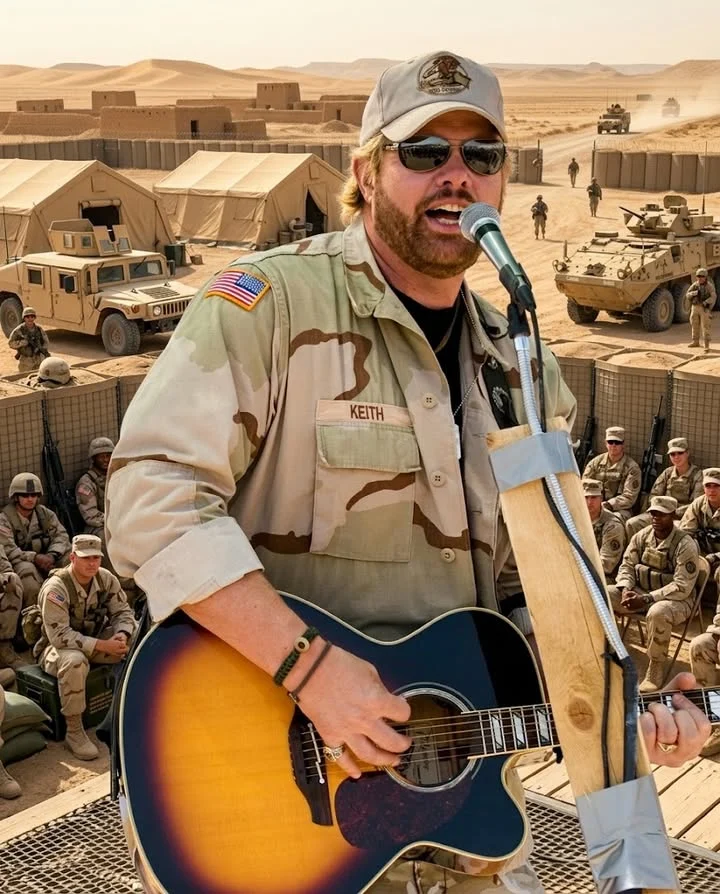
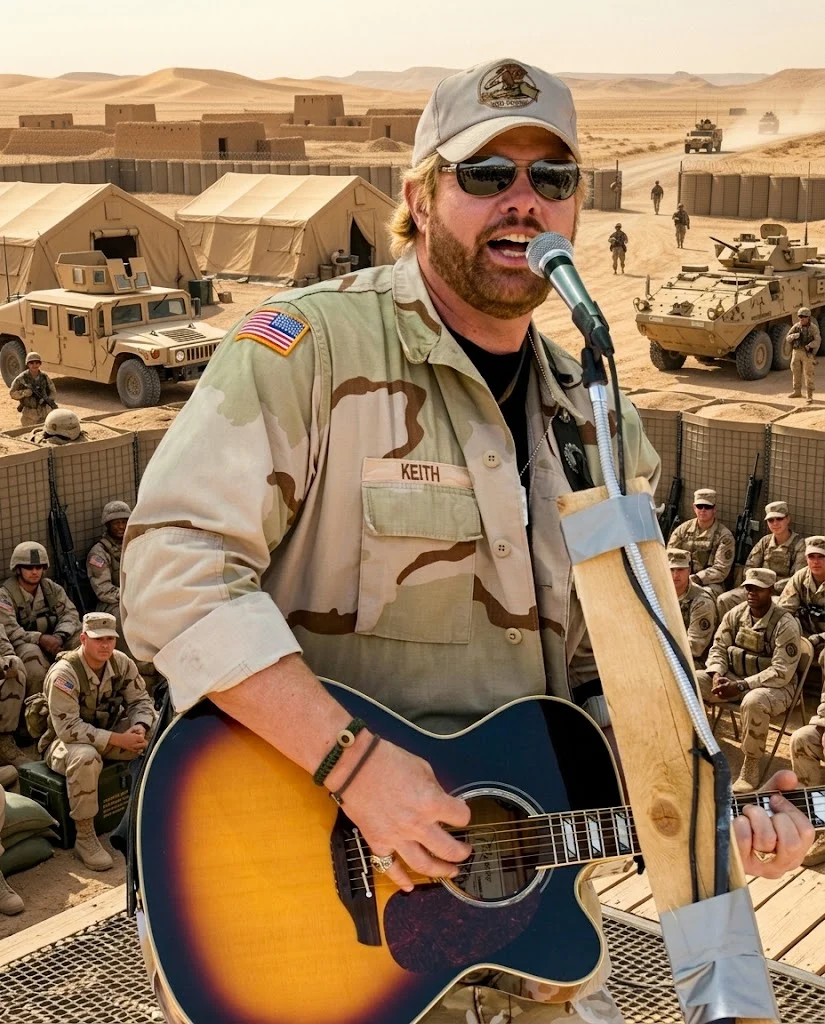
Across 11 USO tours, Keith performed more than 280 events, reaching over 250,000 service members. He traveled in the bellies of C-130 transport planes and rode in Black Hawk helicopters, wearing heavy Kevlar body armor just to reach isolated Forward Operating Bases. There were no massive sound systems or arena lighting rigs. In remote outposts where a full backing band could not travel, Keith simply held an acoustic guitar, standing in cramped mess halls, on windy aircraft carrier decks, and on makeshift platforms built entirely from stacked ammunition crates. Sand blowing across the stage, he sang into the desert dust.
He gave them more than a concert. He gave them a momentary piece of home in the midst of trauma and physical pain.
Beyond the cheering crowds, Keith quietly made his way into military medical tents to visit the wounded. In unrecorded, acoustic sessions, he played softly for soldiers who were too injured to come outside, offering a private piece of comfort. He did not do any of this for the money or publicity. While his domestic tours grossed millions, his USO trips were strictly unpaid. Keith frequently funded his own travel logistics and equipment transport, absorbing heavy costs to ensure his music reached the most isolated units overseas.
In those moments, the barrier between a global country icon and a tired soldier completely vanished. Beneath harsh military floodlights, his voice became a sudden, visceral bridge back to living rooms and kitchen porches across America. When the music stopped, Keith rarely rushed back to a secure compound. He stayed in the soot and heat, exchanging firm handshakes, quiet hugs, and taking photographs until every service member in line had been met.
His final legacy is not just found in the patriotic anthems recorded in a studio. It is written in the desert dirt, left behind for the men and women who needed a piece of home when they were thousands of miles away. Toby Keith chose to stand on ammo crates in active war zones because there was no greater stage than the one where soldiers needed him most.