
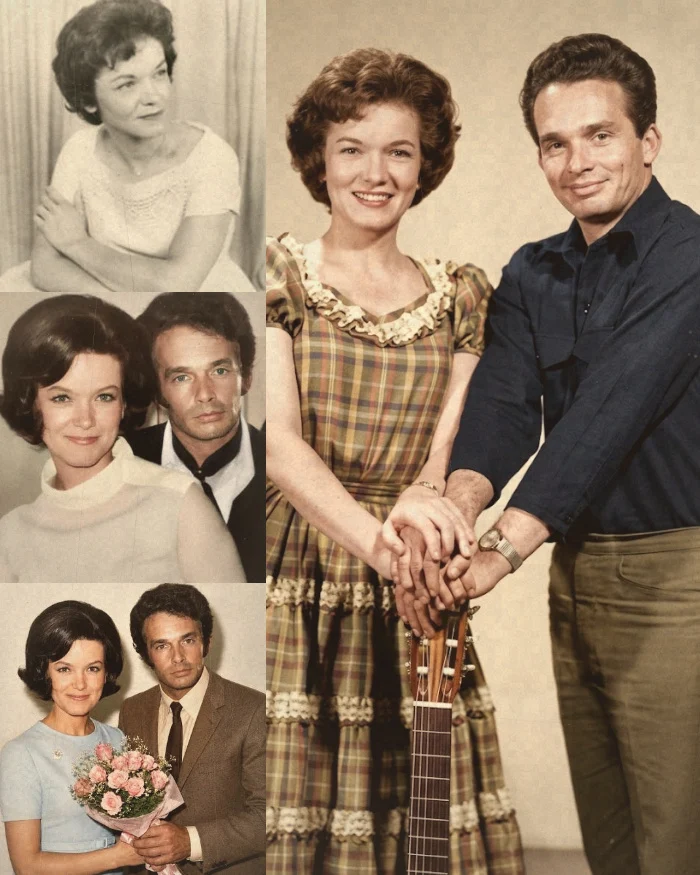
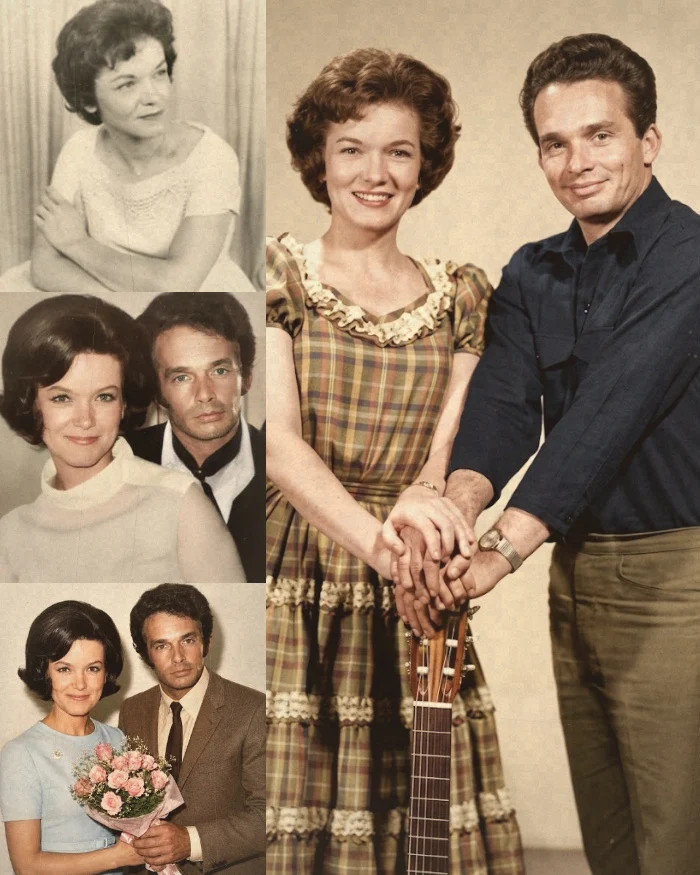
She stood at the edge of the spotlight and made a restless giant seem even larger. That was Bonnie Owens after accepting the Academy of Country Music’s first Female Vocalist of the Year trophy in 1965. She walked away from everything that award promised and chose a backup microphone instead.
Born Bonnie Campbell in Oklahoma she moved to California and helped plant the roots of the raw telecaster-driven sound that became the Bakersfield Sound. Her own 1963 single “Why Don’t Daddy Live Here Anymore” climbed the charts and proved she could command a crowd all alone. The solo empire she could have built stretched out before her.
Then she married Merle Haggard and rewrote country music history.
Haggard was never predictable on stage. He changed tempo and phrasing with his mood and chased the energy of the room. A backup singer waiting for written cues would have been lost. Bonnie learned to read his shoulders, his jaw and his breath. She knew where a note was going before it left his lips. Her harmony held him steady when he rushed and wrapped around him when he stretched a line.
That same steady hand followed him off stage. The band lived on buses for more than two hundred dates every year. Bonnie organized the schedules, paid the band, ironed the clothes and talked Haggard down from the pressure of touring. She served as manager, anchor and den mother without ever putting those titles in writing.
Their voices together became the soul of classic recordings that carried the Bakersfield Sound around the world. They also co-wrote “Today I Started Loving You Again,” turning the raw truth of their own relationship into a country standard.
In 1978 the marriage ended. Everyone expected her to finally take back the solo spotlight.
She stayed with the band.
For decades after the divorce she stood on stage next to the man she used to call her husband and matched his phrasing as if nothing had ever changed. She outlasted his later marriages and built a new life of her own without abandoning her post.
She kept touring with The Strangers into the 2000s and only stepped down when Alzheimer’s disease made the road impossible. She never demanded the center stage. She never asked for the credit.
In a business built on ego she chose to lift another artist higher than herself.
Some artists measure greatness in trophies and headlines. Bonnie Owens measured it in the man she lifted and the music they protected together.