
There are moments in popular music that feel less like calculated brilliance and more like a lucky break caught on tape just before the clock runs out. The opening of The Beatles’ 1964 single “I Feel Fine” is one such moment. It is not a drum fill or a chord or a lyrical hook. It is a sustained resonant whine, the sound of a guitar leaning against an amplifier and achieving self oscillation. Pure feedback. On October 18 1964 during a marathon nine hour session at Abbey Road the group was scrambling to finish material for their fourth British album Beatles for Sale. This track written primarily by John Lennon was intended as a standalone single. George Martin the meticulous producer and the studio engineers must have initially recoiled at the squeal. Feedback was noise. Feedback was unprofessional. Feedback was what you swiftly eliminated. Yet John Lennon the sonic iconoclast heard potential in the controlled chaos.
“Can we have that on the record?”
he reportedly asked recognizing a revolutionary musical texture where others heard an error. The Beatles already conquering the world were now subtly rewriting the rules of the recording studio transforming an unwanted artifact of volume into the very DNA of a commercially successful piece of music.
This song landed right at the end of what we now consider the band’s initial frantic Mop Top phase. 1964 had been a year of unprecedented global domination. The American breakthrough on The Ed Sullivan Show an unprecedented string of chart toppers and the release of their first film A Hard Day’s Night marked a whirlwind of success. Released in November 1964 “I Feel Fine” was the capstone. It was not included on the British Beatles for Sale album but rather positioned as a powerful non stop momentum single a statement of unwavering confidence. The lyric is simple perhaps even disposable but it perfectly fits the theme of the sound pure unadulterated happiness. “Baby’s good to me you know / She’s happy as can be you know / She said so / I’m in love with her and I feel fine.” The lyrical content is almost secondary to the infectious driving rhythm. A feeling more than a story. Lennon and McCartney credited as the writers were moving from simple rock and roll structures toward a greater sophistication but they had not lost their instinct for a perfect two minute pop blast. This track represents the moment they learned they could inject experimental grit without sacrificing commercial sheen.
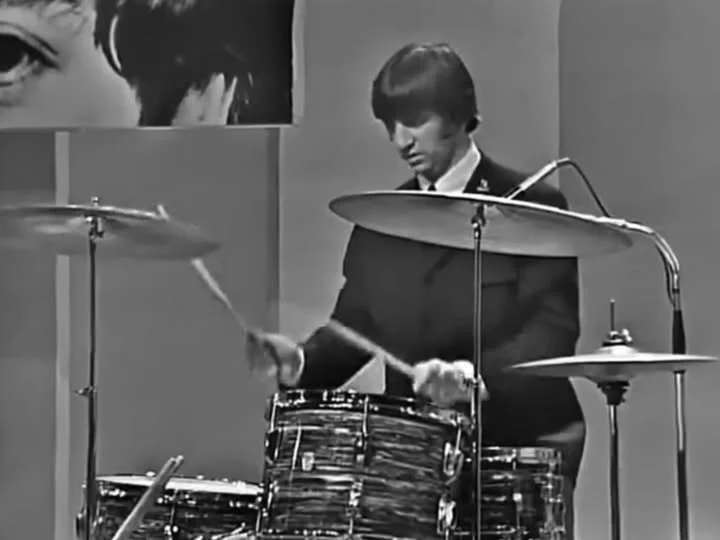
The actual song begins not with the scream of the amp but with one of John Lennon’s most indelible guitar riffs. It is a descending arpeggiated figure in D C and G major that provides the foundation for the entire track. This riff which Lennon reportedly devised while working on the Beatles for Sale track “Eight Days a Week” gives the song a kinetic energy. It pulses and churns instantly demanding attention. Ringo Starr’s drumming is subtle yet complex incorporating a Latin tinged rhythm with a double time hi hat feel that lends the entire track a dancing slightly bouncy momentum. It is the kind of drumming that sounds simple but is devilishly hard to copy. It pushes the tempo without sounding frantic. Paul McCartney’s bassline locks into this groove delivering a powerful driving melodic force typical of his work in this era. The instrumentation is classic four piece rock but George Harrison’s lead guitar is noteworthy. He essentially mimics the main Lennon riff during the verses but his solo section is a layered moment of studio craft. It features two guitar parts a backing rhythm track and a main overdubbed solo that is almost country in its clean sharp attack and phrasing. There is no piano or other orchestral element here. The focus is entirely on the grit and clarity of the core band a perfect showcase for a modern listening experience using studio headphones. The raw energy of the performance is palpable. This is The Beatles not yet wrapped in the heavy overcoats of psychedelia but stripped down lean and utterly confident in their rock and roll foundation.
The feedback intro is what transforms this from a great pop song into a foundational text of rock innovation. Lennon famously credited himself and The Beatles with being the first to intentionally commit feedback to commercial vinyl. Whether it was a complete accident as Paul McCartney has often recounted or a controlled experiment derived from live playing the decision to leave it in was the radical act. It was a conscious blurring of the line between studio perfection and raw abrasive texture. This single note this sustained electronic howl became a secret key for future generations. It opened the door for The Who’s explosive live destruction for Jimi Hendrix’s controlled sonic violence and for every band that would later treat their instruments not just as tools of melody but as generators of pure sound and noise. It is a microcosm of the revolutionary shift happening in popular music. The Beatles were not just writing catchy tunes they were actively pioneering the capabilities of the four track tape machine working alongside George Martin and his engineers to push beyond the conventions of mid century pop recording. They demonstrated to the world that the studio itself was an instrument ready to be wielded with irreverent purpose.
“The true lesson of ‘I Feel Fine’ is that sometimes the greatest leaps in musical innovation are found not in the grand composition but in the decision to celebrate a sonic mistake.”
That opening sound brief as it is forces the listener to recalibrate expectations. It prepares the ear for a piece of music that is both deeply familiar in its rock structure and startlingly new in its texture. It is a moment of pure raw electricity that is both the past and the future of rock and roll crammed into a single defiant note. To listen to it today is to understand that the foundations of the sonic landscape we now take for granted from garage rock to noise rock are laid right here in a simple declaration of joy. Listeners exploring similar innovations should seek out The Kinks with “You Really Got Me” from 1964 featuring a similarly foundational driving guitar riff. The Who with “My Generation” from 1965 shares the same raw aggressive energy often culminating in an explosive feedback laden conclusion. The Rolling Stones with “Satisfaction” from 1965 is built around another instantly recognizable simple yet utterly commanding central guitar riff. Chuck Berry with “Roll Over Beethoven” from 1956 provides the blueprint for the riff driven three chord rock and roll that directly influenced The Beatles energy on this track. Bobby Parker with “Watch Your Step” from 1961 reportedly provided the direct inspiration for Lennon signature arpeggiated riff. And Jimi Hendrix Experience with “Foxy Lady” from 1967 offers a later masterclass in the deliberate and creative use of controlled guitar feedback as a core element of the song texture.