
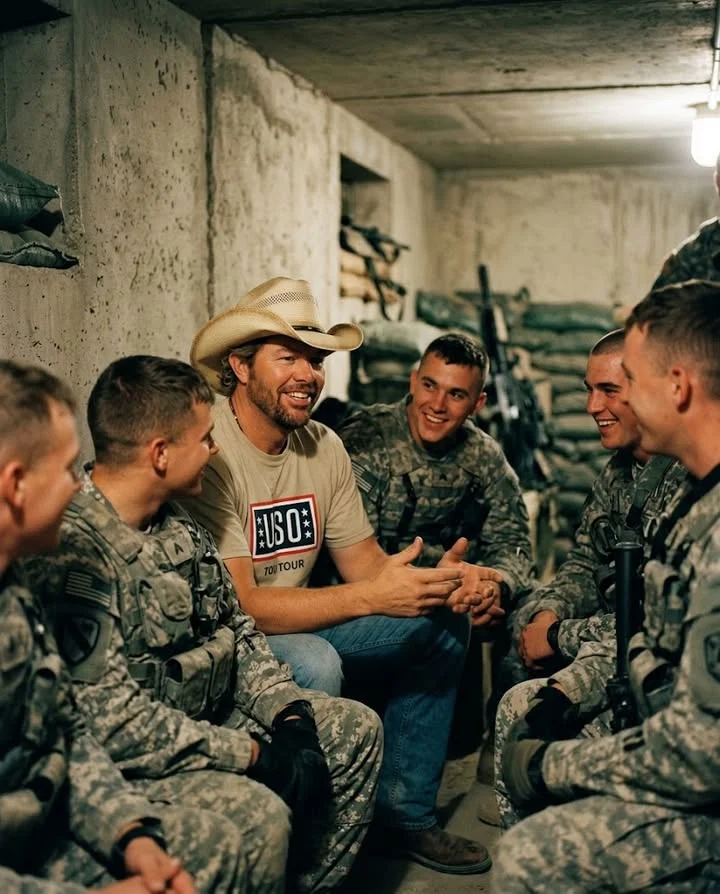
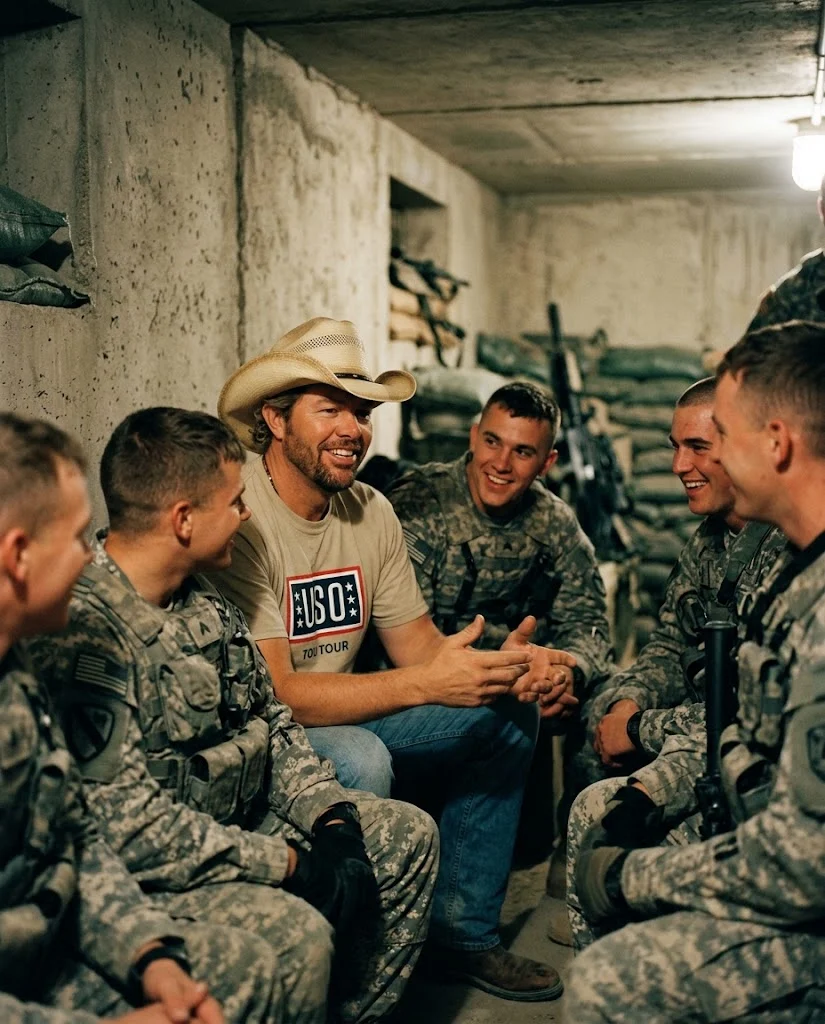
The truest measure of a star is not found in stadium crowds or platinum records. For Toby Keith, it was found in a dusty concrete bunker in southern Afghanistan, standing shoulder to shoulder with 2,500 troops while mortars fell outside.
The year was 2008. The stage was a makeshift platform at Kandahar Airfield. Toby Keith was midway through a set, singing Weed With Willie, when the atmosphere changed instantly.
A mortar siren ripped through the air. In Kandahar, that sound meant exactly one thing. Incoming rounds. The concert did not fade out with an encore. It ended in a desperate sprint for survival.
There was no separate escape for the VIP. The country star ran the same hundred meters, diving into the same cramped shelter. Inside, the tense reality of the combat zone pressed in from all sides.
But Keith did not hide behind security or demand special extraction. Instead, he used his presence to cut the fear. He traded jokes in the dim light. He posed for quick photos. He asked the troops where they called home.
His questions were deeply specific. He wanted to hear about the families waiting in Texas. The kids in Ohio. The college football scores from Oklahoma. He listened intently as soldiers shared their stories and showed pictures of the lives they were fighting to protect.
He didn’t want to talk about the music industry. He wanted to talk about what we were going home to.
When the all-clear siren finally sounded an hour later, military protocol demanded his immediate evacuation. Toby Keith refused the extraction. He stayed on the base until his schedule was fully exhausted. He shook every hand. He signed every last autograph.
This was not an isolated act. Over his lifetime, Keith completed 11 USO tours and performed for over 250,000 service members. He flew on Black Hawk helicopters to the most remote forward operating bases, understanding that the soldiers on the edges needed the connection the most.
That night in the bunker proved he never just sang about the frontline from a comfortable studio. He was willing to stand directly on it.
The music industry remembers him for the anthems and the arena tours. But for a specific generation of American troops, his impact is measured in a different currency. His greatest stage was never in Nashville. It was a dusty runway in a war zone, where a superstar refused to leave his audience behind when the sirens screamed.