
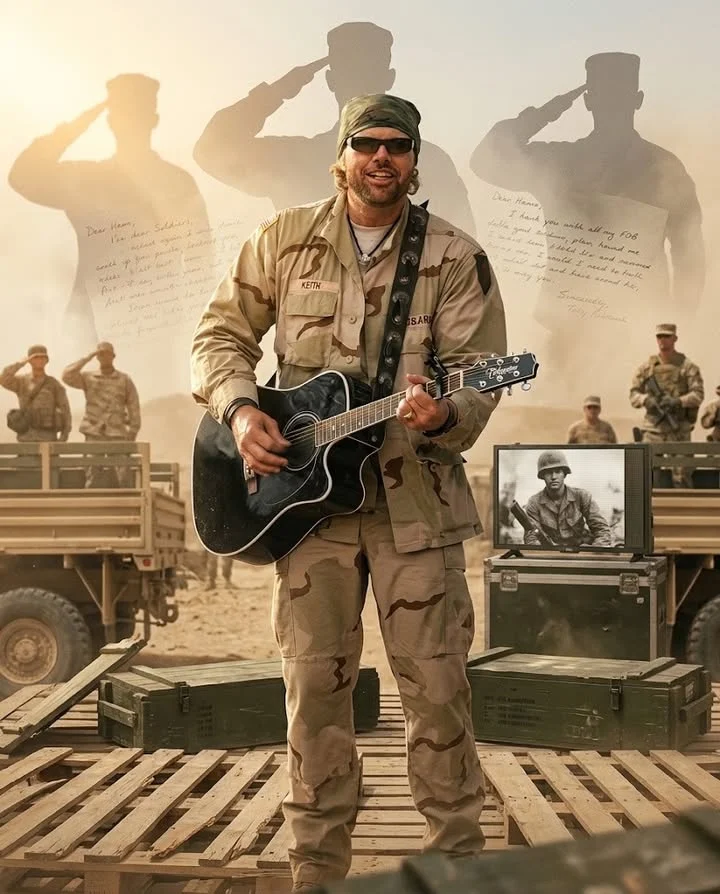
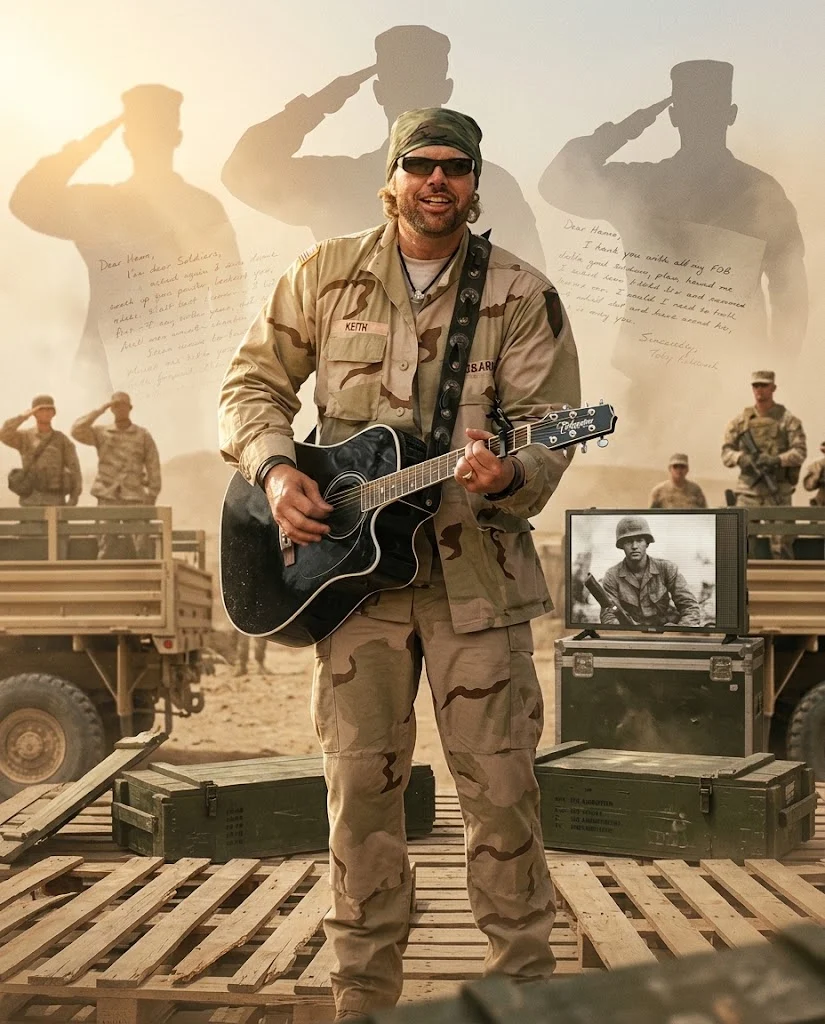
By standing on those broken pallets he gave the most isolated troops proof that their sacrifices were not forgotten.
This was the true weight of his visits. The defining moments always came after the guitar was put away. The superstar who commanded sold-out stadiums did not rush back to the safety of the helicopter. He chose the dust and the dirt instead. He stayed behind to shake every single hand looking exhausted men and women in the eye and sitting down to eat standard military combat rations with them.
For more than a decade Toby Keith made a quiet but unyielding demand when organizing his USO tours across the Middle East. He could have stayed in the secure zones. He refused.
Driven by the lifelong respect he held for his father a veteran of the United States Army he viewed the tours as a solemn duty. Over the course of 11 tours he played more than 200 shows across 17 countries reaching over a quarter of a million service members.
He demanded helicopter flights to the most dangerous outposts and stepped onto a stage made of ammunition boxes.
Soldiers spent their mornings drenched in sweat hastily nailing together wooden shipping pallets empty ammo crates and the beds of cargo trucks just to build him a makeshift platform. When the helicopter touched down in the desert dust out walked a superstar. He smiled and stepped right up onto that unstable plywood. He often performed his acoustic sets without body armor wanting no physical barrier between himself and the troops even when mortar sirens threatened to interrupt the music.
He did this relentlessly flying from one remote checkpoint to another under the scorching sun. The music offered a brief escape.
The units quietly documented his arrival. Disposable cameras captured the fragile plywood stages before they were dismantled. Soldiers sat by dim flashlights writing letters to their families. They did not describe the imminent threats. They wrote about the afternoon a country music giant sat on an ammo box and treated them like family.
Those letters and photographs became prized family heirlooms. They served as tangible proof that their sacrifices were recognized by someone who had no obligation to be there.
The plywood platforms were eventually dismantled and the military escorts always had to take him back to the sky. But for a few hours in the middle of a war zone Toby Keith did not just bring them a melody. He brought them a piece of America.