
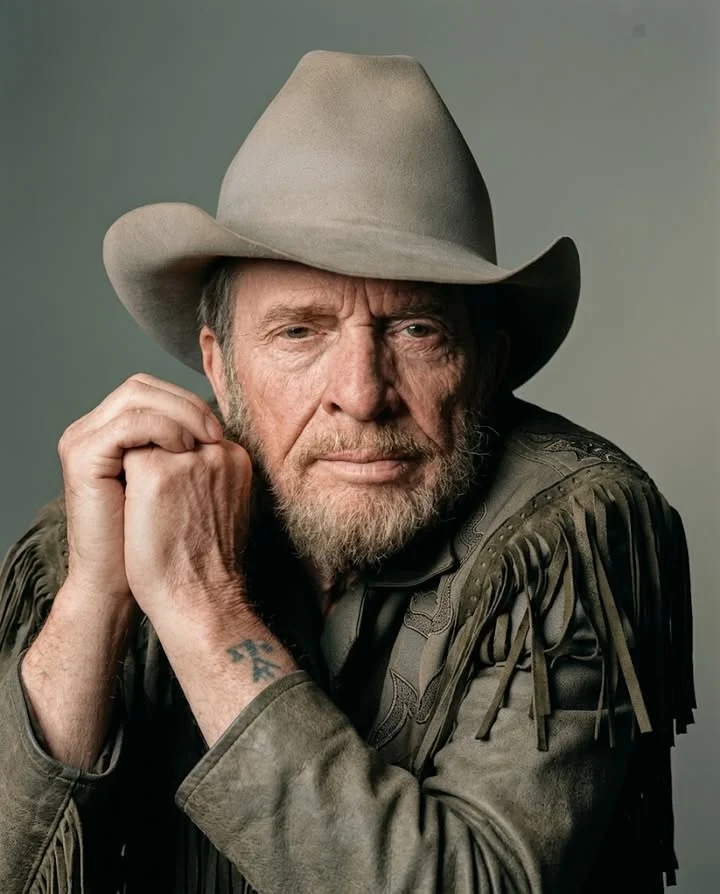
Every legend begins with a wound that refuses to heal. For Merle Haggard, that wound opened when he was nine years old and his father collapsed with a brain hemorrhage. The world stopped making sense.
The boy who once had a warm home in a converted boxcar in Oildale, California, became a ghost running from grief. He jumped freight trains in the dark. He stole cars. He cycled through juvenile halls and jail cells. The pain was always faster than his escape.
By 1958, the law finally caught up. San Quentin State Prison swallowed him whole. He was just another number in rough denim, locked in solitary confinement, expected to disappear. Society had already written his ending.
But then something extraordinary happened on New Year’s Day in 1958. A tall man in black stepped onto the prison stage. Johnny Cash began to sing for the condemned.
Merle sat among hardened men who had forgotten how to feel. As Cash’s voice cut through the cold air, Merle saw a reflection of his own battered soul. In that moment, he understood something vital.
A guitar can hold far more power than a gun. You do not have to die in the dark.
When Merle walked out of San Quentin a free man in 1960, he carried his scars straight to the microphone. He wrote “Mama Tried” not as a catchy tune but as a raw confession. It was a public apology to the mother who prayed for him while he sat in a cage.
Every word he sang was stained with real regret. He was not performing from imagination. He was bleeding truth in three minute bursts.
That was the secret to Merle Haggard. He never had to fake a tear. America embraced him because he sang from the dirt, not from a pedestal. He voiced the outlaws, the inmates, the grease stained workers, and the people who had made terrible mistakes and still had to wake up and live with them.
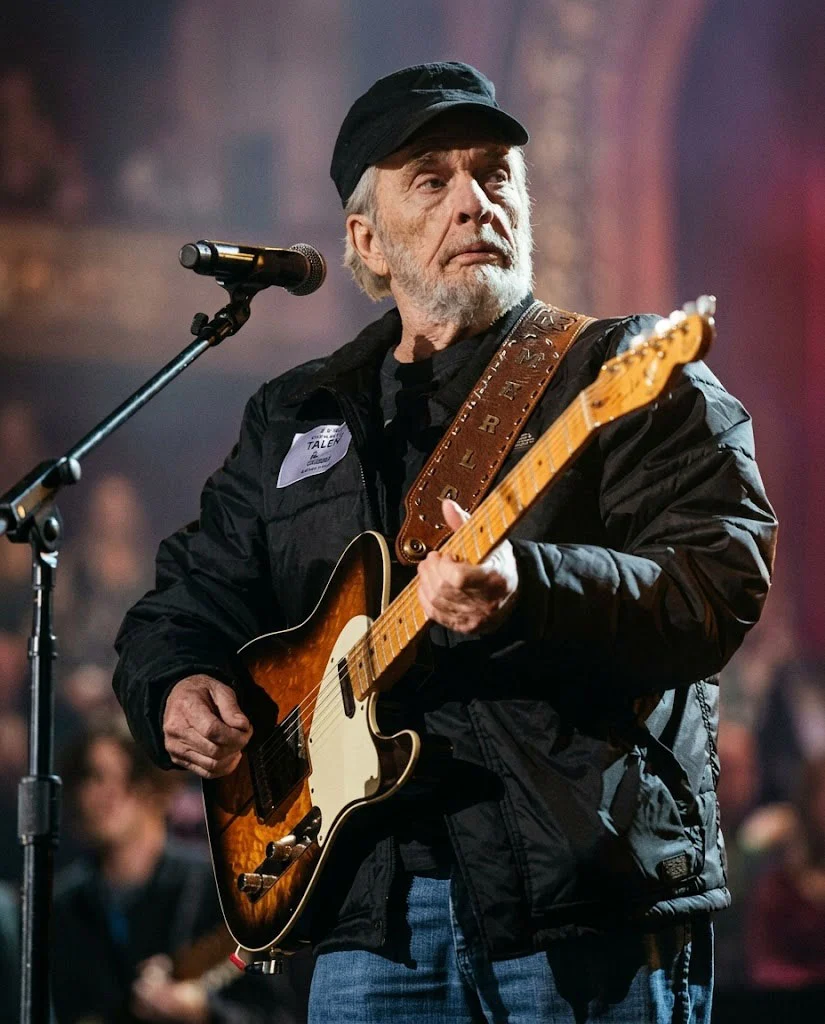
Onstage under bright lights, he looked tough and weathered. But offstage, in the lonely quiet of a tour bus, he still carried the weight of that little boy in the boxcar who just wanted his dad back.
When he sang those low aching notes, entire arenas fell silent. They were watching a man bleed out his truth.
Though he is gone, the voice of the Hag still echoes through country music. He did not just leave behind number one hits. He left behind a shelter for the broken. The grand stages have gone dark and the tour buses have parked for good, but his legacy remains untouched by time.
Somewhere tonight, a man in a quiet room is playing a Merle Haggard record. And for the first time in a long time, he does not feel so alone.