
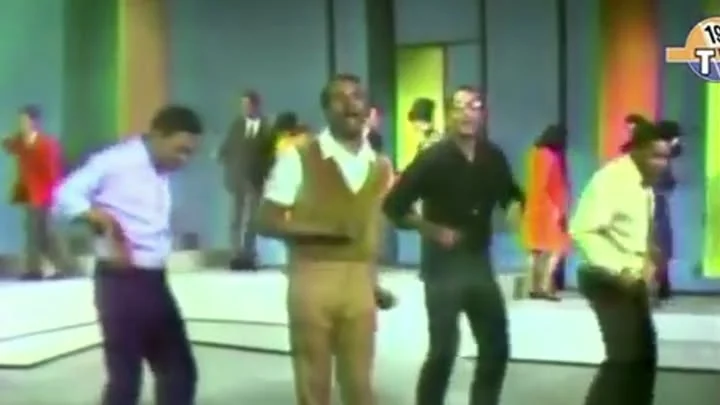
There are songs that simply refuse to let go. They burrow into your memory, surface at unexpected moments, and carry with them an entire era of emotion. For millions, The Four Tops’ “I Can’t Help Myself (Sugar Pie, Honey Bunch)” is exactly that kind of track — a timeless declaration of love that still feels as urgent and fresh as it did in 1965.
Levi Stubbs’ voice, raw with vulnerability and conviction, turns a simple confession into something monumental. When he sings,
“I can’t help myself, I love you and nobody else”
the listener is pulled into a moment of pure, unfiltered devotion. It is this emotional authenticity that has kept the song alive across generations, far beyond its initial chart-topping run on the Billboard Hot 100.
That chart run was no accident. Released as part of The Four Tops Second Album, the single became the breakout hit that defined the group’s career. The album itself was a triumph, produced by the legendary Holland-Dozier-Holland team, and it cemented the Four Tops as one of Motown’s most dynamic acts. While the record features a blend of soulful ballads and danceable grooves, it is the irresistible pull of “I Can’t Help Myself” that remains its most enduring moment.
The song’s success owes much to the group’s signature sound. The Four Tops — Levi Stubbs (lead), Abdul “Duke” Fakir, Lawrence Payton, and Renaldo “Obie” Benson — created harmonies that felt both polished and deeply human. Stubbs’ lead, brimming with both intensity and tenderness, became the emotional anchor of the track, while the backing trio wove a rich tapestry of voices around him. The production by Holland-Dozier-Holland added an effortless sheen, making every note feel inevitable.
Listen closely, and the song reveals its musical genius. It opens with a syncopated piano riff that immediately establishes a sense of forward motion. The bass line provides a solid, grounding groove, while the crisp drum kit drives the rhythm with an infectious momentum. Guitars weave through the mix with subtle warmth, and the horns — trumpets and saxophones — punctuate key moments with brightness and depth. This intricate interplay of instruments, a hallmark of Motown’s studio craft, creates a sound that is both sophisticated and irresistibly catchy.
Yet what elevates the song above mere craftsmanship is its emotional core. The lyrics, penned by Holland-Dozier-Holland, are disarmingly simple: a narrator confesses helpless devotion. Stubbs delivers these lines with such raw sincerity that the sentiment transcends the page. He transforms a love song into a confession that feels personal, even private. This is why the track endures — not just as a nostalgic relic of the 1960s, but as a living piece of music that speaks to the timeless experience of loving without restraint.
Decades later, “I Can’t Help Myself” continues to find new audiences. It appears in films, television shows, and on classic radio stations, introducing the magic of Motown to listeners who weren’t alive when the vinyl first spun. The song stands as a testament to the power of a perfectly crafted melody and a voice that refuses to be forgotten.
For those who want to explore similar treasures, several tracks share its spirit. The Temptations’ “My Girl” offers smooth harmonies and a similarly lush arrangement. The Supremes’ “Stop! In the Name of Love” captures the dramatic energy of the era. Smokey Robinson & the Miracles’ “The Tracks of My Tears” brings a more introspective, orchestral beauty. And Marvin Gaye and Tammi Terrell’s “Ain’t No Mountain High Enough” radiates the same optimistic devotion. Each of these songs, like the Four Tops’ classic, remains a doorway into the golden age of Motown — a sound that still feels like home.